Board overturns zoning administrator’s letter on museum‑plus‑cannabis use, citing accessory‑use concerns
December 07, 2022 | San Francisco City, San Francisco County, California
This article was created by AI summarizing key points discussed. AI makes mistakes, so for full details and context, please refer to the video of the full meeting. Please report any errors so we can fix them. Report an error »
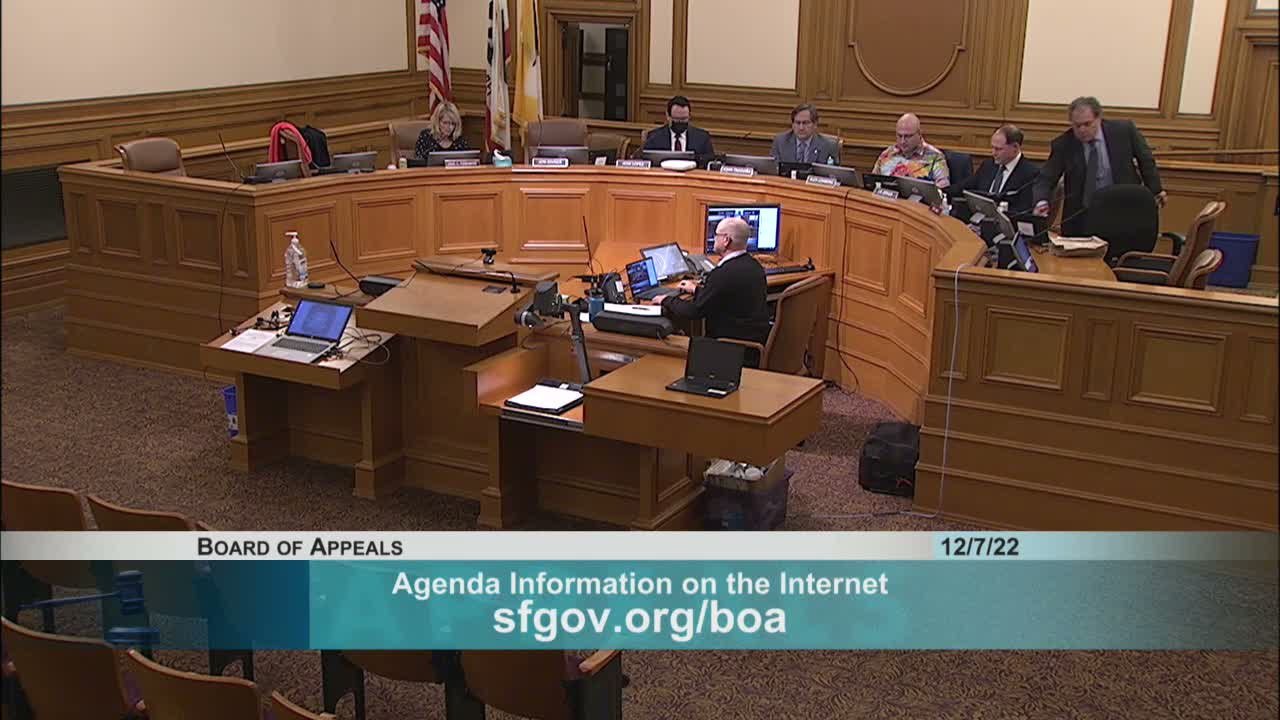
On Dec. 7 the San Francisco Board of Appeals overturned a zoning administrator letter of determination (LOD) that had said a proposed “cannabis museum” with an accessory gift shop/dispensary could be classified as general entertainment and therefore treated as accessory retail under the planning code.
Appellant counsel Todd Williams told commissioners the LOD risked creating a broad loophole allowing dispensaries to avoid the city’s equity program and the 600‑foot buffer by operating as accessory retail tied to non‑retail uses. "For something this critical, the Board of Appeals should not essentially establish a policy that ‘accessory cannabis’ use can take place anywhere in the city while avoiding the planning code requirements that others must follow," Williams said.
Corey Teague of the Planning Department responded that the LOD was an interpretation of existing code language and that the accessory‑use pathway in the code is expressly conditioned on the Office of Cannabis establishing accessory‑use permits and controls; in practice, Teague said, such an accessory use cannot lawfully operate until the Office of Cannabis issues rules and a permit program.
Commissioners debated three linked questions: (1) whether the proposed museum use should be categorized as general entertainment; (2) whether the gift shop/dispensary in the submission qualified as an accessory use; and (3) whether accessory cannabis retail—if ever permitted through an Office of Cannabis process—would be exempt from planning controls such as the 600‑foot buffer.
Several commissioners voiced concern that the accessory‑use language in the code could be exploited as written and that a practical test should determine whether the retail operation is truly subordinate and incidental to the principal use. Commissioner JR Epler moved to grant the appeal on the basis that the zoning administrator erred in classifying the gift shop/dispensary as an accessory use; the motion passed 5–0 and the LOD was overturned.
The Board’s ruling does not prohibit the Office of Cannabis from proposing accessory‑use regulations in the future, but it removes the LOD’s interpretation as a standing precedent in this instance and directs future applicants and staff to evaluate accessory‑use claims carefully in the permit review process.
Appellant counsel Todd Williams told commissioners the LOD risked creating a broad loophole allowing dispensaries to avoid the city’s equity program and the 600‑foot buffer by operating as accessory retail tied to non‑retail uses. "For something this critical, the Board of Appeals should not essentially establish a policy that ‘accessory cannabis’ use can take place anywhere in the city while avoiding the planning code requirements that others must follow," Williams said.
Corey Teague of the Planning Department responded that the LOD was an interpretation of existing code language and that the accessory‑use pathway in the code is expressly conditioned on the Office of Cannabis establishing accessory‑use permits and controls; in practice, Teague said, such an accessory use cannot lawfully operate until the Office of Cannabis issues rules and a permit program.
Commissioners debated three linked questions: (1) whether the proposed museum use should be categorized as general entertainment; (2) whether the gift shop/dispensary in the submission qualified as an accessory use; and (3) whether accessory cannabis retail—if ever permitted through an Office of Cannabis process—would be exempt from planning controls such as the 600‑foot buffer.
Several commissioners voiced concern that the accessory‑use language in the code could be exploited as written and that a practical test should determine whether the retail operation is truly subordinate and incidental to the principal use. Commissioner JR Epler moved to grant the appeal on the basis that the zoning administrator erred in classifying the gift shop/dispensary as an accessory use; the motion passed 5–0 and the LOD was overturned.
The Board’s ruling does not prohibit the Office of Cannabis from proposing accessory‑use regulations in the future, but it removes the LOD’s interpretation as a standing precedent in this instance and directs future applicants and staff to evaluate accessory‑use claims carefully in the permit review process.
View the Full Meeting & All Its Details
This article offers just a summary. Unlock complete video, transcripts, and insights as a Founder Member.
✓
Watch full, unedited meeting videos
✓
Search every word spoken in unlimited transcripts
✓
AI summaries & real-time alerts (all government levels)
✓
Permanent access to expanding government content
30-day money-back guarantee
