San Francisco planning staff outlines limits and streamlining under SB 35, AB 2011 and SB 330
January 04, 2023 | San Francisco City, San Francisco County, California
This article was created by AI summarizing key points discussed. AI makes mistakes, so for full details and context, please refer to the video of the full meeting. Please report any errors so we can fix them. Report an error »
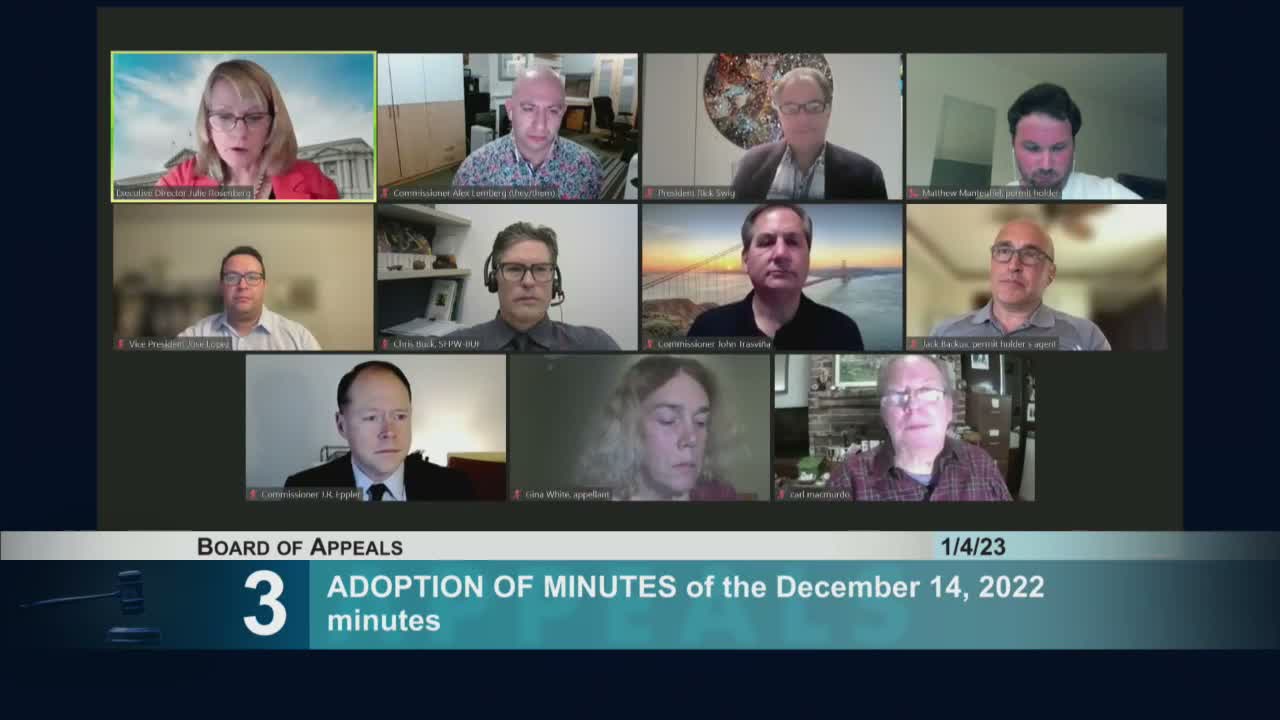
Kate Connor, a planning department housing-implementation manager, told the San Francisco Board of Appeals on Jan. 4 that state housing laws substantially limit local discretion while offering streamlined approvals for qualifying projects.
"The city is incredibly limited in its discretion," Connor said, describing how the state density bonus law allows incentives, concessions and waivers to accommodate extra units and restricts the circumstances under which the city can deny them.
Connor walked the board through three state programs. Under SB 35 (effective 2018) qualifying projects can proceed on a ministerial path with no discretionary entitlements or CEQA review if they meet objective standards and affordability thresholds (for San Francisco the applicable path requires 50% of units at 80% AMI or below). Planning Department records show 21 SB 35 approvals since January 2018, yielding about 2,600 new units and roughly 2,300 deed-restricted affordable units.
AB 2011, which Connor said will take effect in July 2023, also establishes a ministerial review track and divides eligibility into 100% affordable and mixed-income paths; it includes prevailing-wage and relocation-assistance requirements and some new constraints (for example, a 500-foot freeway buffer and demolition limits for mixed-income projects).
The Housing Crisis Act (SB 330) reduces discretionary delay by capping hearings for code-compliant projects and establishing a "preliminary application" that can vest projects. "That 5-hearing limit does include appeals," Connor told the board, while noting the statute excludes CEQA challenges from the count.
Board members asked how local practices such as residential design guidelines — typically subjective — will interact with these objective-state standards. Connor said the city is working to translate design guidance into objective standards where possible, but emphasized that findings to deny waivers or incentives must show "specific adverse impact upon public health or safety," a high bar under the Housing Accountability Act.
Planning staff said they have published director bulletins (including Bulletin 6 and Bulletin 7) explaining local implementation and process details, and they are preparing implementation materials for AB 2011. Connor offered to return to the board with follow-up presentations on implementation specifics.
The presentation framed San Francisco’s role as one of implementing state law while preserving design review to the extent objective standards allow. The board did not take further action on the presentation; commissioners requested written clarifications on which matters previously before the Board of Appeals will change under the new laws.
"The city is incredibly limited in its discretion," Connor said, describing how the state density bonus law allows incentives, concessions and waivers to accommodate extra units and restricts the circumstances under which the city can deny them.
Connor walked the board through three state programs. Under SB 35 (effective 2018) qualifying projects can proceed on a ministerial path with no discretionary entitlements or CEQA review if they meet objective standards and affordability thresholds (for San Francisco the applicable path requires 50% of units at 80% AMI or below). Planning Department records show 21 SB 35 approvals since January 2018, yielding about 2,600 new units and roughly 2,300 deed-restricted affordable units.
AB 2011, which Connor said will take effect in July 2023, also establishes a ministerial review track and divides eligibility into 100% affordable and mixed-income paths; it includes prevailing-wage and relocation-assistance requirements and some new constraints (for example, a 500-foot freeway buffer and demolition limits for mixed-income projects).
The Housing Crisis Act (SB 330) reduces discretionary delay by capping hearings for code-compliant projects and establishing a "preliminary application" that can vest projects. "That 5-hearing limit does include appeals," Connor told the board, while noting the statute excludes CEQA challenges from the count.
Board members asked how local practices such as residential design guidelines — typically subjective — will interact with these objective-state standards. Connor said the city is working to translate design guidance into objective standards where possible, but emphasized that findings to deny waivers or incentives must show "specific adverse impact upon public health or safety," a high bar under the Housing Accountability Act.
Planning staff said they have published director bulletins (including Bulletin 6 and Bulletin 7) explaining local implementation and process details, and they are preparing implementation materials for AB 2011. Connor offered to return to the board with follow-up presentations on implementation specifics.
The presentation framed San Francisco’s role as one of implementing state law while preserving design review to the extent objective standards allow. The board did not take further action on the presentation; commissioners requested written clarifications on which matters previously before the Board of Appeals will change under the new laws.
View the Full Meeting & All Its Details
This article offers just a summary. Unlock complete video, transcripts, and insights as a Founder Member.
✓
Watch full, unedited meeting videos
✓
Search every word spoken in unlimited transcripts
✓
AI summaries & real-time alerts (all government levels)
✓
Permanent access to expanding government content
30-day money-back guarantee
