Board upholds demolition permit at 2550 Irving after DTSC says PCE risks are low; neighbors remain concerned
February 22, 2023 | San Francisco City, San Francisco County, California
This article was created by AI summarizing key points discussed. AI makes mistakes, so for full details and context, please refer to the video of the full meeting. Please report any errors so we can fix them. Report an error »
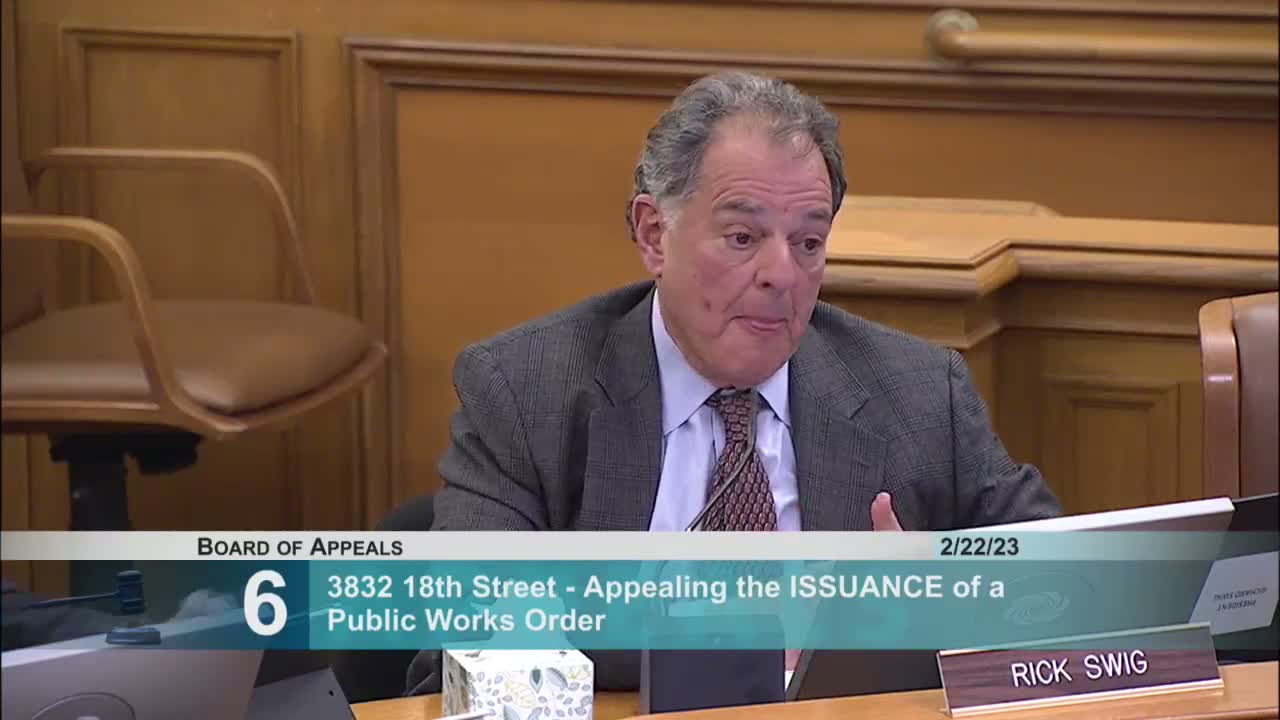
The San Francisco Board of Appeals on Feb. 22 denied an appeal challenging the demolition permit for 2550 Irving Street, allowing the developer’s work to proceed despite neighborhood demands for more testing of perchloroethylene, a solvent known as PCE.
DTSC testimony and board decision
State regulators from the Department of Toxic Substances Control told the board they have found a dilute plume of PCE soil vapor beneath parts of the Irving Street neighborhood and that indoor air testing at two homes showed concentrations consistent with vapor intrusion at roughly twice California’s conservative screening level. Whitney Smith, a senior hazardous substance engineer with DTSC, told the board the measured concentrations indicate “low” risk and that the agency does not believe residents need to take immediate action but will continue monitoring and follow up with affected households.
Why the board moved forward
Board members said DTSC’s presence and the written site management and dust‑control plans submitted by the developer and reviewed by city agencies were decisive. Vice President Jose Lopez and other members noted that planning, the Department of Public Health and the Department of Building Inspection reviewed the permit and that DTSC affirmed demolition can be managed safely while investigations continue. The board voted 3–2 to deny the appeal.
What DTSC and city health officials said
DTSC’s presentation emphasized that vapor intrusion is the relevant exposure pathway and described the agency’s steps: phased investigation across multiple parcels, indoor‑air testing, and oversight of demolition monitoring. Doctor Vivek Mithrani, DTSC’s toxicologist, described California screening levels as deliberately conservative and argued the measured results require continued investigation rather than emergency action. San Francisco Department of Public Health staff said they have approved a site management plan and will coordinate oversight during demolition.
Neighborhood concerns and response
Neighbors and public‑health advocates pressed the board for forensic soil and vapor sampling targeted to suspected source areas and asked for stronger, enforceable language in the site management plan. In public comment, several residents described longstanding health concerns and asked for testing that would cover properties adjacent to the project site. A physician who testified called the readings “unacceptable” and urged greater caution.
What happens next
DTSC told the board it will continue field inspections during demolition and the early phases of construction, and will collect samples if field instruments indicate elevated PCE. The city and DTSC said they will consider enhancements to the site management plan if needed. The board’s decision allows the demolition permit to stand while investigations and any required remediation continue.
DTSC testimony and board decision
State regulators from the Department of Toxic Substances Control told the board they have found a dilute plume of PCE soil vapor beneath parts of the Irving Street neighborhood and that indoor air testing at two homes showed concentrations consistent with vapor intrusion at roughly twice California’s conservative screening level. Whitney Smith, a senior hazardous substance engineer with DTSC, told the board the measured concentrations indicate “low” risk and that the agency does not believe residents need to take immediate action but will continue monitoring and follow up with affected households.
Why the board moved forward
Board members said DTSC’s presence and the written site management and dust‑control plans submitted by the developer and reviewed by city agencies were decisive. Vice President Jose Lopez and other members noted that planning, the Department of Public Health and the Department of Building Inspection reviewed the permit and that DTSC affirmed demolition can be managed safely while investigations continue. The board voted 3–2 to deny the appeal.
What DTSC and city health officials said
DTSC’s presentation emphasized that vapor intrusion is the relevant exposure pathway and described the agency’s steps: phased investigation across multiple parcels, indoor‑air testing, and oversight of demolition monitoring. Doctor Vivek Mithrani, DTSC’s toxicologist, described California screening levels as deliberately conservative and argued the measured results require continued investigation rather than emergency action. San Francisco Department of Public Health staff said they have approved a site management plan and will coordinate oversight during demolition.
Neighborhood concerns and response
Neighbors and public‑health advocates pressed the board for forensic soil and vapor sampling targeted to suspected source areas and asked for stronger, enforceable language in the site management plan. In public comment, several residents described longstanding health concerns and asked for testing that would cover properties adjacent to the project site. A physician who testified called the readings “unacceptable” and urged greater caution.
What happens next
DTSC told the board it will continue field inspections during demolition and the early phases of construction, and will collect samples if field instruments indicate elevated PCE. The city and DTSC said they will consider enhancements to the site management plan if needed. The board’s decision allows the demolition permit to stand while investigations and any required remediation continue.
View the Full Meeting & All Its Details
This article offers just a summary. Unlock complete video, transcripts, and insights as a Founder Member.
✓
Watch full, unedited meeting videos
✓
Search every word spoken in unlimited transcripts
✓
AI summaries & real-time alerts (all government levels)
✓
Permanent access to expanding government content
30-day money-back guarantee
