Board of Appeals denies rehearing request for 2550 Irving Street affordable housing permit
September 13, 2023 | San Francisco City, San Francisco County, California
This article was created by AI summarizing key points discussed. AI makes mistakes, so for full details and context, please refer to the video of the full meeting. Please report any errors so we can fix them. Report an error »
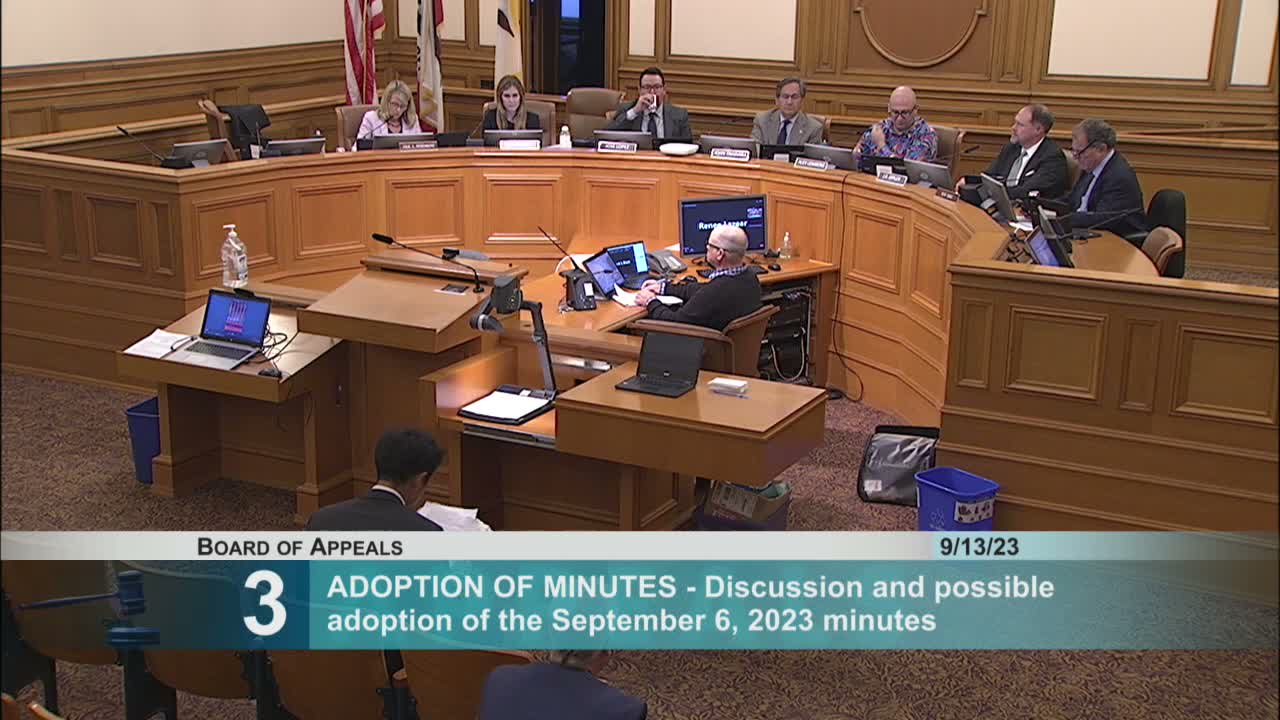
The San Francisco Board of Appeals on Sept. 13 denied a rehearing request from the Sunset Neighborhood Association (MSNA) on the site and building permit for a 90‑unit, 100% affordable housing project at 2550 Irving Street, voting 3–2 to leave the permit in place.
The rehearing request centered on whether the board should revisit findings about soil and soil‑vapor contamination and the city and state agencies’ testing methods. Appellant Enoch Wong and neighborhood experts argued DTSC (the California Department of Toxic Substances Control) had presented inconsistent evidence, did not adequately collaborate with neighbors, and that the existing record raised a ‘‘manifest injustice’’ requiring a new hearing. Lenny Siegel, an expert for the appellants, told the board DTSC had applied averaging to limited samples and had not fully evaluated interim remedies such as soil‑vapor extraction.
TNDC, the permit holder, and city agencies urged the board to deny rehearing. Shreya Shah, TNDC’s associate director of housing development, said the site had been ‘‘extensively tested, characterized, and investigated’’ and that DTSC and the Department of Public Health had concluded the parcel is not the primary source of PCE. She warned that further appeals and delays had already added roughly $1 million to the project’s costs and urged the board to let the permit move forward so construction could proceed.
DTSC told the board its investigations show the 2550 Irving site is "not a significant source of PCE to the surrounding community," and that risks to neighboring residents are currently ‘‘low to insignificant’’ within state and federal risk management ranges. DTSC said it approved a response plan that includes a vapor intrusion mitigation system (VIMS) for the planned building and that additional targeted sampling north of the site would continue.
The Department of Public Health (DPH) said its Maher program had reviewed the materials and maintained that the applicant had met the applicable site‑permit requirements to protect on‑site workers and the neighboring community. The Planning Department noted the project was entitled under SB 35 and fits the city’s housing priorities, and it recommended denying the rehearing request.
Public comment split along predictable lines: dozens of neighbors and several experts urged a rehearing, cited a neighborhood cancer‑cluster map and said DTSC had not followed its own guidance; housing advocates and some local residents urged the board to trust DTSC and DPH and to move forward with affordable housing.
In deliberations commissioners debated whether the rehearing standard was met: MSNA argued the board could grant rehearing to prevent manifest injustice even without wholly new facts; opponents said no materially new evidence had been submitted and warned that SB 35 limits the board’s ability to add project‑specific conditions. Commissioner John Trezvina moved to grant rehearing; that motion failed 2–3. A subsequent motion to deny the rehearing on the grounds that no new evidence justified reopening the matter passed 3–2.
The board’s action leaves the permit in place; DTSC and DPH said they will continue off‑site investigations and oversight. President Rick Swig said he favored moving the project forward while insisting the city agencies remain accountable for addressing neighborhood health questions. The board concluded the evening with plans for continued oversight by the relevant agencies and no immediate change to the permit status.
What happens next: With the rehearing denied, the site permit remains upheld. DTSC, DPH and planning officials said follow‑up sampling and remediation oversight will continue; neighbors and MSNA have other legal and administrative options outside the Board of Appeals record if they seek additional review.
The rehearing request centered on whether the board should revisit findings about soil and soil‑vapor contamination and the city and state agencies’ testing methods. Appellant Enoch Wong and neighborhood experts argued DTSC (the California Department of Toxic Substances Control) had presented inconsistent evidence, did not adequately collaborate with neighbors, and that the existing record raised a ‘‘manifest injustice’’ requiring a new hearing. Lenny Siegel, an expert for the appellants, told the board DTSC had applied averaging to limited samples and had not fully evaluated interim remedies such as soil‑vapor extraction.
TNDC, the permit holder, and city agencies urged the board to deny rehearing. Shreya Shah, TNDC’s associate director of housing development, said the site had been ‘‘extensively tested, characterized, and investigated’’ and that DTSC and the Department of Public Health had concluded the parcel is not the primary source of PCE. She warned that further appeals and delays had already added roughly $1 million to the project’s costs and urged the board to let the permit move forward so construction could proceed.
DTSC told the board its investigations show the 2550 Irving site is "not a significant source of PCE to the surrounding community," and that risks to neighboring residents are currently ‘‘low to insignificant’’ within state and federal risk management ranges. DTSC said it approved a response plan that includes a vapor intrusion mitigation system (VIMS) for the planned building and that additional targeted sampling north of the site would continue.
The Department of Public Health (DPH) said its Maher program had reviewed the materials and maintained that the applicant had met the applicable site‑permit requirements to protect on‑site workers and the neighboring community. The Planning Department noted the project was entitled under SB 35 and fits the city’s housing priorities, and it recommended denying the rehearing request.
Public comment split along predictable lines: dozens of neighbors and several experts urged a rehearing, cited a neighborhood cancer‑cluster map and said DTSC had not followed its own guidance; housing advocates and some local residents urged the board to trust DTSC and DPH and to move forward with affordable housing.
In deliberations commissioners debated whether the rehearing standard was met: MSNA argued the board could grant rehearing to prevent manifest injustice even without wholly new facts; opponents said no materially new evidence had been submitted and warned that SB 35 limits the board’s ability to add project‑specific conditions. Commissioner John Trezvina moved to grant rehearing; that motion failed 2–3. A subsequent motion to deny the rehearing on the grounds that no new evidence justified reopening the matter passed 3–2.
The board’s action leaves the permit in place; DTSC and DPH said they will continue off‑site investigations and oversight. President Rick Swig said he favored moving the project forward while insisting the city agencies remain accountable for addressing neighborhood health questions. The board concluded the evening with plans for continued oversight by the relevant agencies and no immediate change to the permit status.
What happens next: With the rehearing denied, the site permit remains upheld. DTSC, DPH and planning officials said follow‑up sampling and remediation oversight will continue; neighbors and MSNA have other legal and administrative options outside the Board of Appeals record if they seek additional review.
View the Full Meeting & All Its Details
This article offers just a summary. Unlock complete video, transcripts, and insights as a Founder Member.
✓
Watch full, unedited meeting videos
✓
Search every word spoken in unlimited transcripts
✓
AI summaries & real-time alerts (all government levels)
✓
Permanent access to expanding government content
30-day money-back guarantee
