DBI briefed Board on new state solar PV requirements, permitting types and solar-easement limits
February 28, 2024 | San Francisco City, San Francisco County, California
This article was created by AI summarizing key points discussed. AI makes mistakes, so for full details and context, please refer to the video of the full meeting. Please report any errors so we can fix them. Report an error »
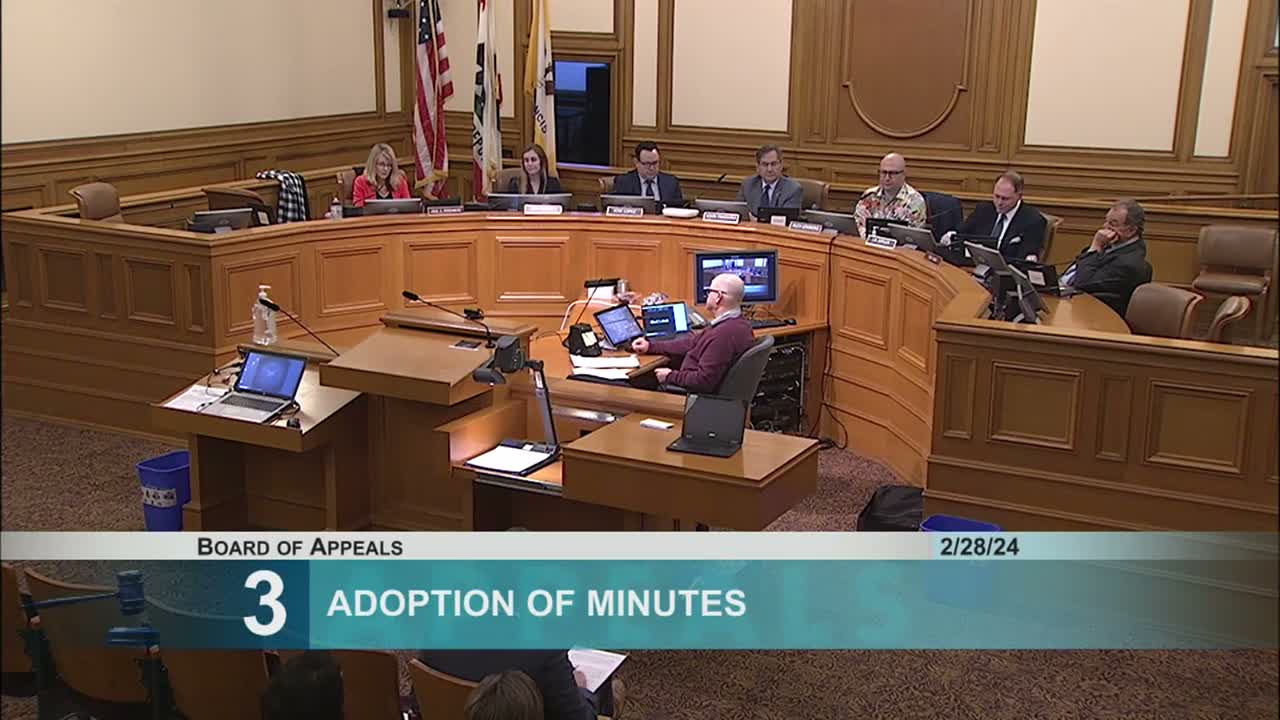
The San Francisco Department of Building Inspection briefed the Board of Appeals on state and local changes affecting solar photovoltaic (PV) permitting on Feb. 28.
DBI senior engineer James Zahn described a stricter solar requirement in the 2022 California Energy Code cycle that, for many new multifamily and commercial buildings, requires installation of a solar PV system rather than mere solar readiness. Zahn explained which contractors are eligible to pull solar permits, how most rooftop PV installs can be permitted with an electrical trade permit (faster and cheaper than building permits), and that building permits are required only when structural work is needed.
Zahn outlined inspection rules: systems under 4 kilowatts can be scheduled for electrical inspection online; larger systems and those using the state-mandated SolarAPP+ platform must also be inspected by the fire department before DBI’s electrical inspection. He said jurisdictions of San Francisco’s size were required to implement an online permitting platform by September 2023.
Zahn also reviewed legal constraints under the California Solar Rights Act and relevant civil-code provisions governing solar easements, noting that an enforceable solar easement must be in writing, measurable, and specify conditions for alteration or termination. He cited a Santa Clara County case in which a verbal promise to trim trees was found insufficient because no written easement existed.
Commissioners asked for clarification about real-world conflicts: whether an owner of an existing rooftop PV system would have recourse if a neighbor added height and shaded panels. Zahn responded that without a written easement the PV owner would have limited recourse and emphasized the importance of timely negotiation or mitigation measures during planning-notice periods. He added that very tall buildings (10+ stories) face different PV requirements because mechanical equipment limits usable roof area.
DBI and planning staff provided contact information and offered to answer follow-up technical or enforcement questions; the briefing did not result in a board directive.
DBI senior engineer James Zahn described a stricter solar requirement in the 2022 California Energy Code cycle that, for many new multifamily and commercial buildings, requires installation of a solar PV system rather than mere solar readiness. Zahn explained which contractors are eligible to pull solar permits, how most rooftop PV installs can be permitted with an electrical trade permit (faster and cheaper than building permits), and that building permits are required only when structural work is needed.
Zahn outlined inspection rules: systems under 4 kilowatts can be scheduled for electrical inspection online; larger systems and those using the state-mandated SolarAPP+ platform must also be inspected by the fire department before DBI’s electrical inspection. He said jurisdictions of San Francisco’s size were required to implement an online permitting platform by September 2023.
Zahn also reviewed legal constraints under the California Solar Rights Act and relevant civil-code provisions governing solar easements, noting that an enforceable solar easement must be in writing, measurable, and specify conditions for alteration or termination. He cited a Santa Clara County case in which a verbal promise to trim trees was found insufficient because no written easement existed.
Commissioners asked for clarification about real-world conflicts: whether an owner of an existing rooftop PV system would have recourse if a neighbor added height and shaded panels. Zahn responded that without a written easement the PV owner would have limited recourse and emphasized the importance of timely negotiation or mitigation measures during planning-notice periods. He added that very tall buildings (10+ stories) face different PV requirements because mechanical equipment limits usable roof area.
DBI and planning staff provided contact information and offered to answer follow-up technical or enforcement questions; the briefing did not result in a board directive.
Don't Miss a Word: See the Full Meeting!
Go beyond summaries. Unlock every video, transcript, and key insight with a Founder Membership.
✓
Get instant access to full meeting videos
✓
Search and clip any phrase from complete transcripts
✓
Receive AI-powered summaries & custom alerts
✓
Enjoy lifetime, unrestricted access to government data
30-day money-back guarantee
