Board denies rehearing requests on Great Highway pilot after divided debate over Estuary Institute report
March 13, 2024 | San Francisco City, San Francisco County, California
This article was created by AI summarizing key points discussed. AI makes mistakes, so for full details and context, please refer to the video of the full meeting. Please report any errors so we can fix them. Report an error »
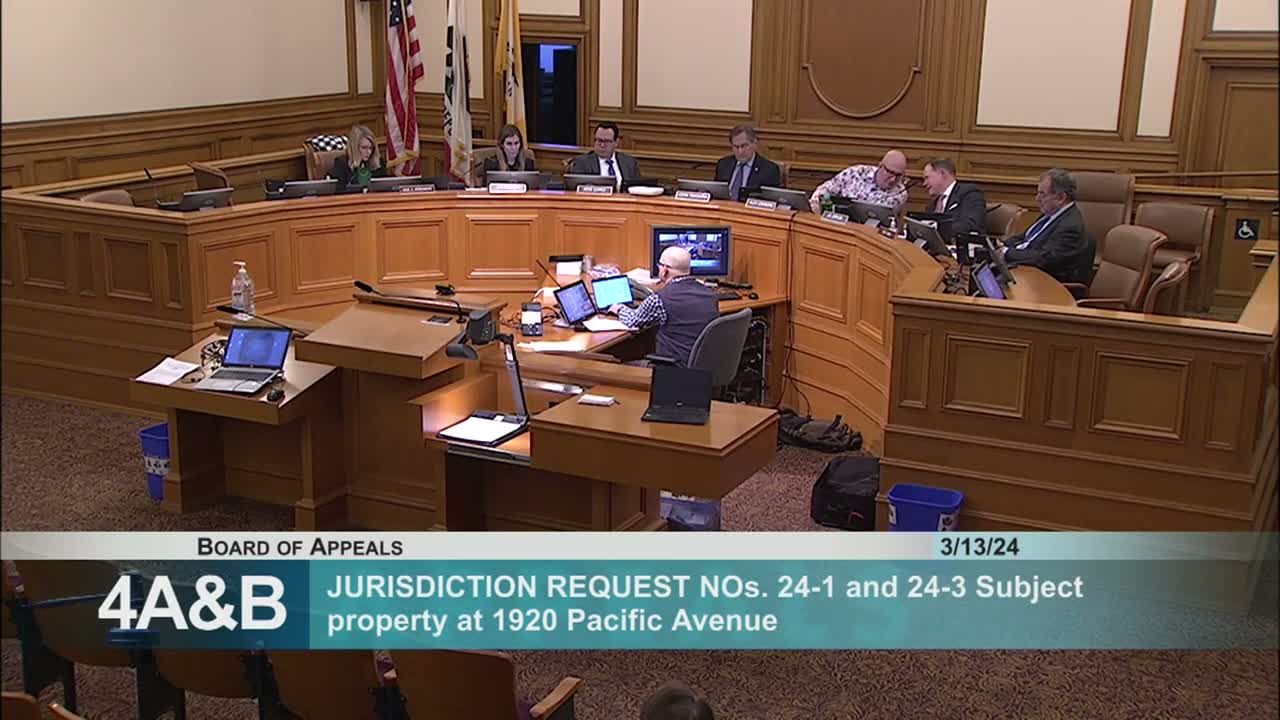
The San Francisco Board of Appeals on March 13 considered rehearing requests for three appeals related to the Great Highway pilot but denied the requests after extended public comment and split deliberations.
Appellants — represented at the hearing by attorneys and neighborhood advocates — argued that new, material facts emerged after the original hearing that could have affected the outcome. They highlighted a December 2023 Estuary Institute report that they said documents dune trampling and human‑caused erosion and pointed to internal emails and the recent installation of log seating in the median that appellants say were not disclosed or were mischaracterized by Recreation and Parks in the earlier record. "The newly installed seating raises material LCP consistency issues," appellant counsel said, and the Estuary Institute report, they argued, bolstered concerns about impacts to dune habitat and snowy plovers.
Planning Department staff told the board the rehearing standard is high and disputed that appellants met it: zoning administrator Corey Teague said the Estuary Institute material had been referenced in prior materials and that, in any event, the bench feature is exempt from coastal‑permit review under Planning Code section 3.30.3. Teague and other city witnesses said the coastal permit at issue is a time‑limited pilot that did not require additional environmental review beyond the CEQA consideration applied to that pilot.
Deputy City Attorney Jen Huber addressed public accusations that she had advocated for a particular result at the prior hearing. Huber said she provided legal advice about what findings would be required if the board were to grant an appeal and reaffirmed she did not advise the board on the merits of whether the Planning Commission’s findings conformed to the Local Coastal Program.
Public comment was extensive and sharply divided: some neighbors and environmental advocates urged a rehearing so the Estuary Institute findings and questions about internal agency communications could be examined; other residents and local advocates said the report was public in December 2023, that Rec and Park’s bench is covered by Planning Code §3.30.3 and therefore not a material change to the permit scope, and that the pilot has already been subject to multiple public processes, including legislation and voter engagement.
Commissioners split in deliberations over whether the Estuary Institute report, the bench, and Rec and Park’s absence from tonight’s hearing constituted new material facts or manifest injustice that merited reopening. A motion to grant a rehearing was moved and discussed but did not result in a rehearing being granted; after additional procedural discussion the board concluded the rehearing requests were denied and closed the item.
The board did not make substantive changes to the underlying coastal permit and indicated that further environmental or programmatic review remains available through the usual regulatory and administrative channels.
Appellants — represented at the hearing by attorneys and neighborhood advocates — argued that new, material facts emerged after the original hearing that could have affected the outcome. They highlighted a December 2023 Estuary Institute report that they said documents dune trampling and human‑caused erosion and pointed to internal emails and the recent installation of log seating in the median that appellants say were not disclosed or were mischaracterized by Recreation and Parks in the earlier record. "The newly installed seating raises material LCP consistency issues," appellant counsel said, and the Estuary Institute report, they argued, bolstered concerns about impacts to dune habitat and snowy plovers.
Planning Department staff told the board the rehearing standard is high and disputed that appellants met it: zoning administrator Corey Teague said the Estuary Institute material had been referenced in prior materials and that, in any event, the bench feature is exempt from coastal‑permit review under Planning Code section 3.30.3. Teague and other city witnesses said the coastal permit at issue is a time‑limited pilot that did not require additional environmental review beyond the CEQA consideration applied to that pilot.
Deputy City Attorney Jen Huber addressed public accusations that she had advocated for a particular result at the prior hearing. Huber said she provided legal advice about what findings would be required if the board were to grant an appeal and reaffirmed she did not advise the board on the merits of whether the Planning Commission’s findings conformed to the Local Coastal Program.
Public comment was extensive and sharply divided: some neighbors and environmental advocates urged a rehearing so the Estuary Institute findings and questions about internal agency communications could be examined; other residents and local advocates said the report was public in December 2023, that Rec and Park’s bench is covered by Planning Code §3.30.3 and therefore not a material change to the permit scope, and that the pilot has already been subject to multiple public processes, including legislation and voter engagement.
Commissioners split in deliberations over whether the Estuary Institute report, the bench, and Rec and Park’s absence from tonight’s hearing constituted new material facts or manifest injustice that merited reopening. A motion to grant a rehearing was moved and discussed but did not result in a rehearing being granted; after additional procedural discussion the board concluded the rehearing requests were denied and closed the item.
The board did not make substantive changes to the underlying coastal permit and indicated that further environmental or programmatic review remains available through the usual regulatory and administrative channels.
View the Full Meeting & All Its Details
This article offers just a summary. Unlock complete video, transcripts, and insights as a Founder Member.
✓
Watch full, unedited meeting videos
✓
Search every word spoken in unlimited transcripts
✓
AI summaries & real-time alerts (all government levels)
✓
Permanent access to expanding government content
30-day money-back guarantee
