Planning commission pauses vote on sign rule change after hours of debate; asks staff for visual mock-ups
October 07, 2021 | San Francisco City, San Francisco County, California
This article was created by AI summarizing key points discussed. AI makes mistakes, so for full details and context, please refer to the video of the full meeting. Please report any errors so we can fix them. Report an error »
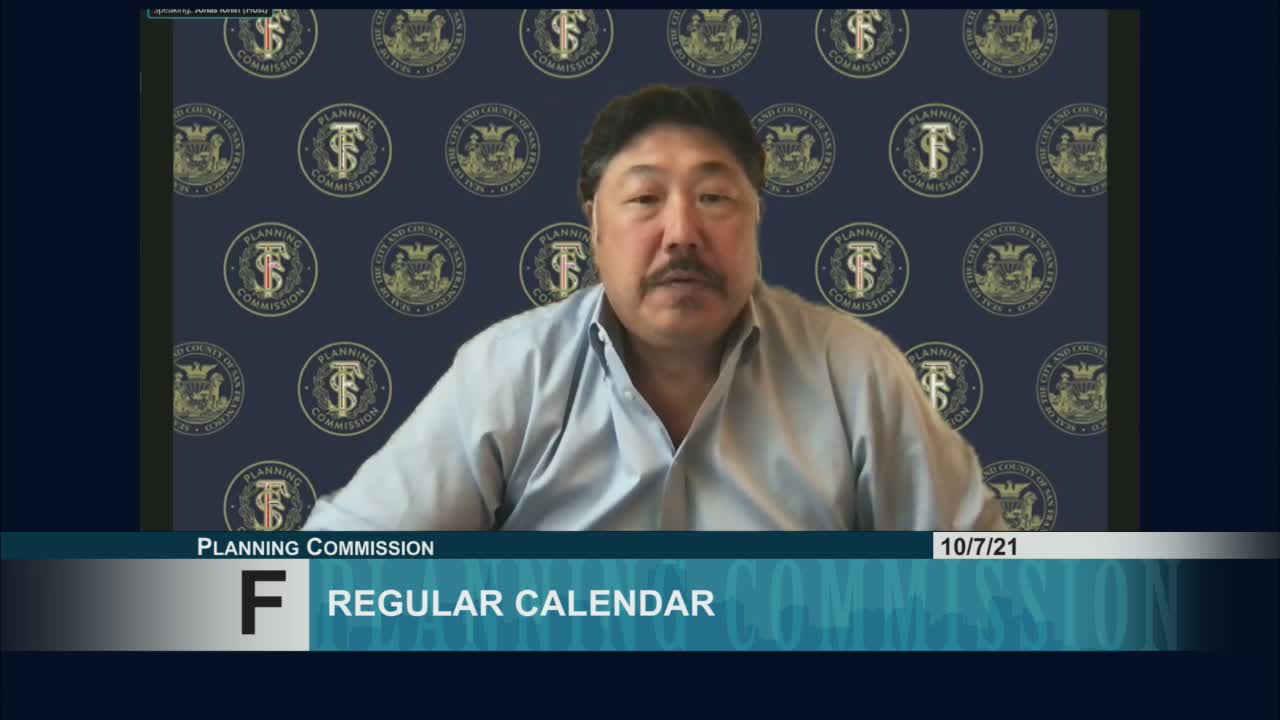
The San Francisco Planning Commission on Oct. 7 continued debate for one week on a proposal that would allow businesses to place sign copy on awnings or marquees in addition to projecting (blade) signs in many commercial districts.
The ordinance, sponsored by Supervisor Catherine Stefani’s office and presented by staff, would amend the planning code to legalize dual signage in certain districts and would not change dimensional limits or rules on historic buildings. "The supervisor wanted to move forward with a code change which would effectively legalize existing signage for about 400 businesses," Dominica Donovan said for the sponsor’s office, citing a visual survey of storefronts.
Why it matters: Supporters say the change would spare longstanding, often immigrant-owned businesses from costly enforcement and create a path to legalization for signs that have existed for decades; opponents say it risks reversing decades of anti-clutter work that helped reclaim San Francisco’s streetscapes.
Opponents told the commission the proposal would increase visual clutter and erode neighborhood character. "Visual clutter will dramatically increase and it will be bad for all of our neighborhoods," Charles Hedd of the Coalition for San Francisco Neighborhoods said during public comment. Designers and neighborhood groups repeated that concern, arguing the city should prioritize enforcement and better governance rather than loosening the code.
Staff positioned the proposal as narrowly targeted. The department recommended several modifications — including expanding the set of districts covered and widening a small-business fee exemption for legalization — and stressed the ordinance does not change size or projection limits. Zoning Administrator Corey Teague noted that even if the ordinance passes, new or modified signs would still require permits: "All new signs require sign permit, and they're gonna be subject to the controls that are in place at that time," he said.
Commissioners debated two policy approaches. Commissioner Moore proposed a limited grandfathering or "amnesty"-style approach so that businesses with pre-existing signage could be deemed nonconforming rather than prosecuted; she characterized it as a way to avoid forcing small businesses into costly compliance steps. Planning staff and other commissioners raised caution about the administrative burden and evidentiary issues — particularly the difficulty of proving when an awning or sign predated the 1990s code — and how grandfathering interacts with dimensional requirements.
Several commissioners asked staff to produce a visual mock-up showing a worst-case block scenario if the ordinance were applied citywide. Commissioner Diamond moved, and the commission voted unanimously to continue the item for one week so staff could prepare visual examples and return before the Board of Supervisors deadline. Staff warned that the ordinance expires Oct. 19 but agreed to try to supply the requested visuals within the available time.
Next steps: The commission continued the item for one week to receive the visuals requested by commissioners and to further consider amendments such as grandfathering language and district coverage. The Board of Supervisors will be the next body to review any final ordinance.
Attribution: Quotes and positions in this article are drawn from public remarks recorded at the Oct. 7 Planning Commission meeting and from the staff presentation provided to the commission.
The ordinance, sponsored by Supervisor Catherine Stefani’s office and presented by staff, would amend the planning code to legalize dual signage in certain districts and would not change dimensional limits or rules on historic buildings. "The supervisor wanted to move forward with a code change which would effectively legalize existing signage for about 400 businesses," Dominica Donovan said for the sponsor’s office, citing a visual survey of storefronts.
Why it matters: Supporters say the change would spare longstanding, often immigrant-owned businesses from costly enforcement and create a path to legalization for signs that have existed for decades; opponents say it risks reversing decades of anti-clutter work that helped reclaim San Francisco’s streetscapes.
Opponents told the commission the proposal would increase visual clutter and erode neighborhood character. "Visual clutter will dramatically increase and it will be bad for all of our neighborhoods," Charles Hedd of the Coalition for San Francisco Neighborhoods said during public comment. Designers and neighborhood groups repeated that concern, arguing the city should prioritize enforcement and better governance rather than loosening the code.
Staff positioned the proposal as narrowly targeted. The department recommended several modifications — including expanding the set of districts covered and widening a small-business fee exemption for legalization — and stressed the ordinance does not change size or projection limits. Zoning Administrator Corey Teague noted that even if the ordinance passes, new or modified signs would still require permits: "All new signs require sign permit, and they're gonna be subject to the controls that are in place at that time," he said.
Commissioners debated two policy approaches. Commissioner Moore proposed a limited grandfathering or "amnesty"-style approach so that businesses with pre-existing signage could be deemed nonconforming rather than prosecuted; she characterized it as a way to avoid forcing small businesses into costly compliance steps. Planning staff and other commissioners raised caution about the administrative burden and evidentiary issues — particularly the difficulty of proving when an awning or sign predated the 1990s code — and how grandfathering interacts with dimensional requirements.
Several commissioners asked staff to produce a visual mock-up showing a worst-case block scenario if the ordinance were applied citywide. Commissioner Diamond moved, and the commission voted unanimously to continue the item for one week so staff could prepare visual examples and return before the Board of Supervisors deadline. Staff warned that the ordinance expires Oct. 19 but agreed to try to supply the requested visuals within the available time.
Next steps: The commission continued the item for one week to receive the visuals requested by commissioners and to further consider amendments such as grandfathering language and district coverage. The Board of Supervisors will be the next body to review any final ordinance.
Attribution: Quotes and positions in this article are drawn from public remarks recorded at the Oct. 7 Planning Commission meeting and from the staff presentation provided to the commission.
Don't Miss a Word: See the Full Meeting!
Go beyond summaries. Unlock every video, transcript, and key insight with a Founder Membership.
✓
Get instant access to full meeting videos
✓
Search and clip any phrase from complete transcripts
✓
Receive AI-powered summaries & custom alerts
✓
Enjoy lifetime, unrestricted access to government data
30-day money-back guarantee
