Planning Commission backs 'Cars to Casas' changes to allow housing on auto‑oriented lots
December 09, 2021 | San Francisco City, San Francisco County, California
This article was created by AI summarizing key points discussed. AI makes mistakes, so for full details and context, please refer to the video of the full meeting. Please report any errors so we can fix them. Report an error »
The San Francisco Planning Commission voted 5–2 on Dec. 9 to approve a staff‑recommended version of the "Cars to Casas" ordinance — a city proposal to ease rules for building housing on auto‑oriented parcels such as parking lots, gas stations and accessory garages.
The ordinance, sponsored by the mayor, would remove a conditional‑use requirement and provide density exceptions for certain auto‑oriented sites, allowing, for example, up to four units in RH zoning and form‑based density in other districts. Planning staff recommended several modifications, including allowing lots whose last legal use was automotive to qualify and shortening the legacy‑business lookback from 10 years to four.
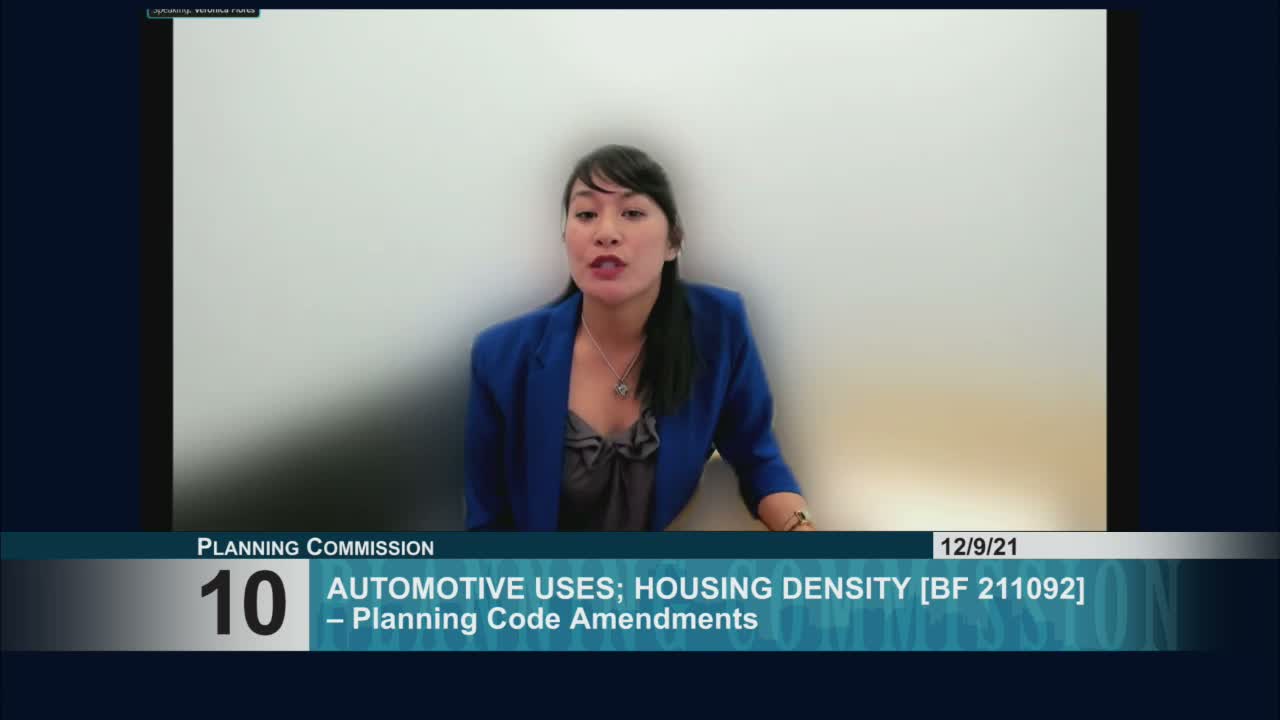
Why it matters: The department framed the proposal as a targeted way to convert car‑centric parcels into housing and to advance the city’s transit‑first and climate goals. Veronica Flores, Planning Department staff, told commissioners the ordinance “moves the city away from auto‑centric uses and also increases our housing supply.” Supporters said the measure could streamline production of homes on parcels that currently sit underused.
Supporters, including SPUR, Housing Action Coalition and neighborhood advocates, told commissioners the rule change would speed housing production while improving walkability. "Auto‑centric lots should be the easiest lots in the city to build housing on," one caller said during the public comment period.
Opponents and concerns: Speakers — and several commissioners in questions — urged stronger protections for industrial and production (PDR) jobs, and for legacy businesses and employees that rely on automotive and light‑industrial uses. Commissioner Moore and Commissioner Imperial voted no, warning the ordinance could displace small businesses and PDR workers and that the city needs clearer protections and an implementation plan.
Added conditions: To respond to concerns, the commission required annual monitoring of conversions (to be reported through existing housing inventory reports), directed staff to conduct outreach to affected businesses and legacy applicants, and asked staff to consider how to track remaining gas stations and service infrastructure. Commissioner Tanner, who moved the staff recommendation with those additions, said the motion bundled changes the commission had discussed and would provide clearer guidance to the Board of Supervisors.
What happens next: The commission’s action is a recommendation; the mayor’s substitute ordinance and any final amendments will go to the Board of Supervisors for legislative consideration. The commission and staff said recent amendments to the inclusionary housing rules and planned code changes will provide additional post‑approval milestones to reduce the risks commissioners flagged.
Commission vote: 5 in favor, 2 opposed (Commissioners Imperial and Moore). The commission recorded the motion to approve staff's recommendation with the added monitoring and outreach provisions.
The ordinance, sponsored by the mayor, would remove a conditional‑use requirement and provide density exceptions for certain auto‑oriented sites, allowing, for example, up to four units in RH zoning and form‑based density in other districts. Planning staff recommended several modifications, including allowing lots whose last legal use was automotive to qualify and shortening the legacy‑business lookback from 10 years to four.
Why it matters: The department framed the proposal as a targeted way to convert car‑centric parcels into housing and to advance the city’s transit‑first and climate goals. Veronica Flores, Planning Department staff, told commissioners the ordinance “moves the city away from auto‑centric uses and also increases our housing supply.” Supporters said the measure could streamline production of homes on parcels that currently sit underused.
Supporters, including SPUR, Housing Action Coalition and neighborhood advocates, told commissioners the rule change would speed housing production while improving walkability. "Auto‑centric lots should be the easiest lots in the city to build housing on," one caller said during the public comment period.
Opponents and concerns: Speakers — and several commissioners in questions — urged stronger protections for industrial and production (PDR) jobs, and for legacy businesses and employees that rely on automotive and light‑industrial uses. Commissioner Moore and Commissioner Imperial voted no, warning the ordinance could displace small businesses and PDR workers and that the city needs clearer protections and an implementation plan.
Added conditions: To respond to concerns, the commission required annual monitoring of conversions (to be reported through existing housing inventory reports), directed staff to conduct outreach to affected businesses and legacy applicants, and asked staff to consider how to track remaining gas stations and service infrastructure. Commissioner Tanner, who moved the staff recommendation with those additions, said the motion bundled changes the commission had discussed and would provide clearer guidance to the Board of Supervisors.
What happens next: The commission’s action is a recommendation; the mayor’s substitute ordinance and any final amendments will go to the Board of Supervisors for legislative consideration. The commission and staff said recent amendments to the inclusionary housing rules and planned code changes will provide additional post‑approval milestones to reduce the risks commissioners flagged.
Commission vote: 5 in favor, 2 opposed (Commissioners Imperial and Moore). The commission recorded the motion to approve staff's recommendation with the added monitoring and outreach provisions.
View the Full Meeting & All Its Details
This article offers just a summary. Unlock complete video, transcripts, and insights as a Founder Member.
✓
Watch full, unedited meeting videos
✓
Search every word spoken in unlimited transcripts
✓
AI summaries & real-time alerts (all government levels)
✓
Permanent access to expanding government content
30-day money-back guarantee
