Planning commission reviews draft EIR for Ocean Beach adaptation; staff flags unavoidable traffic and habitat impacts
January 06, 2022 | San Francisco City, San Francisco County, California
This article was created by AI summarizing key points discussed. AI makes mistakes, so for full details and context, please refer to the video of the full meeting. Please report any errors so we can fix them. Report an error »
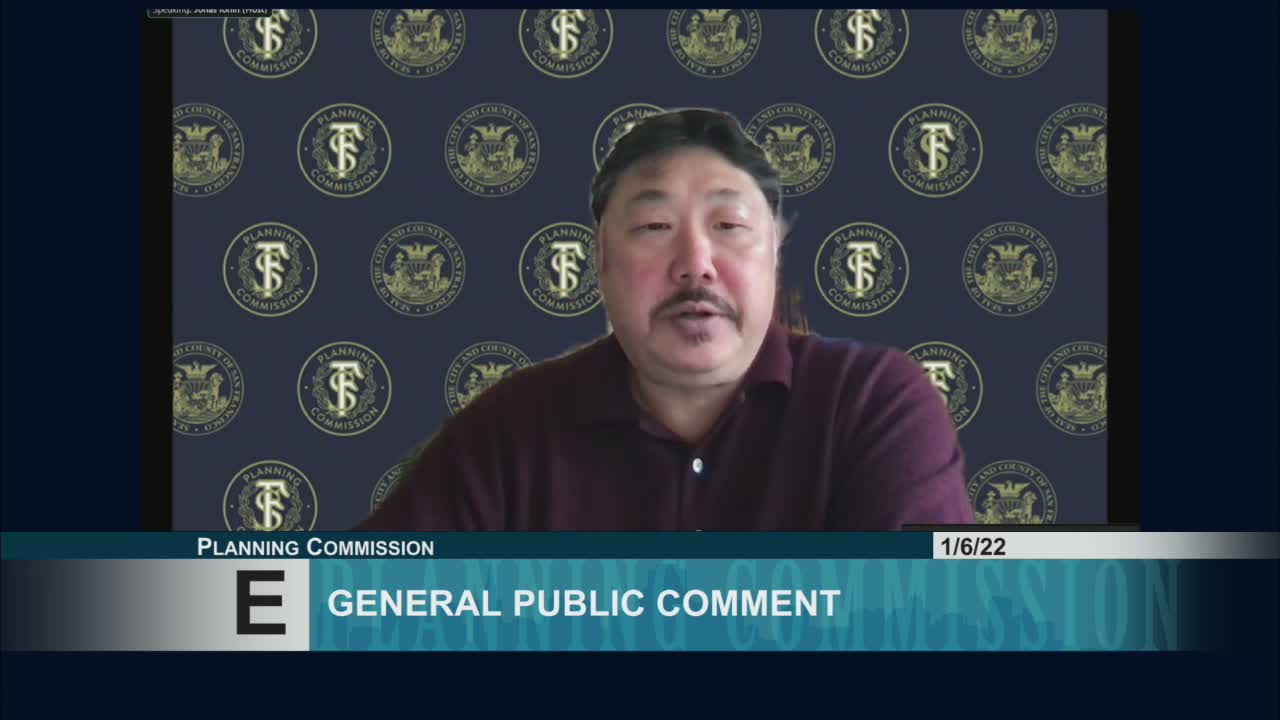
Planning department staff on Jan. 6 presented the draft Environmental Impact Report (EIR) for the SFPUC’s Ocean Beach Climate Change Adaptation Project and asked the Planning Commission to comment on the document’s adequacy and accuracy under the California Environmental Quality Act (CEQA). Julie Moore, the department’s environmental coordinator for the project, said no approval was requested at the meeting and that written comments will be accepted through 5 p.m. on Jan. 24, 2022.
The draft EIR describes a multi‑agency strategy along roughly one mile of South Ocean Beach, from Sloat Boulevard south to the Fort Funston bluffs. Major components include managed retreat in places, long‑term beach nourishment, removal of rock and rubble revetments, construction of a buried wall to protect wastewater infrastructure (including the Lake Merced Tunnel), removal of some pavement, and a multi‑use trail with plazas, restrooms and coastal access parking. The project would permanently close the Great Highway between Sloat and Skyline Boulevards to public vehicular traffic while retaining a service road for SFPUC facilities, the presentation said.
The draft EIR identified several impacts the department regarded as "significant and unavoidable." On transportation, it estimated the permanent closure south of Slope Boulevard would shift traffic onto Sloat and Skyline Boulevards, adding about a half‑mile per diverted trip and roughly 2,500,000 vehicle miles traveled (VMT) per year—above the planning department’s significance threshold of 2,000,000 VMT per year. Staff told commissioners it had not identified a feasible mitigation package that would eliminate that threshold exceedance.
On noise, staff said the traffic diversion would raise roadway noise on portions of Sloat and Skyline Boulevards and that mitigation options (speed limits, signals, redesign) carry implementation uncertainty. On biological resources, the EIR said removal of approximately 500 feet of bluff habitat would affect the Fort Funston bank‑swallow colony, a state‑listed species, and concluded there is no known feasible mitigation to replace or fully compensate for the lost local breeding habitat.
Moore outlined four alternatives analyzed in the draft EIR: no project; an increased beach‑nourishment approach that would place about five times more sand than the project but still leave some infrastructure vulnerable; a conventional seawall alternative that would require roughly three times more sand placement; and an inland infrastructure alternative that would abandon the Lake Merced Tunnel and place wastewater infrastructure inland beneath existing roads. The alternatives, staff said, present different tradeoffs between habitat protection, VMT/noise impacts and long‑term infrastructure vulnerability.
Public commenters raised several themes during the hearing. Paul Patterson, a resident near Slope and Skyline, said his neighborhood could not absorb diverted traffic and urged traffic‑calming measures such as a roundabout if diversions occur. Michael Cotton questioned the VMT calculation and said the draft EIR’s estimate of 2,500,000 VMT may be understated; he also asked that the EIR reconcile increased VMT with potential greenhouse‑gas impacts. Eileen Bogan of the Coalition for San Francisco Neighborhoods urged the commission to consider regional drivers of erosion, including commercial sand mining in San Francisco Bay and related permitting by the State Lands Commission and BCDC.
Several commissioners praised the EIR’s alternatives analysis and thoroughness but asked staff to clarify figures, add labeling and explain mitigation triggers (for example the dBA thresholds cited under noise mitigation) and to provide more detail on the bank swallow’s natural history and habitat location. Staff said written public comments would be responded to in a responses‑to‑comments document and that staff are seeking input only on the adequacy and accuracy of the draft EIR at this stage.
The draft EIR was published Dec. 8, 2021, and the department will accept written comments sent to cpc.oceanbeachEIR@sfgov.org or mailed to Julie Moore, 49 South Van Ness Avenue, Suite 1400, San Francisco, CA 94103, by 5 p.m. on Jan. 24, 2022.
What’s next: staff will compile public comments, prepare written responses and consider revisions to the draft EIR before later decisions about project approvals and permits by the responsible agencies.
The draft EIR describes a multi‑agency strategy along roughly one mile of South Ocean Beach, from Sloat Boulevard south to the Fort Funston bluffs. Major components include managed retreat in places, long‑term beach nourishment, removal of rock and rubble revetments, construction of a buried wall to protect wastewater infrastructure (including the Lake Merced Tunnel), removal of some pavement, and a multi‑use trail with plazas, restrooms and coastal access parking. The project would permanently close the Great Highway between Sloat and Skyline Boulevards to public vehicular traffic while retaining a service road for SFPUC facilities, the presentation said.
The draft EIR identified several impacts the department regarded as "significant and unavoidable." On transportation, it estimated the permanent closure south of Slope Boulevard would shift traffic onto Sloat and Skyline Boulevards, adding about a half‑mile per diverted trip and roughly 2,500,000 vehicle miles traveled (VMT) per year—above the planning department’s significance threshold of 2,000,000 VMT per year. Staff told commissioners it had not identified a feasible mitigation package that would eliminate that threshold exceedance.
On noise, staff said the traffic diversion would raise roadway noise on portions of Sloat and Skyline Boulevards and that mitigation options (speed limits, signals, redesign) carry implementation uncertainty. On biological resources, the EIR said removal of approximately 500 feet of bluff habitat would affect the Fort Funston bank‑swallow colony, a state‑listed species, and concluded there is no known feasible mitigation to replace or fully compensate for the lost local breeding habitat.
Moore outlined four alternatives analyzed in the draft EIR: no project; an increased beach‑nourishment approach that would place about five times more sand than the project but still leave some infrastructure vulnerable; a conventional seawall alternative that would require roughly three times more sand placement; and an inland infrastructure alternative that would abandon the Lake Merced Tunnel and place wastewater infrastructure inland beneath existing roads. The alternatives, staff said, present different tradeoffs between habitat protection, VMT/noise impacts and long‑term infrastructure vulnerability.
Public commenters raised several themes during the hearing. Paul Patterson, a resident near Slope and Skyline, said his neighborhood could not absorb diverted traffic and urged traffic‑calming measures such as a roundabout if diversions occur. Michael Cotton questioned the VMT calculation and said the draft EIR’s estimate of 2,500,000 VMT may be understated; he also asked that the EIR reconcile increased VMT with potential greenhouse‑gas impacts. Eileen Bogan of the Coalition for San Francisco Neighborhoods urged the commission to consider regional drivers of erosion, including commercial sand mining in San Francisco Bay and related permitting by the State Lands Commission and BCDC.
Several commissioners praised the EIR’s alternatives analysis and thoroughness but asked staff to clarify figures, add labeling and explain mitigation triggers (for example the dBA thresholds cited under noise mitigation) and to provide more detail on the bank swallow’s natural history and habitat location. Staff said written public comments would be responded to in a responses‑to‑comments document and that staff are seeking input only on the adequacy and accuracy of the draft EIR at this stage.
The draft EIR was published Dec. 8, 2021, and the department will accept written comments sent to cpc.oceanbeachEIR@sfgov.org or mailed to Julie Moore, 49 South Van Ness Avenue, Suite 1400, San Francisco, CA 94103, by 5 p.m. on Jan. 24, 2022.
What’s next: staff will compile public comments, prepare written responses and consider revisions to the draft EIR before later decisions about project approvals and permits by the responsible agencies.
Don't Miss a Word: See the Full Meeting!
Go beyond summaries. Unlock every video, transcript, and key insight with a Founder Membership.
✓
Get instant access to full meeting videos
✓
Search and clip any phrase from complete transcripts
✓
Receive AI-powered summaries & custom alerts
✓
Enjoy lifetime, unrestricted access to government data
30-day money-back guarantee
