Commission backs zoning change to allow adult sexual venues in LGBTQ cultural districts
April 07, 2022 | San Francisco City, San Francisco County, California
This article was created by AI summarizing key points discussed. AI makes mistakes, so for full details and context, please refer to the video of the full meeting. Please report any errors so we can fix them. Report an error »
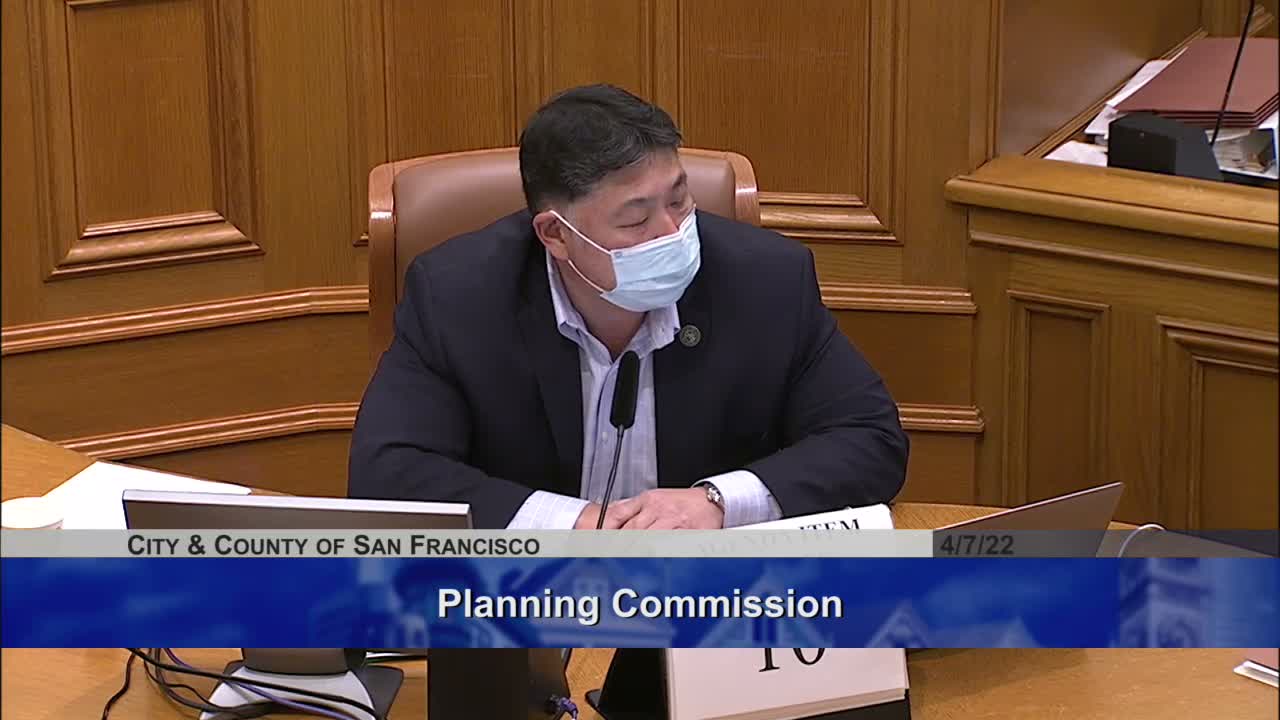
The Planning Commission on April 7 unanimously approved a planning code amendment that would create a specific land‑use category for adult sexual venues (described in the ordinance as businesses operating under Health Code Article 47 standards) and principally permit them in neighborhoods historically associated with San Francisco’s LGBTQ communities.
Supervisor Mandelmann’s office presented the ordinance as a corrective to zoning rules that, staff said, continued to carry the stigma of the AIDS‑era restrictions. The proposal defines an "adult sexual venue" as a retail sales and services use operating under the health department’s minimum standards (age verification, no alcohol or patron intoxication, provision of safer‑sex supplies and education) and allows such venues principally in the Castro, Upper Market corridor, parts of Western SoMa and specified blocks of the Tenderloin and the Compton Transgender Cultural District. Where adult sexual venues remain conditionally permitted, the ordinance would allow limited late‑night operation (2 a.m.–6 a.m.) via a conditional use permit.
Staff recommended several technical amendments — including expanding the RC‑4 zoning area to cover the Transgender Cultural District in full, clarifying that bathhouse facilities (pools, tubs, steam rooms) and limited live performance permits may be included, and correcting a zoning table for the Chinatown community business district. Commissioners asked procedural questions about permitting, accessory uses and neighborhood notice; staff explained that principally permitted uses may proceed without a public hearing if they meet code standards but that block‑notice options and appeals remain available.
Supporters included legacy businesses, cultural district representatives and the Golden Gate Business Association, who described the change as an opportunity to restore culturally important spaces, reduce stigma, improve public‑health education and support queer‑owned small businesses during economic recovery.
The commission approved the ordinance as amended and forwarded it with staff’s technical modifications for implementation steps, including drafting the final ordinance language and making the recommended zoning table corrections.
Next steps: staff will incorporate technical edits and process the ordinance for subsequent steps required to effectuate the planning code change and to coordinate with the Department of Public Health on any necessary operational rules.
Supervisor Mandelmann’s office presented the ordinance as a corrective to zoning rules that, staff said, continued to carry the stigma of the AIDS‑era restrictions. The proposal defines an "adult sexual venue" as a retail sales and services use operating under the health department’s minimum standards (age verification, no alcohol or patron intoxication, provision of safer‑sex supplies and education) and allows such venues principally in the Castro, Upper Market corridor, parts of Western SoMa and specified blocks of the Tenderloin and the Compton Transgender Cultural District. Where adult sexual venues remain conditionally permitted, the ordinance would allow limited late‑night operation (2 a.m.–6 a.m.) via a conditional use permit.
Staff recommended several technical amendments — including expanding the RC‑4 zoning area to cover the Transgender Cultural District in full, clarifying that bathhouse facilities (pools, tubs, steam rooms) and limited live performance permits may be included, and correcting a zoning table for the Chinatown community business district. Commissioners asked procedural questions about permitting, accessory uses and neighborhood notice; staff explained that principally permitted uses may proceed without a public hearing if they meet code standards but that block‑notice options and appeals remain available.
Supporters included legacy businesses, cultural district representatives and the Golden Gate Business Association, who described the change as an opportunity to restore culturally important spaces, reduce stigma, improve public‑health education and support queer‑owned small businesses during economic recovery.
The commission approved the ordinance as amended and forwarded it with staff’s technical modifications for implementation steps, including drafting the final ordinance language and making the recommended zoning table corrections.
Next steps: staff will incorporate technical edits and process the ordinance for subsequent steps required to effectuate the planning code change and to coordinate with the Department of Public Health on any necessary operational rules.
View the Full Meeting & All Its Details
This article offers just a summary. Unlock complete video, transcripts, and insights as a Founder Member.
✓
Watch full, unedited meeting videos
✓
Search every word spoken in unlimited transcripts
✓
AI summaries & real-time alerts (all government levels)
✓
Permanent access to expanding government content
30-day money-back guarantee
