Planning Department reports 4,633 housing units added in 2021 but San Francisco still falls short of RHNA targets
April 28, 2022 | San Francisco City, San Francisco County, California
This article was created by AI summarizing key points discussed. AI makes mistakes, so for full details and context, please refer to the video of the full meeting. Please report any errors so we can fix them. Report an error »
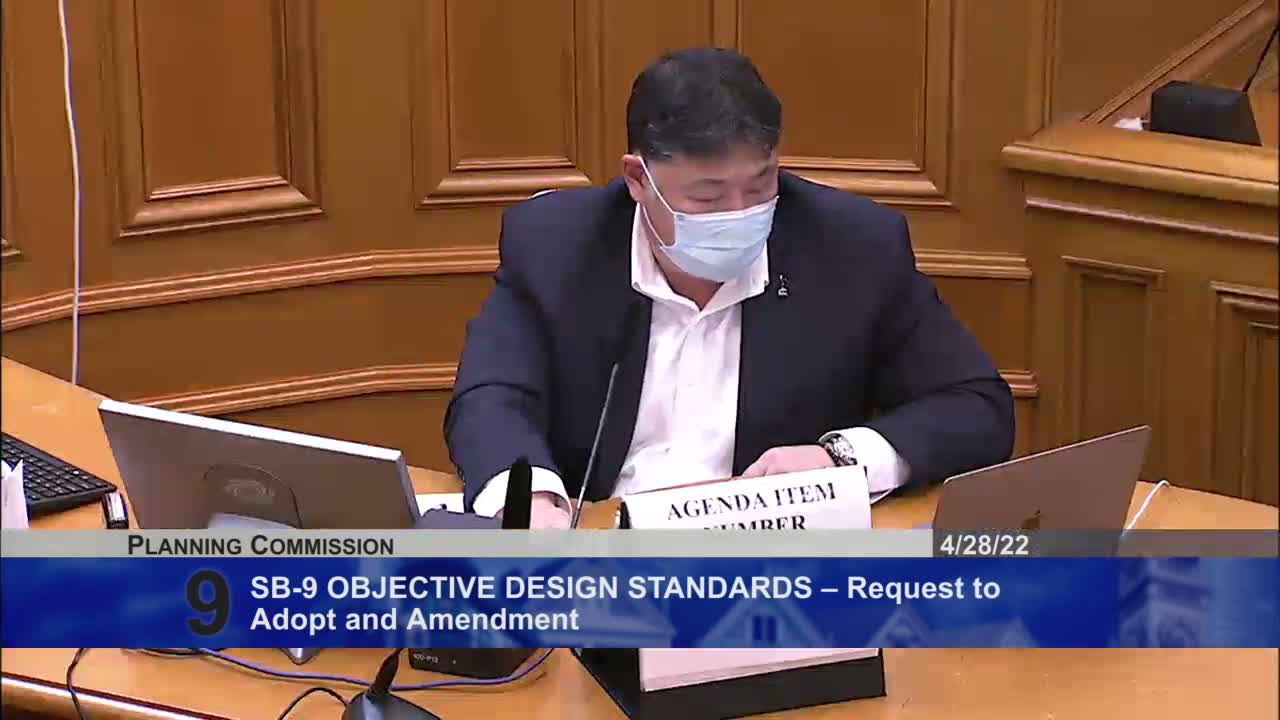
Planning Department senior housing and land-use planner James Pappas presented the 2021 Housing Inventory and Housing Balance Report to the Planning Commission on April 28. The report showed 4,633 units added in 2021 (one of the three highest annual totals in two decades), a notable increase in affordable production (approximately 1,500 units, more than double the prior year), and growth driven largely by several large multifamily projects.
Pappas said most new housing continued to be built in buildings over 20 units, though ADUs and small-multifamily projects contributed meaningfully. He warned that despite the production spike the city remains below RHNA targets for very low and low income housing and that production is geographically concentrated in three planning districts: Mission, Downtown and South of Market.
Commissioners pressed staff on how to better track the development pipeline, including projects that have been entitled but not permitted, permitted but not yet under construction, and changes to entitlements. Staff said the quarterly pipeline report provides project-by-project tracking and offered to augment future reports with data on entitlement extensions and projects that remain entitled but dormant. Commissioners asked about mechanisms to understand how major multi-phase projects (e.g., Park Merced, Treasure Island, Pier 70) are progressing relative to entitlements and where delays might be occurring.
The presentation highlighted the policy challenge: the city produced a relatively high number of units in 2021 but remains off track on RHNA targets for lower-income categories and must consider zoning, funding and process changes to support broader production across neighborhoods.
No formal action was required; staff will consider requested pipeline and extension-tracking enhancements for future reports.
Pappas said most new housing continued to be built in buildings over 20 units, though ADUs and small-multifamily projects contributed meaningfully. He warned that despite the production spike the city remains below RHNA targets for very low and low income housing and that production is geographically concentrated in three planning districts: Mission, Downtown and South of Market.
Commissioners pressed staff on how to better track the development pipeline, including projects that have been entitled but not permitted, permitted but not yet under construction, and changes to entitlements. Staff said the quarterly pipeline report provides project-by-project tracking and offered to augment future reports with data on entitlement extensions and projects that remain entitled but dormant. Commissioners asked about mechanisms to understand how major multi-phase projects (e.g., Park Merced, Treasure Island, Pier 70) are progressing relative to entitlements and where delays might be occurring.
The presentation highlighted the policy challenge: the city produced a relatively high number of units in 2021 but remains off track on RHNA targets for lower-income categories and must consider zoning, funding and process changes to support broader production across neighborhoods.
No formal action was required; staff will consider requested pipeline and extension-tracking enhancements for future reports.
View the Full Meeting & All Its Details
This article offers just a summary. Unlock complete video, transcripts, and insights as a Founder Member.
✓
Watch full, unedited meeting videos
✓
Search every word spoken in unlimited transcripts
✓
AI summaries & real-time alerts (all government levels)
✓
Permanent access to expanding government content
30-day money-back guarantee
