Planning Commission approves code change to let MOHCD issue violations, create enforcement fund
May 26, 2022 | San Francisco City, San Francisco County, California
This article was created by AI summarizing key points discussed. AI makes mistakes, so for full details and context, please refer to the video of the full meeting. Please report any errors so we can fix them. Report an error »
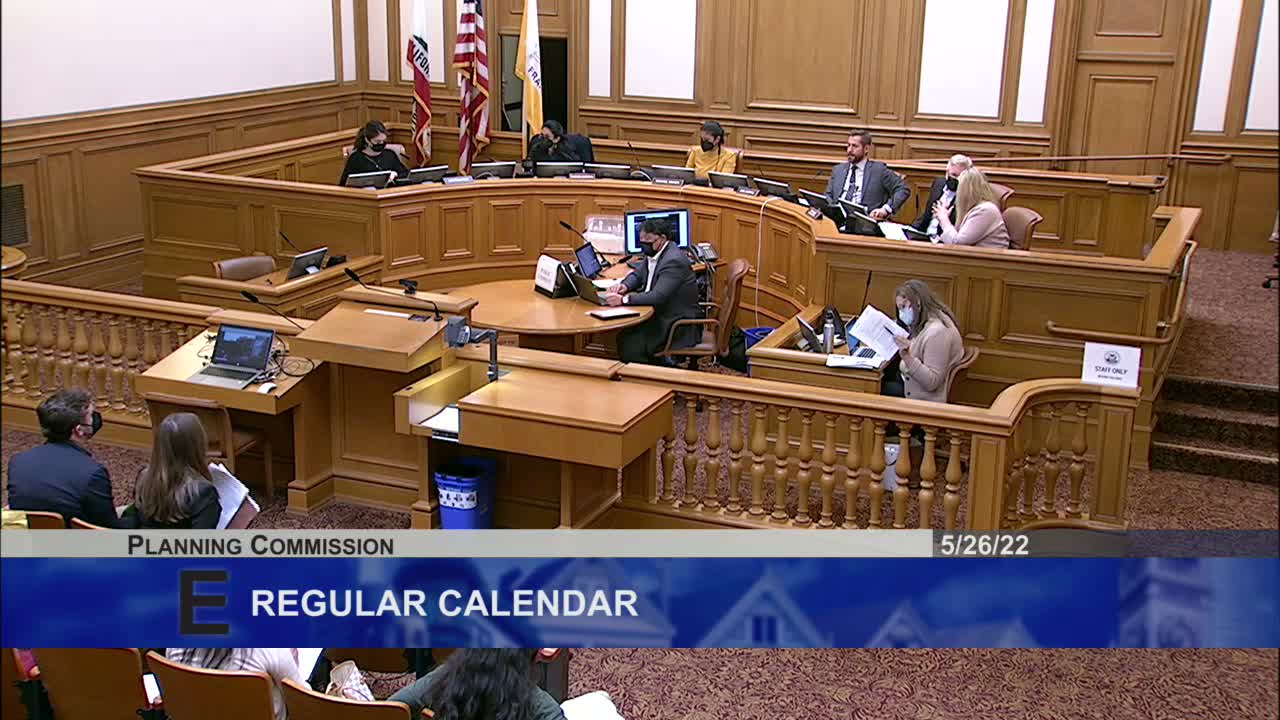
The San Francisco Planning Commission on May 26 recommended an amendment to the Planning Code that would allow the Mayor's Office of Housing and Community Development (MOHCD) to issue notices of violation in certain affordable-housing enforcement cases, establish an Affordable Housing Enforcement Fund to receive penalties and time-and-materials payments, and require a memorandum of understanding (MOU) between Planning and MOHCD to define lead-agency roles.
Supporters and staff said the change is procedural, intended to remove duplication and shorten enforcement timelines in cases such as illegal subletting of Below-Market-Rate (BMR) units. "This ordinance will streamline current enforcement processes and make the distribution of penalties more equitable between the two departments," Planning staff Audrey Maloney said. Sheila Nicholas of MOHCD told the commission the office currently lacks the administrative authority to issue the formal notice that starts daily administrative penalties and that the proposed change would let MOHCD bill for time-and-materials and recover penalties it enforces.
MOHCD compliance manager Jackie So told commissioners that the majority of MOHCD enforcement cases involve owners illegally renting out BMR units and that allowing MOHCD to issue notices of violation in those occupancy cases would let the agency act more quickly. Zoning Administrator Corey Teague described the usual sequence of enforcement notices (notice of complaint -> notice of enforcement -> notice of violation) and emphasized that a notice of violation is appealable and that Planning typically drafts the formal NOV because it must set out the legal basis for penalties.
Public commenters generally supported faster enforcement but urged safeguards. John Avalos of the Council of Community Housing Organizations said he backed streamlining but asked that the MOU and the proposed fund be designed so the money is used only for enforcement-related costs unless changed by ordinance. Sue Hesser and other speakers urged caution and asked for more time to review the details, pointing to recent DBI-related controversies and broader BMR concerns.
Commissioners pressed staff on several points, including whether the change duplicates existing functions and how MOHCD will staff enforcement work. Staff and MOHCD said the fund (called the Affordable Housing Enforcement Fund in the draft ordinance) is written into the administrative code with a section specifying permissible uses and that the intention is to support enforcement work (dedicated personnel, legal costs and time-and-materials recovery). They also said planning and MOHCD already collaborate closely on many cases and that the ordinance would formalize a legal framework to match that practice.
Commissioner Diamond moved to approve the ordinance and asked that staff provide the commission with a near-final draft of the MOU as an informational item. The motion passed 5-2; Commissioners Imperial and Moore voted no. Staff said a 95% draft of the MOU could be circulated to commissioners within about two weeks and that the ordinance will be forwarded to the Board of Supervisors for further consideration. The sponsor's Land Use Committee presentation is scheduled June 6; the Board's June 16 deadline was noted during deliberations.
The commission's action was procedural and limited to recommending the Planning Code amendment and requesting the MOU be shared with the commission as an informational item; adoption of the ordinance and final MOU terms will be decided by the Board of Supervisors and subsequent implementing documents.
Supporters and staff said the change is procedural, intended to remove duplication and shorten enforcement timelines in cases such as illegal subletting of Below-Market-Rate (BMR) units. "This ordinance will streamline current enforcement processes and make the distribution of penalties more equitable between the two departments," Planning staff Audrey Maloney said. Sheila Nicholas of MOHCD told the commission the office currently lacks the administrative authority to issue the formal notice that starts daily administrative penalties and that the proposed change would let MOHCD bill for time-and-materials and recover penalties it enforces.
MOHCD compliance manager Jackie So told commissioners that the majority of MOHCD enforcement cases involve owners illegally renting out BMR units and that allowing MOHCD to issue notices of violation in those occupancy cases would let the agency act more quickly. Zoning Administrator Corey Teague described the usual sequence of enforcement notices (notice of complaint -> notice of enforcement -> notice of violation) and emphasized that a notice of violation is appealable and that Planning typically drafts the formal NOV because it must set out the legal basis for penalties.
Public commenters generally supported faster enforcement but urged safeguards. John Avalos of the Council of Community Housing Organizations said he backed streamlining but asked that the MOU and the proposed fund be designed so the money is used only for enforcement-related costs unless changed by ordinance. Sue Hesser and other speakers urged caution and asked for more time to review the details, pointing to recent DBI-related controversies and broader BMR concerns.
Commissioners pressed staff on several points, including whether the change duplicates existing functions and how MOHCD will staff enforcement work. Staff and MOHCD said the fund (called the Affordable Housing Enforcement Fund in the draft ordinance) is written into the administrative code with a section specifying permissible uses and that the intention is to support enforcement work (dedicated personnel, legal costs and time-and-materials recovery). They also said planning and MOHCD already collaborate closely on many cases and that the ordinance would formalize a legal framework to match that practice.
Commissioner Diamond moved to approve the ordinance and asked that staff provide the commission with a near-final draft of the MOU as an informational item. The motion passed 5-2; Commissioners Imperial and Moore voted no. Staff said a 95% draft of the MOU could be circulated to commissioners within about two weeks and that the ordinance will be forwarded to the Board of Supervisors for further consideration. The sponsor's Land Use Committee presentation is scheduled June 6; the Board's June 16 deadline was noted during deliberations.
The commission's action was procedural and limited to recommending the Planning Code amendment and requesting the MOU be shared with the commission as an informational item; adoption of the ordinance and final MOU terms will be decided by the Board of Supervisors and subsequent implementing documents.
Don't Miss a Word: See the Full Meeting!
Go beyond summaries. Unlock every video, transcript, and key insight with a Founder Membership.
✓
Get instant access to full meeting videos
✓
Search and clip any phrase from complete transcripts
✓
Receive AI-powered summaries & custom alerts
✓
Enjoy lifetime, unrestricted access to government data
30-day money-back guarantee
