Planning staff present study linking ride‑hail activity to land‑use and curb management; commission to fold findings into transportation element
June 30, 2022 | San Francisco City, San Francisco County, California
This article was created by AI summarizing key points discussed. AI makes mistakes, so for full details and context, please refer to the video of the full meeting. Please report any errors so we can fix them. Report an error »
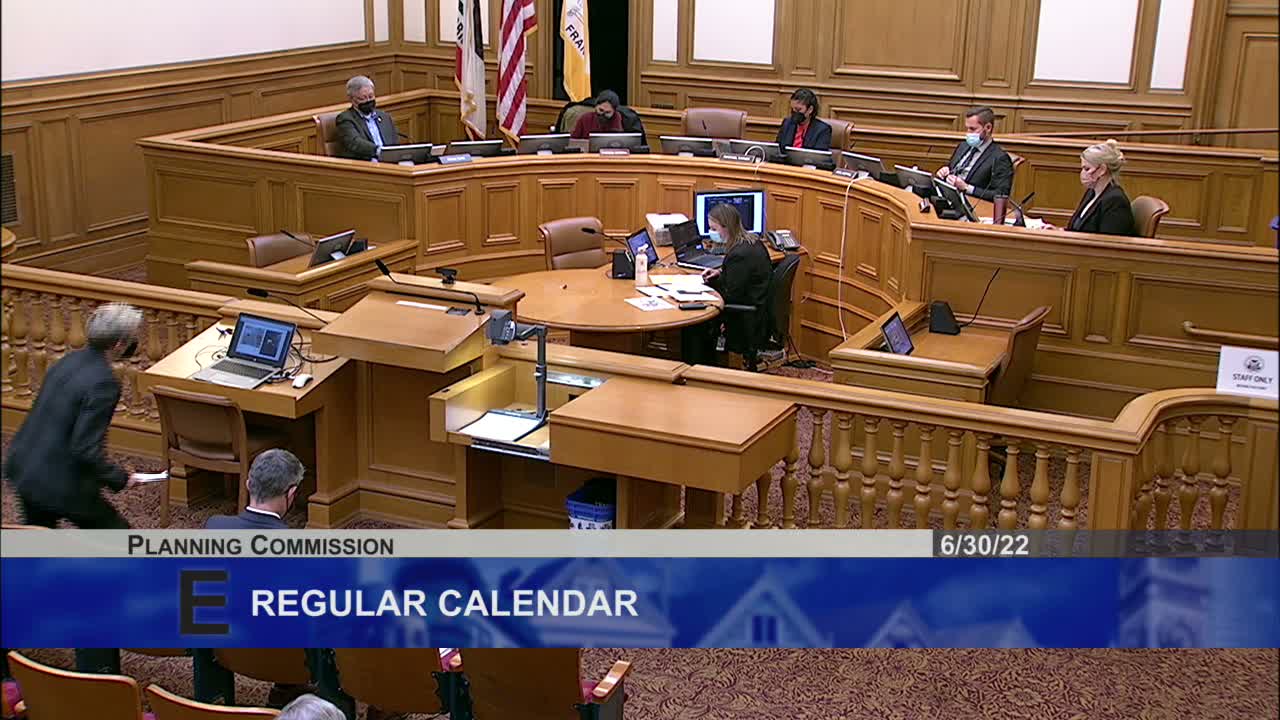
San Francisco — Planning Department staff on June 30 presented a study to the Planning Commission concluding that transportation network company (TNC) activity — commonly called ride‑hail services — is concentrated in denser, visitor‑ and retail‑oriented parts of the city and that those patterns have implications for land‑use regulation, curb management and environmental review.
"You can expect more TNC activity in places that have visitor, retail, residential and cultural uses," said Tam Tran, senior transportation planner, during a department briefing. She told commissioners the department found higher pickup and drop‑off activity in the northeastern quarter of the city and that built‑environment factors (lower car ownership, high parking costs and higher density) are associated with greater TNC use.
The report summarized four questions staff were asked by the commission and public. It found: TNC activity correlates with certain land‑uses and density; features beyond land use (household car ownership and parking costs) help predict TNC activity; some new land‑use categories — for vehicle storage, maintenance and charging — do not fit neatly into existing code definitions; and developers report plans to build less off‑street parking as they factor changing travel behavior into design.
The study relies in part on data the Transportation Authority collected in 2016 and a 2018 congestion analysis showing TNCs contributed a large share of the increase in vehicle delay between 2010 and 2016. "They contributed about 50% of the increase and about a quarter of the total delay," Drew Cooper of the Transportation Authority told the commission when staff asked for clarification about the congestion figures.
Public commenters urged the department to broaden the work. Jim Morshow of Hayes Valley said the city should codify reductions in parking where developers now say it is unnecessary, and urged a parallel study of commercial delivery services (Uber Eats, DoorDash, Instacart) that also use curb space and private vehicles. Others asked the department to put a stronger emphasis on the city's Transit First policy and on equity for residents without smartphones.
Commissioners probed the jurisdictional limits of land use tools, noting many operational enforcement issues (double‑parking, citation authority) fall to SFMTA and public‑safety agencies. Staff said the department will fold the TNC findings into the forthcoming transportation element update, work with SFMTA and SFCTA on curb‑management strategies, and develop plan‑code controls for emerging mobility and autonomous‑vehicle uses where appropriate.
No formal action was requested or taken on the TNC study at the June 30 meeting; commissioners asked staff to return with draft policies for the transportation element in 2023 (staff estimated "next spring or summer") and to continue interagency coordination on data and curb management.
"You can expect more TNC activity in places that have visitor, retail, residential and cultural uses," said Tam Tran, senior transportation planner, during a department briefing. She told commissioners the department found higher pickup and drop‑off activity in the northeastern quarter of the city and that built‑environment factors (lower car ownership, high parking costs and higher density) are associated with greater TNC use.
The report summarized four questions staff were asked by the commission and public. It found: TNC activity correlates with certain land‑uses and density; features beyond land use (household car ownership and parking costs) help predict TNC activity; some new land‑use categories — for vehicle storage, maintenance and charging — do not fit neatly into existing code definitions; and developers report plans to build less off‑street parking as they factor changing travel behavior into design.
The study relies in part on data the Transportation Authority collected in 2016 and a 2018 congestion analysis showing TNCs contributed a large share of the increase in vehicle delay between 2010 and 2016. "They contributed about 50% of the increase and about a quarter of the total delay," Drew Cooper of the Transportation Authority told the commission when staff asked for clarification about the congestion figures.
Public commenters urged the department to broaden the work. Jim Morshow of Hayes Valley said the city should codify reductions in parking where developers now say it is unnecessary, and urged a parallel study of commercial delivery services (Uber Eats, DoorDash, Instacart) that also use curb space and private vehicles. Others asked the department to put a stronger emphasis on the city's Transit First policy and on equity for residents without smartphones.
Commissioners probed the jurisdictional limits of land use tools, noting many operational enforcement issues (double‑parking, citation authority) fall to SFMTA and public‑safety agencies. Staff said the department will fold the TNC findings into the forthcoming transportation element update, work with SFMTA and SFCTA on curb‑management strategies, and develop plan‑code controls for emerging mobility and autonomous‑vehicle uses where appropriate.
No formal action was requested or taken on the TNC study at the June 30 meeting; commissioners asked staff to return with draft policies for the transportation element in 2023 (staff estimated "next spring or summer") and to continue interagency coordination on data and curb management.
View the Full Meeting & All Its Details
This article offers just a summary. Unlock complete video, transcripts, and insights as a Founder Member.
✓
Watch full, unedited meeting videos
✓
Search every word spoken in unlimited transcripts
✓
AI summaries & real-time alerts (all government levels)
✓
Permanent access to expanding government content
30-day money-back guarantee
