Planning Commission backs Tenderloin Neon Special Sign District with staff-recommended changes
August 25, 2022 | San Francisco City, San Francisco County, California
This article was created by AI summarizing key points discussed. AI makes mistakes, so for full details and context, please refer to the video of the full meeting. Please report any errors so we can fix them. Report an error »
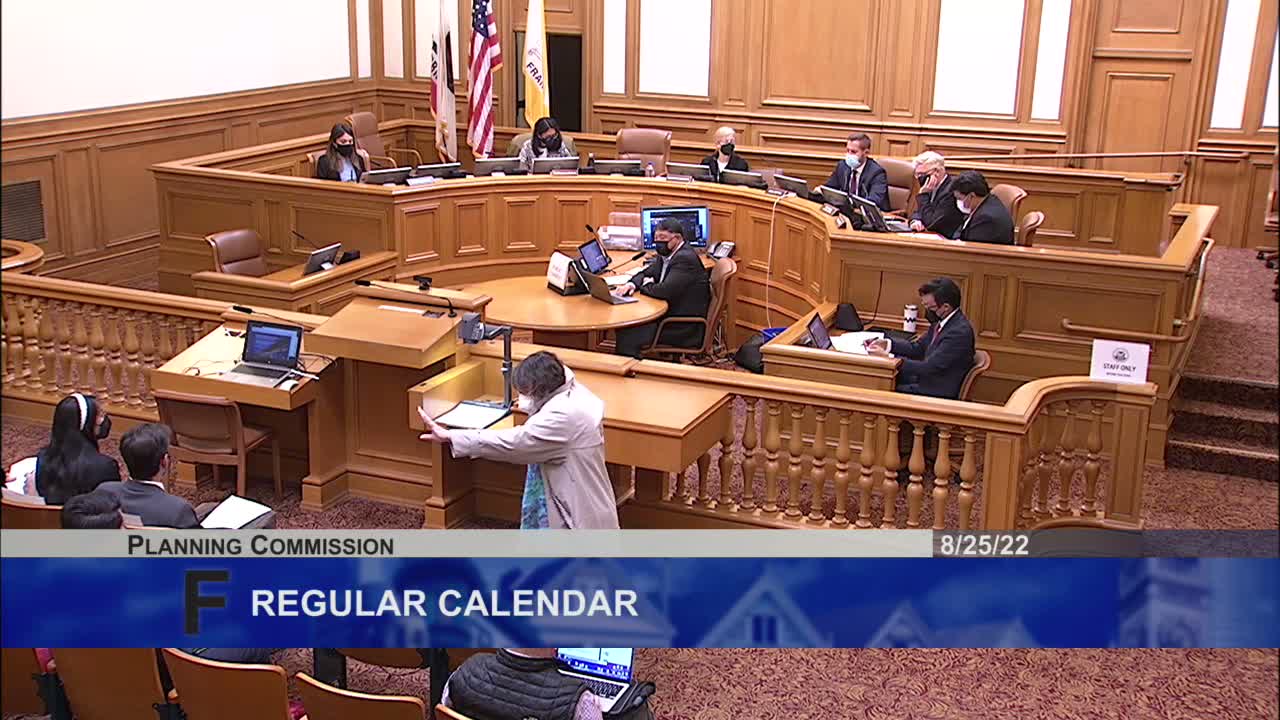
The San Francisco Planning Commission on Aug. 25 voted unanimously to approve a Tenderloin Neon Special Sign District that aims to make it easier to restore historic neon and permit sympathetic new neon signage in the neighborhood.
The ordinance, sponsored by District 5 Supervisor Dean Preston and introduced to the commission by Kyle Smiley, chief of staff for the supervisor, follows the Tenderloin Community Action Plan's recommendation to "restore and encourage more new neon signs in the neighborhood." Smiley said the office worked with the Planning Department, city attorney's office and neighborhood advocates to draft the legislation and plans to introduce substitute language that incorporates staff's recommended modifications.
Planning staff recommended a set of changes to the draft ordinance designed to preserve existing sign allowances and clarify how nonconforming neon can be repaired. Veronica Flores, the department planner presenting the item, recommended striking provisions that would have been more restrictive than current C-4 rules, allowing legal nonconforming neon signs to be removed, refurbished off-site and returned to the property, clarifying projecting/blade sign definitions, and renaming forthcoming guidance as "design standards" to avoid creating new discretionary approvals.
Community supporters framed neon as part of the Tenderloin's identity and a low-cost way to improve lighting and nighttime safety. "Neon signs are a crucial aspect of the Tenderloin's visual identity," said Katie Connery of the Tenderloin Museum, which has been a fiscal sponsor for neighborhood neon work. Randall Homan of San Francisco Neon and preservationists from San Francisco Heritage also urged approval.
Commissioners welcomed the community-driven effort and the staff revisions. Chair Moore asked the ordinance sponsor to adopt the department's suggested edits in a substitute ordinance; Smiley said his office intended to do so. The commission voted 5-0 to approve the ordinance as modified.
What happens next: the sponsor plans to introduce substitute legislation including the corresponding zoning map amendment; staff will return with refined design standards at a later hearing.
The ordinance, sponsored by District 5 Supervisor Dean Preston and introduced to the commission by Kyle Smiley, chief of staff for the supervisor, follows the Tenderloin Community Action Plan's recommendation to "restore and encourage more new neon signs in the neighborhood." Smiley said the office worked with the Planning Department, city attorney's office and neighborhood advocates to draft the legislation and plans to introduce substitute language that incorporates staff's recommended modifications.
Planning staff recommended a set of changes to the draft ordinance designed to preserve existing sign allowances and clarify how nonconforming neon can be repaired. Veronica Flores, the department planner presenting the item, recommended striking provisions that would have been more restrictive than current C-4 rules, allowing legal nonconforming neon signs to be removed, refurbished off-site and returned to the property, clarifying projecting/blade sign definitions, and renaming forthcoming guidance as "design standards" to avoid creating new discretionary approvals.
Community supporters framed neon as part of the Tenderloin's identity and a low-cost way to improve lighting and nighttime safety. "Neon signs are a crucial aspect of the Tenderloin's visual identity," said Katie Connery of the Tenderloin Museum, which has been a fiscal sponsor for neighborhood neon work. Randall Homan of San Francisco Neon and preservationists from San Francisco Heritage also urged approval.
Commissioners welcomed the community-driven effort and the staff revisions. Chair Moore asked the ordinance sponsor to adopt the department's suggested edits in a substitute ordinance; Smiley said his office intended to do so. The commission voted 5-0 to approve the ordinance as modified.
What happens next: the sponsor plans to introduce substitute legislation including the corresponding zoning map amendment; staff will return with refined design standards at a later hearing.
View the Full Meeting & All Its Details
This article offers just a summary. Unlock complete video, transcripts, and insights as a Founder Member.
✓
Watch full, unedited meeting videos
✓
Search every word spoken in unlimited transcripts
✓
AI summaries & real-time alerts (all government levels)
✓
Permanent access to expanding government content
30-day money-back guarantee
