Planning staff outline complaint-based enforcement process and limits of current penalties
January 19, 2023 | San Francisco City, San Francisco County, California
This article was created by AI summarizing key points discussed. AI makes mistakes, so for full details and context, please refer to the video of the full meeting. Please report any errors so we can fix them. Report an error »
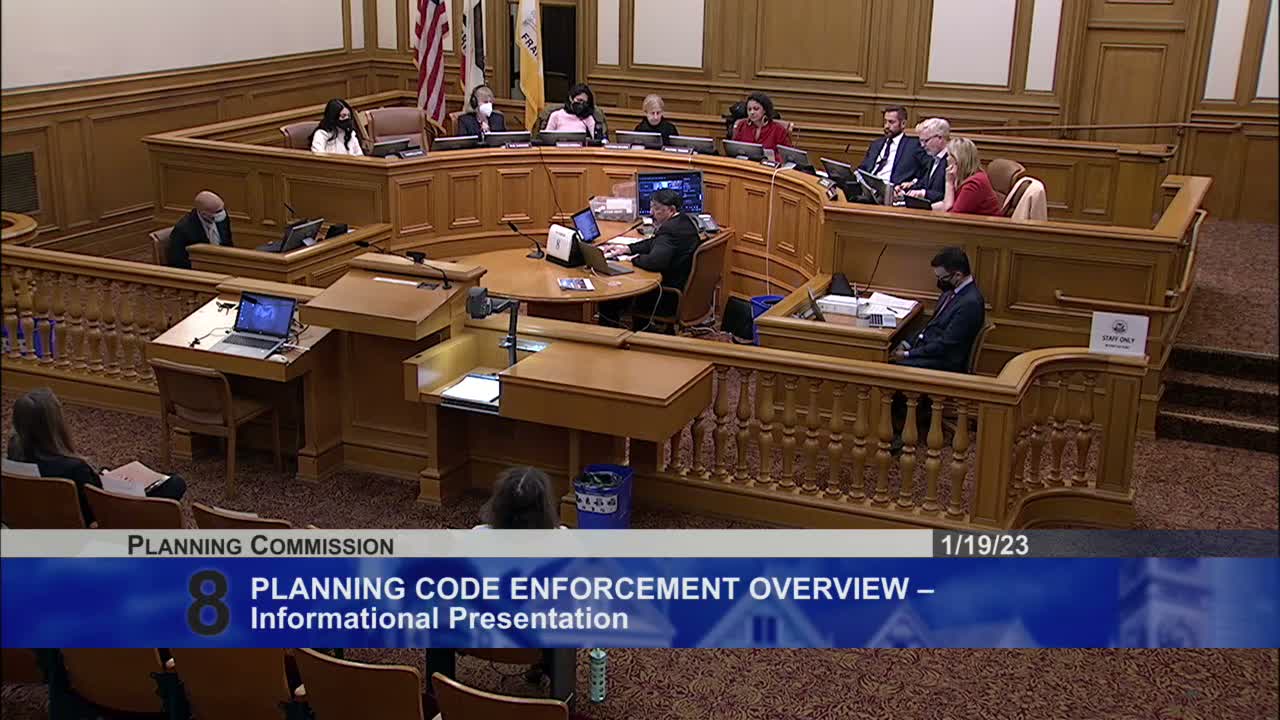
City planning staff on Jan. 19 walked the commission and the public through how the department handles planning-code complaints and enforcement. Kelly Wong, manager of the code-enforcement team, described a complaint-driven workflow that begins with a notice of complaint and can escalate through a notice of enforcement and a notice of violation to appeals and penalties.
Wong said the department typically issues a notice of violation and allows 15 days for the owner to file an appeal or begin abatement; if the owner does not abate, daily penalties can begin, and the current administrative daily penalty can reach $250 per violation. The department currently charges a base staff time-and-materials fee for confirmed enforcement cases of $1,580, and offers payment plans for owners unable to pay immediately.
Wong and zoning administrator Corey Teague explained that the enforcement program is complaint-based and relies on referrals from the Department of Building Inspection (DBI), Public Works and other agencies. Staff are increasingly doing joint site visits with DBI to resolve complex building and planning code overlaps. "We are a complaint-based code enforcement program," Wong said, adding that not every report is a planning violation and that the team frequently refers matters to other agencies.
During public comment, Portside condominium residents and representatives described a decade-long enforcement history around a parking garage that they said remains noncompliant despite multiple notices and litigation efforts. Speakers urged closer coordination with the City Attorney and DBI and stronger remedies for repeat noncompliance. Commissioners pressed staff on whether enforcement should remain complaint-driven or become more proactive, and asked about the department's ability to ensure work meets planning approvals after DBI signs off.
Staff said that some gaps stem from differences in code focus between DBI (building code/life safety) and Planning (land use), and that the department is pursuing cross-training for inspectors and closer interagency referrals. They also noted existing legal paths (referral to the Bureau of Delinquent Revenue or the City Attorney) for recalcitrant owners.
What happens next: The department will continue interagency coordination and provide the commission with updates, and staff said proposed legislation being discussed later in the hearing would provide additional tools for penalty-setting and abatement.
Wong said the department typically issues a notice of violation and allows 15 days for the owner to file an appeal or begin abatement; if the owner does not abate, daily penalties can begin, and the current administrative daily penalty can reach $250 per violation. The department currently charges a base staff time-and-materials fee for confirmed enforcement cases of $1,580, and offers payment plans for owners unable to pay immediately.
Wong and zoning administrator Corey Teague explained that the enforcement program is complaint-based and relies on referrals from the Department of Building Inspection (DBI), Public Works and other agencies. Staff are increasingly doing joint site visits with DBI to resolve complex building and planning code overlaps. "We are a complaint-based code enforcement program," Wong said, adding that not every report is a planning violation and that the team frequently refers matters to other agencies.
During public comment, Portside condominium residents and representatives described a decade-long enforcement history around a parking garage that they said remains noncompliant despite multiple notices and litigation efforts. Speakers urged closer coordination with the City Attorney and DBI and stronger remedies for repeat noncompliance. Commissioners pressed staff on whether enforcement should remain complaint-driven or become more proactive, and asked about the department's ability to ensure work meets planning approvals after DBI signs off.
Staff said that some gaps stem from differences in code focus between DBI (building code/life safety) and Planning (land use), and that the department is pursuing cross-training for inspectors and closer interagency referrals. They also noted existing legal paths (referral to the Bureau of Delinquent Revenue or the City Attorney) for recalcitrant owners.
What happens next: The department will continue interagency coordination and provide the commission with updates, and staff said proposed legislation being discussed later in the hearing would provide additional tools for penalty-setting and abatement.
View the Full Meeting & All Its Details
This article offers just a summary. Unlock complete video, transcripts, and insights as a Founder Member.
✓
Watch full, unedited meeting videos
✓
Search every word spoken in unlimited transcripts
✓
AI summaries & real-time alerts (all government levels)
✓
Permanent access to expanding government content
30-day money-back guarantee
