Planning Department outlines tighter budget, staffing shifts as housing-element work ramps up
January 26, 2023 | San Francisco City, San Francisco County, California
This article was created by AI summarizing key points discussed. AI makes mistakes, so for full details and context, please refer to the video of the full meeting. Please report any errors so we can fix them. Report an error »
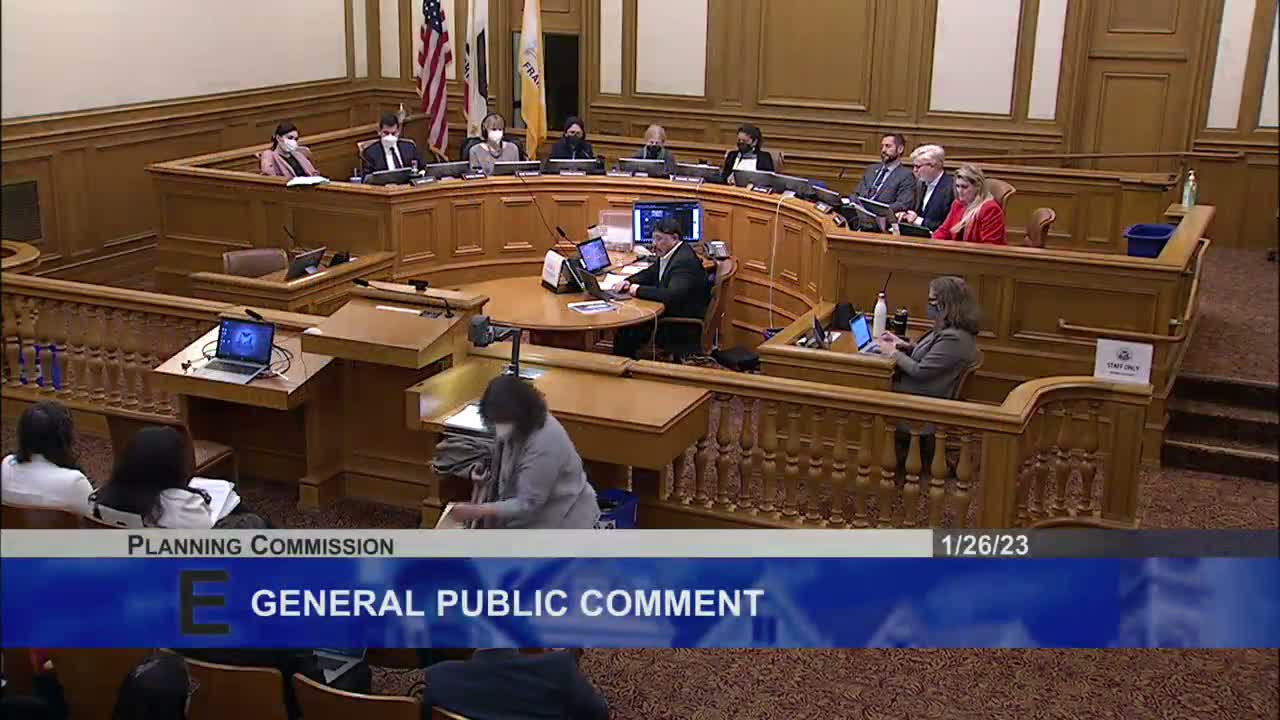
San Francisco's Planning Department told the Planning Commission on Jan. 26 that it faces a constrained fiscal outlook over the next two years and is retooling staff and contracts to prioritize implementation of the city's newly adopted housing element.
Director Hillis and Deputy Director Deborah Landis presented a two-year informational budget and work program that shows declining fee revenues and a reduced general-fund contribution compared with past years. Landis said the department expects to reduce fees by about $2,000,000 and cited a one-time $4,000,000 general-fund payment in the current year that will not recur. "We're not seeing a recovery in revenues," Landis said in the presentation, urging commissioners that the department must prioritize implementation, equity and core permitting work.
Why it matters: The planning department's finances will shape how quickly the city can rezone and implement programs in its housing element. Staff emphasized that implementation will require shifting staff and contracting resources and close interagency work on rezoning, community outreach and infrastructure.
Key details:
- Landis said the department projects a two-year deficit and will return on Feb. 9 with more detailed proposals, including potential cuts by eliminating vacant positions; she stressed those would target vacancies rather than filled posts.
- Staff reported a projected drop in fee and other revenues compared with earlier years; slides presented charted a decline from prior $40M fee years toward roughly $30M if recent trends hold.
- The department said it intends to protect essential permitting services while reallocating programmatic capacity to housing-element implementation, rezoning, and equity-focused community planning work.
- The packet lists roughly 228 FTEs and staff indicated planning will increase the total FTE allocation working on enforcement and code-related matters from about 8.5 to 10 for the next year.
Commissioner reaction and next steps: Commissioners pressed staff on how many FTEs would be dedicated to housing-element work and how community-engagement contracts would be procured. Anne Marie Rogers, director of the Citywide Policy Group, said the department has a core team of staff for rezoning and planned public engagement pushes this spring aimed at shape and height discussions along commercial and transit corridors.
Director Hillis and other staff said the department will return to the commission on Feb. 9 with more detailed proposals and that the city budget will follow the mayor's process, with publication of the city budget in June and the Board of Supervisors' review thereafter.
Director Hillis and Deputy Director Deborah Landis presented a two-year informational budget and work program that shows declining fee revenues and a reduced general-fund contribution compared with past years. Landis said the department expects to reduce fees by about $2,000,000 and cited a one-time $4,000,000 general-fund payment in the current year that will not recur. "We're not seeing a recovery in revenues," Landis said in the presentation, urging commissioners that the department must prioritize implementation, equity and core permitting work.
Why it matters: The planning department's finances will shape how quickly the city can rezone and implement programs in its housing element. Staff emphasized that implementation will require shifting staff and contracting resources and close interagency work on rezoning, community outreach and infrastructure.
Key details:
- Landis said the department projects a two-year deficit and will return on Feb. 9 with more detailed proposals, including potential cuts by eliminating vacant positions; she stressed those would target vacancies rather than filled posts.
- Staff reported a projected drop in fee and other revenues compared with earlier years; slides presented charted a decline from prior $40M fee years toward roughly $30M if recent trends hold.
- The department said it intends to protect essential permitting services while reallocating programmatic capacity to housing-element implementation, rezoning, and equity-focused community planning work.
- The packet lists roughly 228 FTEs and staff indicated planning will increase the total FTE allocation working on enforcement and code-related matters from about 8.5 to 10 for the next year.
Commissioner reaction and next steps: Commissioners pressed staff on how many FTEs would be dedicated to housing-element work and how community-engagement contracts would be procured. Anne Marie Rogers, director of the Citywide Policy Group, said the department has a core team of staff for rezoning and planned public engagement pushes this spring aimed at shape and height discussions along commercial and transit corridors.
Director Hillis and other staff said the department will return to the commission on Feb. 9 with more detailed proposals and that the city budget will follow the mayor's process, with publication of the city budget in June and the Board of Supervisors' review thereafter.
View the Full Meeting & All Its Details
This article offers just a summary. Unlock complete video, transcripts, and insights as a Founder Member.
✓
Watch full, unedited meeting videos
✓
Search every word spoken in unlimited transcripts
✓
AI summaries & real-time alerts (all government levels)
✓
Permanent access to expanding government content
30-day money-back guarantee
