Planning Commission continues San Bruno Avenue housing project to allow tenant relocation plan and translations
March 16, 2023 | San Francisco City, San Francisco County, California
This article was created by AI summarizing key points discussed. AI makes mistakes, so for full details and context, please refer to the video of the full meeting. Please report any errors so we can fix them. Report an error »
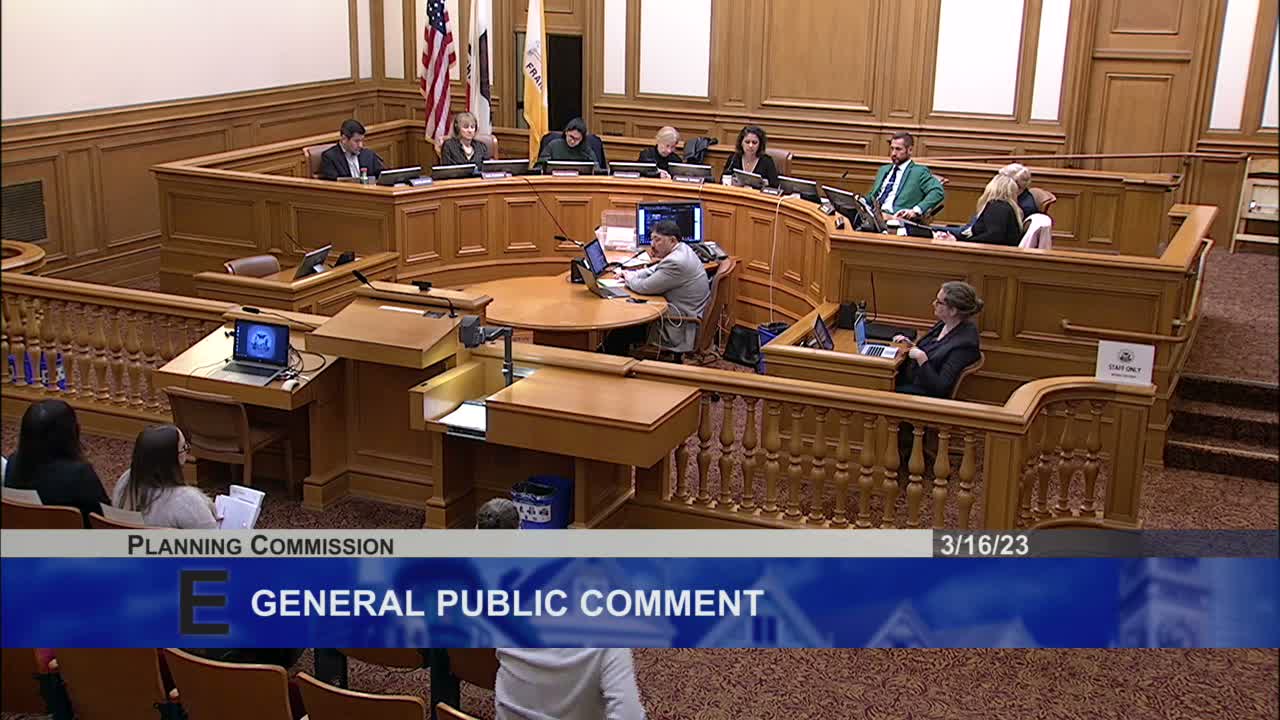
The San Francisco Planning Commission on March 16 voted unanimously to continue consideration of the conditional use authorization for 2861–2899 San Bruno Ave to April 27 to allow more time for a tenant relocation plan and related materials to be finalized.
Planning staff told the commission they requested the continuance to give the project sponsor and tenant representatives time to produce a tenant plan and a relocation agreement and to have those documents translated into Spanish and Chinese so tenants can review them in their primary languages. Staff said the goal is to produce a phasing plan that addresses both construction sequencing and the effects on residents.
Ryan Patterson, attorney for the project sponsor, described four developments since the last hearing: an on‑site tenants meeting with Cantonese and Spanish translation; revised permit plans intended to make future subdivision harder; ongoing settlement communications with tenant counsel (which Patterson described as privileged) that have required the owner to tender claims to its insurance carrier; and the sponsor’s agreement to pay reasonable moving expenses. “The owners are generally agreeable to that plan,” Patterson said, and asked guidance on details to include in Exhibit C, particularly realistic construction timeframes.
Patterson said the sponsor believes realistic construction sequencing is closer to nine to 12 months per building rather than the three‑ to six‑month timeframes earlier discussed, and noted natural turnover in market‑rate units could allow overlapping work in some buildings.
Tenant attorney Mark Hushman and tenant representative Mark Bushman said negotiations are ongoing and urged the owners to put the sponsor’s commitments in writing well before the April 27 hearing. Hushman said he represents roughly half the tenants and that an enforceable, translated plan is crucial for monolingual tenants to plan their lives.
Commissioners pressed staff and the sponsor to ensure translated materials are included in the hearing packet with sufficient lead time. Staff set a schedule that gives the applicant until March 28 to submit a final plan for publication and two weeks for translation; if the deadline is not met in a substantive manner, enforcement penalties could resume.
The commission’s motion to continue to April 27 passed unanimously, 6–0. Commissioners said they expect a phasing plan that covers construction sequencing and the “people plan” — how tenants will be rehoused, when, and what expenses the sponsor will cover — and asked staff to summarize tenant rights and available city resources for unrepresented residents.
Planning staff told the commission they requested the continuance to give the project sponsor and tenant representatives time to produce a tenant plan and a relocation agreement and to have those documents translated into Spanish and Chinese so tenants can review them in their primary languages. Staff said the goal is to produce a phasing plan that addresses both construction sequencing and the effects on residents.
Ryan Patterson, attorney for the project sponsor, described four developments since the last hearing: an on‑site tenants meeting with Cantonese and Spanish translation; revised permit plans intended to make future subdivision harder; ongoing settlement communications with tenant counsel (which Patterson described as privileged) that have required the owner to tender claims to its insurance carrier; and the sponsor’s agreement to pay reasonable moving expenses. “The owners are generally agreeable to that plan,” Patterson said, and asked guidance on details to include in Exhibit C, particularly realistic construction timeframes.
Patterson said the sponsor believes realistic construction sequencing is closer to nine to 12 months per building rather than the three‑ to six‑month timeframes earlier discussed, and noted natural turnover in market‑rate units could allow overlapping work in some buildings.
Tenant attorney Mark Hushman and tenant representative Mark Bushman said negotiations are ongoing and urged the owners to put the sponsor’s commitments in writing well before the April 27 hearing. Hushman said he represents roughly half the tenants and that an enforceable, translated plan is crucial for monolingual tenants to plan their lives.
Commissioners pressed staff and the sponsor to ensure translated materials are included in the hearing packet with sufficient lead time. Staff set a schedule that gives the applicant until March 28 to submit a final plan for publication and two weeks for translation; if the deadline is not met in a substantive manner, enforcement penalties could resume.
The commission’s motion to continue to April 27 passed unanimously, 6–0. Commissioners said they expect a phasing plan that covers construction sequencing and the “people plan” — how tenants will be rehoused, when, and what expenses the sponsor will cover — and asked staff to summarize tenant rights and available city resources for unrepresented residents.
Don't Miss a Word: See the Full Meeting!
Go beyond summaries. Unlock every video, transcript, and key insight with a Founder Membership.
✓
Get instant access to full meeting videos
✓
Search and clip any phrase from complete transcripts
✓
Receive AI-powered summaries & custom alerts
✓
Enjoy lifetime, unrestricted access to government data
30-day money-back guarantee
