Planning staff, ULI and equity council outline downtown recovery plan; stakeholders urge equity and small‑business support
November 09, 2023 | San Francisco City, San Francisco County, California
This article was created by AI summarizing key points discussed. AI makes mistakes, so for full details and context, please refer to the video of the full meeting. Please report any errors so we can fix them. Report an error »
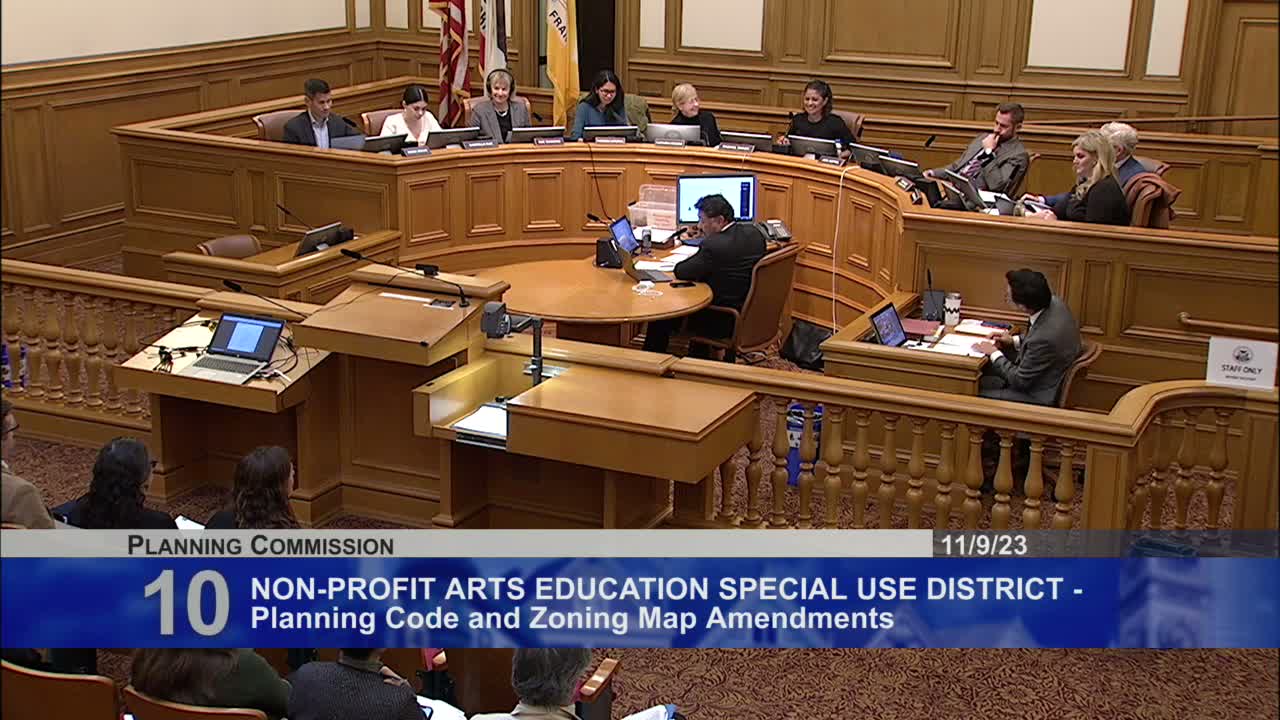
Planning Department staff, the Office of Economic and Workforce Development (OEWD) and an Urban Land Institute (ULI) advisory panel presented a coordinated strategy on Nov. 9 to revitalize Downtown San Francisco through a combination of public‑realm improvements, incentives for conversions, and targeted programming.
Jacob Bentliff of OEWD highlighted current downtown metrics and city programs: office attendance remains about 42% of pre‑pandemic levels, hotel occupancy trends around 80%, and international visitation has largely returned. City efforts include the Vacant to Vibrant program (pop‑ups and activations), Storefront Opportunity Grants ($25K–$50K), a proposed transfer‑tax ballot measure to waive transfer tax for certain conversion projects, and expanded funding for community ambassadors and shelter beds. The planning department presented a three‑node approach focusing on Mid‑Market, Union Square and the Downtown Gateway to activate ground floors, promote adaptive reuse of upper floors, and support cultural anchors.
The ULI advisory panel and Perkins+Will consultants recommended an immediate 1‑year plan and a governance and financing structure (including a proposed downtown revitalization authority or similar entity) to coordinate investments, technical assistance and tenant/leasing innovations. The consultants emphasized a mix of near‑term activations, adaptive reuse pilots, and capacity‑building for community benefit districts.
Public testimony was substantial and heavily equity‑focused. Raquel Redondias of the Equity Council said the working group’s priorities are affordable housing, economic participation, cultural identity, community gathering places, and education. Equity Council and many callers criticized recent city grant allocations as lacking transparency (several speakers cited roughly $2 million in Powell Street activation funds and reports that part of that funding went to celebrity chef Tyler Florence) and urged that future funds and leased ground‑floor opportunities be explicitly targeted to historically marginalized small businesses, artists, and BIPOC entrepreneurs. Speakers asked for clearer evaluation metrics and reporting on who benefits from programs like Vacant to Vibrant and business tax incentives.
Commissioners asked staff to return with clarifications: how equity is embedded in the new office‑attraction tax credit, more detailed metrics to report progress, and updates on state conversations about property tax abatement options for conversions. Staff said further memos and director’s reports will provide ongoing updates as projects move from concept to implementation.
Why it matters: Downtown policies affect citywide visitation, jobs, small‑business viability, and the supply of space for cultural institutions. The presentation combined marketing and activation programs with regulatory changes to spur conversions while equity advocates pressed for concrete commitments to ensure benefits reach local small businesses and artists.
Provenance: topicintro SEG 822; topfinish SEG 3190.
Jacob Bentliff of OEWD highlighted current downtown metrics and city programs: office attendance remains about 42% of pre‑pandemic levels, hotel occupancy trends around 80%, and international visitation has largely returned. City efforts include the Vacant to Vibrant program (pop‑ups and activations), Storefront Opportunity Grants ($25K–$50K), a proposed transfer‑tax ballot measure to waive transfer tax for certain conversion projects, and expanded funding for community ambassadors and shelter beds. The planning department presented a three‑node approach focusing on Mid‑Market, Union Square and the Downtown Gateway to activate ground floors, promote adaptive reuse of upper floors, and support cultural anchors.
The ULI advisory panel and Perkins+Will consultants recommended an immediate 1‑year plan and a governance and financing structure (including a proposed downtown revitalization authority or similar entity) to coordinate investments, technical assistance and tenant/leasing innovations. The consultants emphasized a mix of near‑term activations, adaptive reuse pilots, and capacity‑building for community benefit districts.
Public testimony was substantial and heavily equity‑focused. Raquel Redondias of the Equity Council said the working group’s priorities are affordable housing, economic participation, cultural identity, community gathering places, and education. Equity Council and many callers criticized recent city grant allocations as lacking transparency (several speakers cited roughly $2 million in Powell Street activation funds and reports that part of that funding went to celebrity chef Tyler Florence) and urged that future funds and leased ground‑floor opportunities be explicitly targeted to historically marginalized small businesses, artists, and BIPOC entrepreneurs. Speakers asked for clearer evaluation metrics and reporting on who benefits from programs like Vacant to Vibrant and business tax incentives.
Commissioners asked staff to return with clarifications: how equity is embedded in the new office‑attraction tax credit, more detailed metrics to report progress, and updates on state conversations about property tax abatement options for conversions. Staff said further memos and director’s reports will provide ongoing updates as projects move from concept to implementation.
Why it matters: Downtown policies affect citywide visitation, jobs, small‑business viability, and the supply of space for cultural institutions. The presentation combined marketing and activation programs with regulatory changes to spur conversions while equity advocates pressed for concrete commitments to ensure benefits reach local small businesses and artists.
Provenance: topicintro SEG 822; topfinish SEG 3190.
View the Full Meeting & All Its Details
This article offers just a summary. Unlock complete video, transcripts, and insights as a Founder Member.
✓
Watch full, unedited meeting videos
✓
Search every word spoken in unlimited transcripts
✓
AI summaries & real-time alerts (all government levels)
✓
Permanent access to expanding government content
30-day money-back guarantee
