Planning Commission approves horizontal repairs at Sutro Tower, opens environmental review on vertical cladding removal
October 13, 2022 | San Francisco City, San Francisco County, California
This article was created by AI summarizing key points discussed. AI makes mistakes, so for full details and context, please refer to the video of the full meeting. Please report any errors so we can fix them. Report an error »
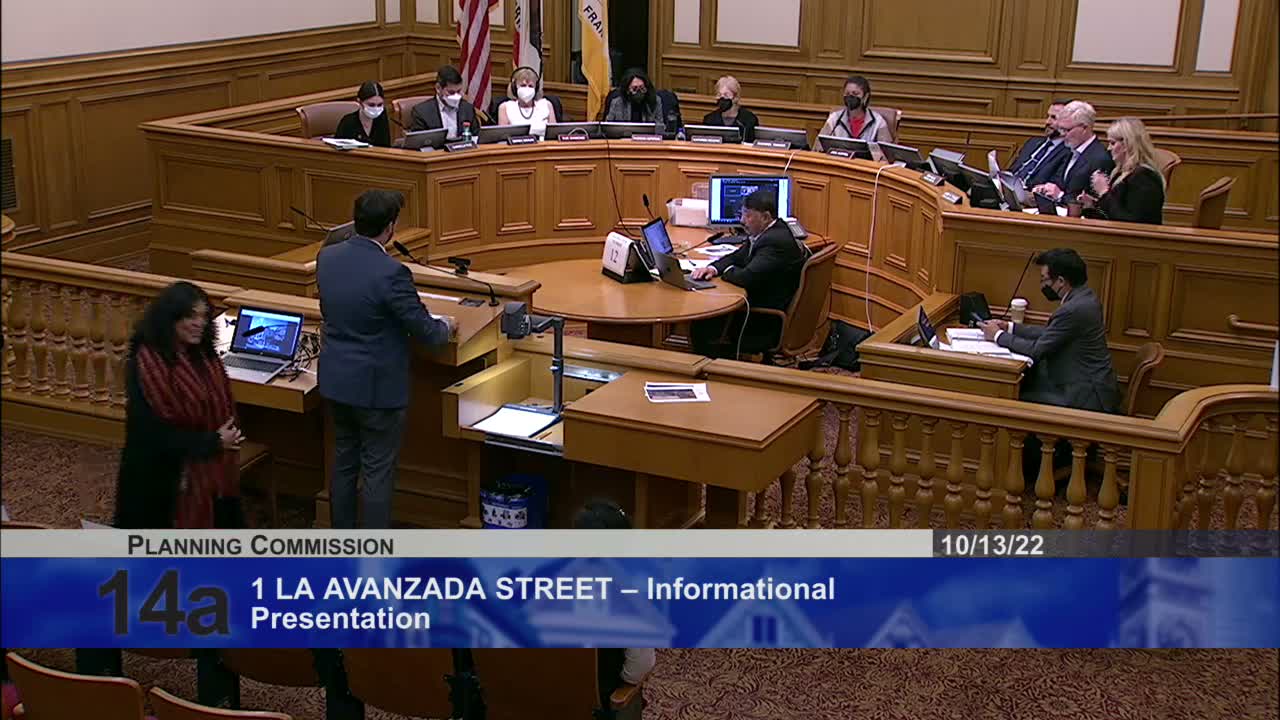
The San Francisco Planning Commission on Oct. 13 approved a mandatory discretionary review to replace interior horizontal cladding panels at Sutro Tower (levels 2–4) and directed staff to accelerate environmental review to resolve whether the tower’s vertical cladding must be reinstalled after that cladding was removed without full authorization.
Planning staff described the case history: the 2019 discretionary approval allowed temporary removal for specific structural work, but staff discovered in 2021 that additional vertical cladding below level four had been removed without the full CEQA and permitting steps. Staff recommended approval of the discrete horizontal‑panel replacement (to protect interior equipment) and an expedited environmental study to evaluate three primary options for the vertical cladding: permanent removal (no‑cladding), full replacement, or replacement in modified materials.
Kristen Saul Peters, representing Sutro Tower Inc. (STI), said the vertical cladding was removed to facilitate the FCC‑required “repack” of broadcast frequencies and structural improvements; she and STI’s engineers argued permanent removal reduces weight and wind load, lowers worker risk and avoids years of noisy work. STI’s engineering estimate for a replacement alternative was cited in testimony as roughly $48–50 million for replacement; painting and associated repack work was cited at about $10 million. Broadcasters—including Northern California Public Media (KRCB), KRON, KGO (ABC7) and KPIX—said missing the federal reimbursement window would leave some stations with unreimbursed costs in the millions. Northern California Public Media said the station KRCB could face an estimated $6–7 million share if replacement is required and it is not eligible for FCC reimbursement.
Neighborhood groups and local residents urged the commission to favor permanent removal for safety reasons. Midtown Terrace, Twin Peaks and other neighbors submitted letters and petitions urging a no‑cladding alternative, asserting prior incidents when panels or metal pieces fell and citing quieter conditions since removal.
Preservation staff said they concluded in an earlier Historic Resource Evaluation (HRE) that the cladding is a character‑defining feature; that determination triggers a higher level of CEQA review unless an initial study supports a mitigated negative declaration. Deputy ERO Devyani Jain told commissioners that statutory scoping and comment periods make an April decision infeasible; staff said a focused EIR would be tight but June could be possible if the department reprioritized workloads, though a mitigated negative declaration (if feasible) would shorten the timetable.
Commissioner Diamond moved to approve the horizontal replacement (conditions included standard antenna/inspection requirements and a construction timeline tied to environmental approval) and to attach conditions to the building permit; the motion passed unanimously (7–0). Commissioners also asked staff to prioritize CEQA work on the vertical‑cladding question and to report back about possible enforcement actions for the previous unpermitted removal.
What comes next: planning staff will prepare an initial study and determine whether an MND or focused EIR is required for vertical‑cladding removal. If the commission later determines cladding removal is permissible after CEQA, staff and STI discussed painting options to approximate prior appearance or to de‑emphasize the vertical elements. STI and broadcaster representatives urged the department to expedite review so the stations can meet federal reimbursement deadlines (STI and counsel cited a July 3, 2023 statutory deadline for committed funds to qualify for reimbursement).
Planning staff described the case history: the 2019 discretionary approval allowed temporary removal for specific structural work, but staff discovered in 2021 that additional vertical cladding below level four had been removed without the full CEQA and permitting steps. Staff recommended approval of the discrete horizontal‑panel replacement (to protect interior equipment) and an expedited environmental study to evaluate three primary options for the vertical cladding: permanent removal (no‑cladding), full replacement, or replacement in modified materials.
Kristen Saul Peters, representing Sutro Tower Inc. (STI), said the vertical cladding was removed to facilitate the FCC‑required “repack” of broadcast frequencies and structural improvements; she and STI’s engineers argued permanent removal reduces weight and wind load, lowers worker risk and avoids years of noisy work. STI’s engineering estimate for a replacement alternative was cited in testimony as roughly $48–50 million for replacement; painting and associated repack work was cited at about $10 million. Broadcasters—including Northern California Public Media (KRCB), KRON, KGO (ABC7) and KPIX—said missing the federal reimbursement window would leave some stations with unreimbursed costs in the millions. Northern California Public Media said the station KRCB could face an estimated $6–7 million share if replacement is required and it is not eligible for FCC reimbursement.
Neighborhood groups and local residents urged the commission to favor permanent removal for safety reasons. Midtown Terrace, Twin Peaks and other neighbors submitted letters and petitions urging a no‑cladding alternative, asserting prior incidents when panels or metal pieces fell and citing quieter conditions since removal.
Preservation staff said they concluded in an earlier Historic Resource Evaluation (HRE) that the cladding is a character‑defining feature; that determination triggers a higher level of CEQA review unless an initial study supports a mitigated negative declaration. Deputy ERO Devyani Jain told commissioners that statutory scoping and comment periods make an April decision infeasible; staff said a focused EIR would be tight but June could be possible if the department reprioritized workloads, though a mitigated negative declaration (if feasible) would shorten the timetable.
Commissioner Diamond moved to approve the horizontal replacement (conditions included standard antenna/inspection requirements and a construction timeline tied to environmental approval) and to attach conditions to the building permit; the motion passed unanimously (7–0). Commissioners also asked staff to prioritize CEQA work on the vertical‑cladding question and to report back about possible enforcement actions for the previous unpermitted removal.
What comes next: planning staff will prepare an initial study and determine whether an MND or focused EIR is required for vertical‑cladding removal. If the commission later determines cladding removal is permissible after CEQA, staff and STI discussed painting options to approximate prior appearance or to de‑emphasize the vertical elements. STI and broadcaster representatives urged the department to expedite review so the stations can meet federal reimbursement deadlines (STI and counsel cited a July 3, 2023 statutory deadline for committed funds to qualify for reimbursement).
Don't Miss a Word: See the Full Meeting!
Go beyond summaries. Unlock every video, transcript, and key insight with a Founder Membership.
✓
Get instant access to full meeting videos
✓
Search and clip any phrase from complete transcripts
✓
Receive AI-powered summaries & custom alerts
✓
Enjoy lifetime, unrestricted access to government data
30-day money-back guarantee
