Planning Commission certifies EIR and unanimously approves Stonestown development agreement to redevelop mall and parking into 3,500 homes
May 09, 2024 | San Francisco City, San Francisco County, California
This article was created by AI summarizing key points discussed. AI makes mistakes, so for full details and context, please refer to the video of the full meeting. Please report any errors so we can fix them. Report an error »
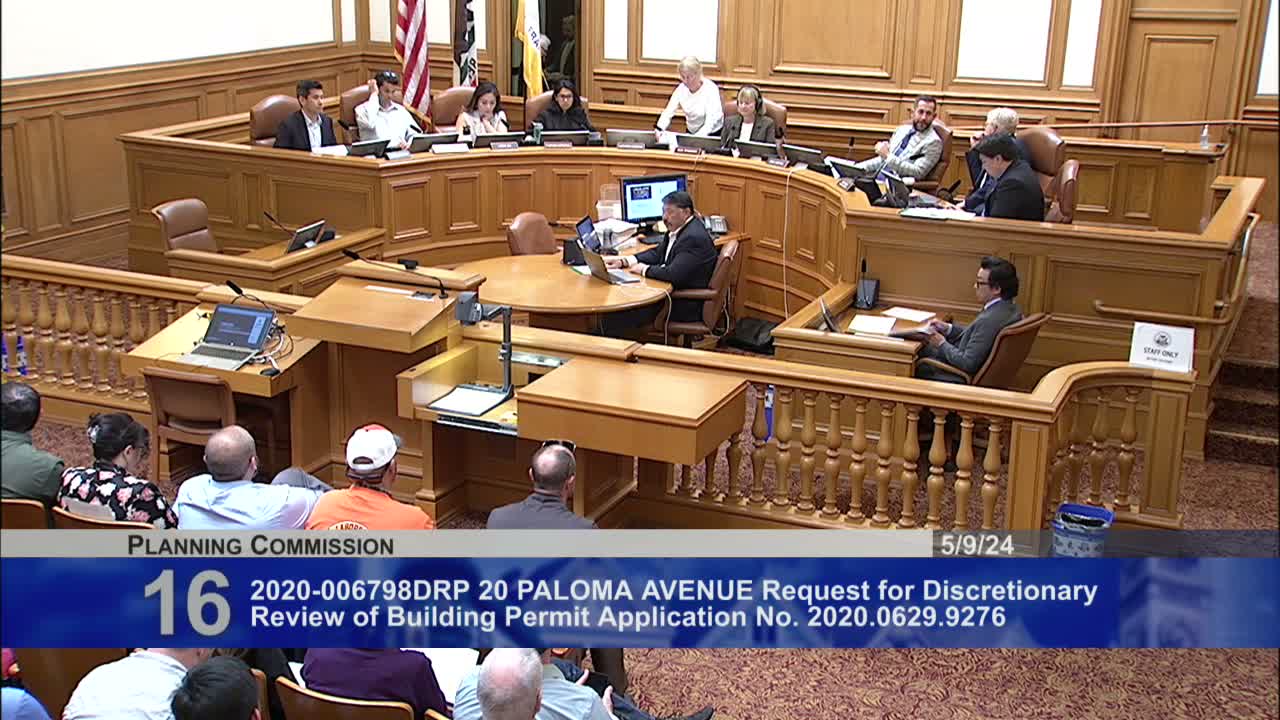
The San Francisco Planning Commission on May 9 certified the final environmental impact report and approved a suite of entitlements for the Stonestown redevelopment project, a multi-phase plan to transform the Stonestown Mall site and surrounding parking into a mixed-use neighborhood with up to 3,500 homes.
Planning staff presented the project and its requested approvals — certification of the final EIR; adoption of CEQA findings and a statement of overriding considerations; shadow findings for Rec and Park; general plan amendments; planning-code and zoning map changes to create a new Stonestown Special Use District (SUD); design standards and guidelines; and a 25-year development agreement between the city and Brookfield Properties. "The purpose of today's hearing is to present the final project and consider a series of resolutions and motions and to certify the project's EIR," planning staff said.
Brookfield representatives described a transit-oriented, phased plan that replaces surface parking with housing, retail and parks. "We are providing much needed housing with 3,500 units," Brookfield's Chrissy Donnelly told the commission. The sponsor and staff said the plan includes six acres of publicly accessible open spaces, a new retail spine on Twentieth Avenue, protected bike lanes, a childcare facility sized for about 100 children, and a 7,000-square-foot senior center to be leased for $1 per year to a nonprofit operator.
The development agreement ties community benefits to phases and contains three ways to meet the 20% affordable requirement: build inclusionary on-site units, donate up to three parcels for 100% affordable housing to the city or a nonprofit (the developer would need to subsidize if donated to a nonprofit), or pay in-lieu fees for up to 390 units. Planning staff said at least 300 affordable units will be physically built on-site and that the plan uses project check-in points every 600 units to verify milestones.
Environmental planning staff summarized the EIR findings: the project would cause significant and unavoidable impacts in several areas, including historic resources (demolition of the UA Theater), transit delay, construction noise, air quality and wind; the EIR lists mitigation measures but notes some impacts remain significant and unavoidable. The commission voted first to certify the EIR and then, after extended deliberation and public comment, voted to approve the larger entitlement package.
Public comment was extensive and largely supportive: labor unions, neighborhood groups, the Sierra Club, YIMBY and many residents praised the project's housing supply, jobs and community benefits. Other speakers raised concerns about traffic impacts on Twentieth Avenue and nearby residential streets, the depth of affordability (urging mandatory land dedication rather than optional donations), and timing of benefits. Planning staff responded that the traffic analysis did not substantiate a claimed 20% traffic increase on a segment of Twentieth Avenue and said the project would include transportation mitigation and construction management plans reviewed by SFMTA and Public Works.
Commissioners praised the design, workforce and local hiring commitments, and measures intended to accelerate early phases. Commissioner Koppel moved to approve the package as amended in staff's read-in revisions; the motion was seconded and passed unanimously 7-0.
What happens next: the approvals enable master entitlements and implementation steps. Staff said the project will next be reviewed by Rec and Park (May 16), SFMTA (May 21), SFPUC (May 28) and the Board of Supervisors in early summer 2024; creation of an enhanced infrastructure financing district (EIFD) would require separate Board action.
Planning staff presented the project and its requested approvals — certification of the final EIR; adoption of CEQA findings and a statement of overriding considerations; shadow findings for Rec and Park; general plan amendments; planning-code and zoning map changes to create a new Stonestown Special Use District (SUD); design standards and guidelines; and a 25-year development agreement between the city and Brookfield Properties. "The purpose of today's hearing is to present the final project and consider a series of resolutions and motions and to certify the project's EIR," planning staff said.
Brookfield representatives described a transit-oriented, phased plan that replaces surface parking with housing, retail and parks. "We are providing much needed housing with 3,500 units," Brookfield's Chrissy Donnelly told the commission. The sponsor and staff said the plan includes six acres of publicly accessible open spaces, a new retail spine on Twentieth Avenue, protected bike lanes, a childcare facility sized for about 100 children, and a 7,000-square-foot senior center to be leased for $1 per year to a nonprofit operator.
The development agreement ties community benefits to phases and contains three ways to meet the 20% affordable requirement: build inclusionary on-site units, donate up to three parcels for 100% affordable housing to the city or a nonprofit (the developer would need to subsidize if donated to a nonprofit), or pay in-lieu fees for up to 390 units. Planning staff said at least 300 affordable units will be physically built on-site and that the plan uses project check-in points every 600 units to verify milestones.
Environmental planning staff summarized the EIR findings: the project would cause significant and unavoidable impacts in several areas, including historic resources (demolition of the UA Theater), transit delay, construction noise, air quality and wind; the EIR lists mitigation measures but notes some impacts remain significant and unavoidable. The commission voted first to certify the EIR and then, after extended deliberation and public comment, voted to approve the larger entitlement package.
Public comment was extensive and largely supportive: labor unions, neighborhood groups, the Sierra Club, YIMBY and many residents praised the project's housing supply, jobs and community benefits. Other speakers raised concerns about traffic impacts on Twentieth Avenue and nearby residential streets, the depth of affordability (urging mandatory land dedication rather than optional donations), and timing of benefits. Planning staff responded that the traffic analysis did not substantiate a claimed 20% traffic increase on a segment of Twentieth Avenue and said the project would include transportation mitigation and construction management plans reviewed by SFMTA and Public Works.
Commissioners praised the design, workforce and local hiring commitments, and measures intended to accelerate early phases. Commissioner Koppel moved to approve the package as amended in staff's read-in revisions; the motion was seconded and passed unanimously 7-0.
What happens next: the approvals enable master entitlements and implementation steps. Staff said the project will next be reviewed by Rec and Park (May 16), SFMTA (May 21), SFPUC (May 28) and the Board of Supervisors in early summer 2024; creation of an enhanced infrastructure financing district (EIFD) would require separate Board action.
Don't Miss a Word: See the Full Meeting!
Go beyond summaries. Unlock every video, transcript, and key insight with a Founder Membership.
✓
Get instant access to full meeting videos
✓
Search and clip any phrase from complete transcripts
✓
Receive AI-powered summaries & custom alerts
✓
Enjoy lifetime, unrestricted access to government data
30-day money-back guarantee
