Commission stalls on 249 Texas Street conditional‑use over tenant‑history and demolition concerns; continues item to June 13
May 23, 2024 | San Francisco City, San Francisco County, California
This article was created by AI summarizing key points discussed. AI makes mistakes, so for full details and context, please refer to the video of the full meeting. Please report any errors so we can fix them. Report an error »
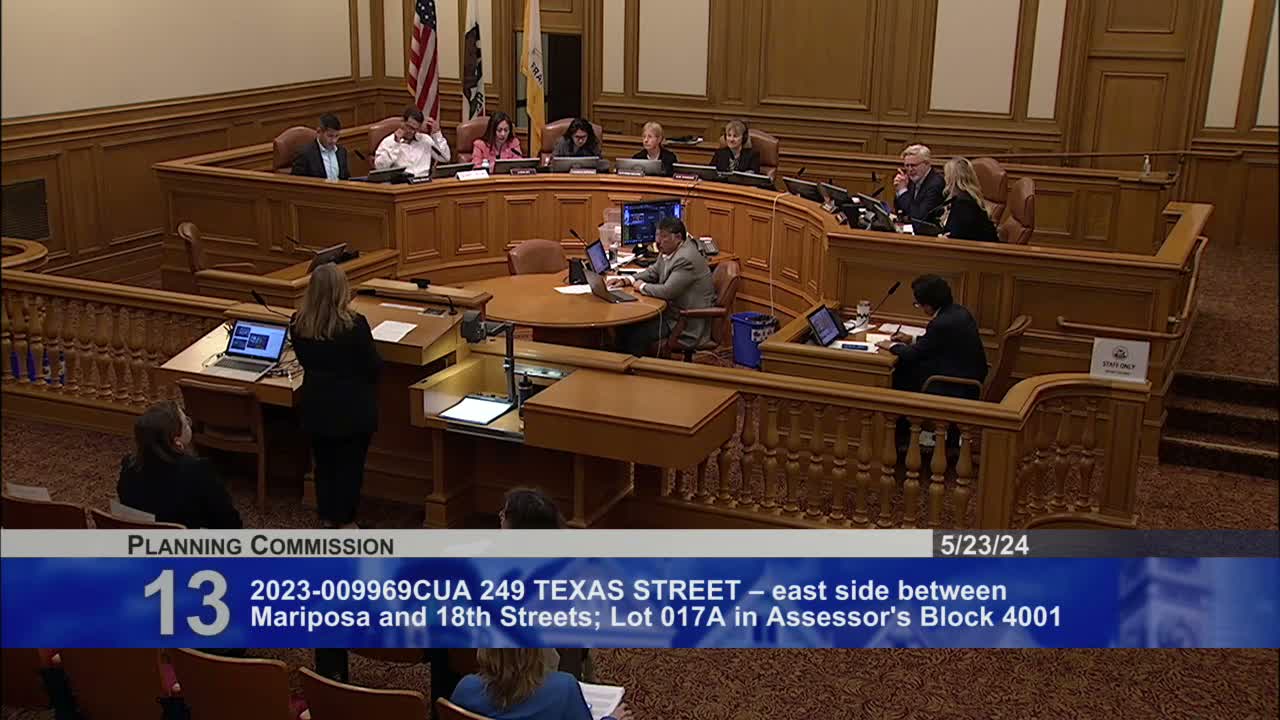
The Planning Commission considered a conditional‑use authorization for 249 Texas Street, where the project would replace a modified 1951 single‑family home (including an unauthorized dwelling unit) with a new two‑unit building.
Planning staff recommended approval, concluding the proposed building adds durable, code‑compliant units, increases bedrooms and preserves rental protections under SB 330/SB 330 look‑back rules. The project sponsor and architect said they increased the size and street presence of the lower unit to address prior concerns that led the Board of Supervisors to overturn an earlier approval. The sponsor described the new design as a two‑unit family home with separate entries and code‑compliant light wells.
Organized opposition — neighbors and tenant advocates — argued the property historically housed low‑income tenants, claimed an eviction or coercive lease exit during COVID, and said the demolition threshold and tenant history counsel against approval. The project presentation and defense emphasized that one of the prior units had been vacant for five years (the state/SB 330 look‑back period) and that the owners did not effect a rental eviction in the manner alleged.
Commissioners asked detailed questions about construction methods, the presence of an elevator (and whether it could be keyed to prevent functional unit merger), and whether unit parity and affordability were preserved. A motion to approve with the condition that the elevator be key‑coded produced a three‑to‑three tie and failed. Commissioners expressed differences: some accepted the project's code compliance and replacement of older, substandard construction; others urged stronger affordability commitments and criticized the project's historical tenancy record.
The commission ultimately voted 4–2 to continue the item to June 13 to allow time for potential negotiated resolution between neighbors and the sponsor and to permit the full commission to consider the item when a seventh commissioner is present.
Next step: item continued to June 13 for further consideration; staff recommended parties use the interim to negotiate terms that could address neighbor concerns and affordability questions.
Planning staff recommended approval, concluding the proposed building adds durable, code‑compliant units, increases bedrooms and preserves rental protections under SB 330/SB 330 look‑back rules. The project sponsor and architect said they increased the size and street presence of the lower unit to address prior concerns that led the Board of Supervisors to overturn an earlier approval. The sponsor described the new design as a two‑unit family home with separate entries and code‑compliant light wells.
Organized opposition — neighbors and tenant advocates — argued the property historically housed low‑income tenants, claimed an eviction or coercive lease exit during COVID, and said the demolition threshold and tenant history counsel against approval. The project presentation and defense emphasized that one of the prior units had been vacant for five years (the state/SB 330 look‑back period) and that the owners did not effect a rental eviction in the manner alleged.
Commissioners asked detailed questions about construction methods, the presence of an elevator (and whether it could be keyed to prevent functional unit merger), and whether unit parity and affordability were preserved. A motion to approve with the condition that the elevator be key‑coded produced a three‑to‑three tie and failed. Commissioners expressed differences: some accepted the project's code compliance and replacement of older, substandard construction; others urged stronger affordability commitments and criticized the project's historical tenancy record.
The commission ultimately voted 4–2 to continue the item to June 13 to allow time for potential negotiated resolution between neighbors and the sponsor and to permit the full commission to consider the item when a seventh commissioner is present.
Next step: item continued to June 13 for further consideration; staff recommended parties use the interim to negotiate terms that could address neighbor concerns and affordability questions.
View the Full Meeting & All Its Details
This article offers just a summary. Unlock complete video, transcripts, and insights as a Founder Member.
✓
Watch full, unedited meeting videos
✓
Search every word spoken in unlimited transcripts
✓
AI summaries & real-time alerts (all government levels)
✓
Permanent access to expanding government content
30-day money-back guarantee
