SFUSD Migrant Education Program spotlights student success and barriers, asks board for clearer outreach
January 25, 2022 | San Francisco City, San Francisco County, California
This article was created by AI summarizing key points discussed. AI makes mistakes, so for full details and context, please refer to the video of the full meeting. Please report any errors so we can fix them. Report an error »
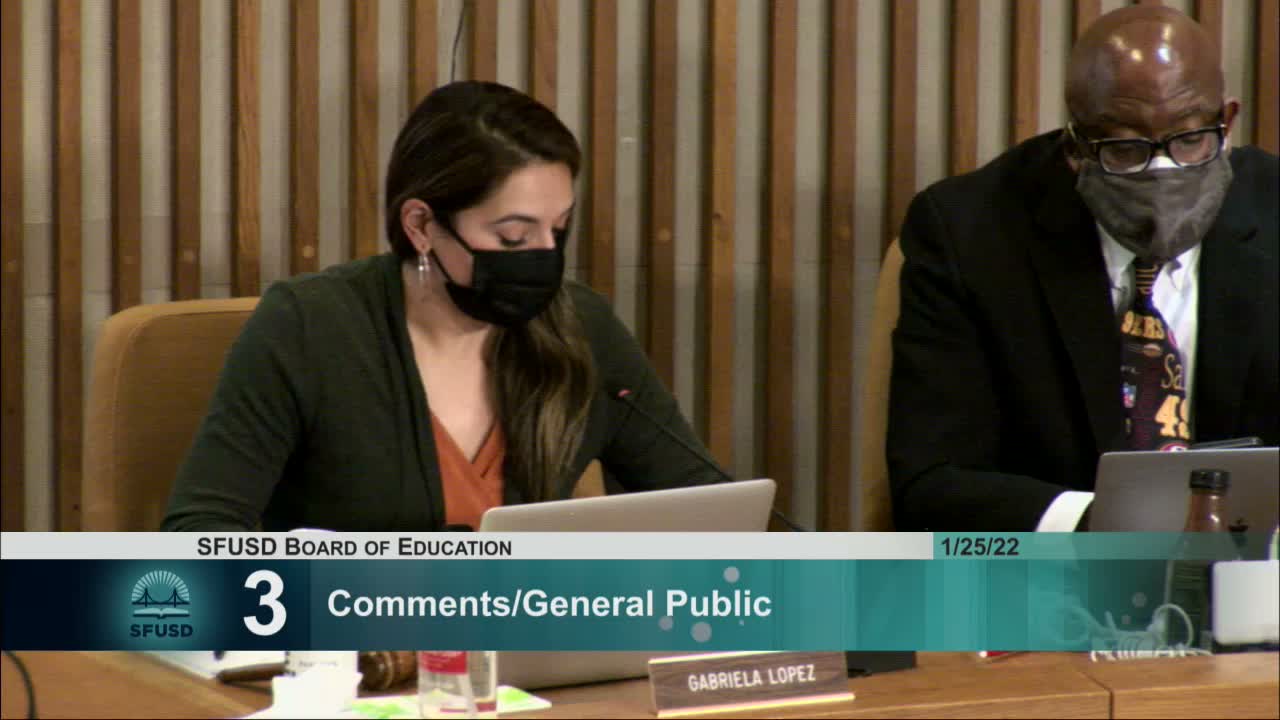
At a Jan. 25 meeting of the San Francisco Board of Education, the district’s Migrant Education Program showcased student work, described supports for migrant families and urged the board to help expand outreach and eliminate barriers that keep families from using district services.
Jose Espinosa, a 12th‑grade student at Mission High School, introduced a video and told the board he has been part of the Migrant Education Program since elementary school. Brenda Sandoval Moreno, who identified herself as a Migrant Education Program representative, said the program provides academic enrichment, mentoring, case management, college‑readiness support and summer programming, and that this year the program has expanded mental‑health services.
The presentation included data the presenters said came from state and internal sources: counselors reported that a recent cohort saw a high graduation outcome (presenters stated a 100% graduation rate for the cohort discussed) and staff said MEP has provided internship opportunities and an aquaponics summer program. Sandoval Moreno told commissioners the families served have experienced homelessness, evictions and job loss, and that roughly 80% of those families have faced eviction or job loss during the pandemic. She said families sometimes avoid district programs out of fear those interactions could affect immigration status and stressed the importance of trust‑building and clear, translated outreach.
Commissioners pressed staff on whether district systems are effectively connecting families to resources. Commissioner Alexander asked about district support in light of rent‑relief and other efforts; Sandoval Moreno said staff do ‘hand‑holding’ to enroll families, distribute flyers, and work with parent liaisons at school sites. Commissioners asked staff to provide transparent tracking of advisory recommendations and to surface metrics for enrollment, graduation and CSU/UC‑eligible rates. Staff said state data (as presented) show recent Migrant Ed cohort graduation counts (11 of 13 in the latest release; 11 of 15 the prior year) and offered to supply additional percentages and internal data to the board.
Public commenters and advisory groups praised the program and called for continued work on interpretation, cultural humility and better scheduling and notice for engagement forums. Commissioners suggested linking MEP outreach with city family resource centers to improve access and recommended a public‑facing tracking document so the community can see progress year to year.
Next steps: staff said they would follow up with the board to share more detailed data (including CSU/UC eligibility rates and internal monitoring), coordinate with advisory committees and consider adjustments to outreach and hours to reach families who have limited phone or internet access.
Jose Espinosa, a 12th‑grade student at Mission High School, introduced a video and told the board he has been part of the Migrant Education Program since elementary school. Brenda Sandoval Moreno, who identified herself as a Migrant Education Program representative, said the program provides academic enrichment, mentoring, case management, college‑readiness support and summer programming, and that this year the program has expanded mental‑health services.
The presentation included data the presenters said came from state and internal sources: counselors reported that a recent cohort saw a high graduation outcome (presenters stated a 100% graduation rate for the cohort discussed) and staff said MEP has provided internship opportunities and an aquaponics summer program. Sandoval Moreno told commissioners the families served have experienced homelessness, evictions and job loss, and that roughly 80% of those families have faced eviction or job loss during the pandemic. She said families sometimes avoid district programs out of fear those interactions could affect immigration status and stressed the importance of trust‑building and clear, translated outreach.
Commissioners pressed staff on whether district systems are effectively connecting families to resources. Commissioner Alexander asked about district support in light of rent‑relief and other efforts; Sandoval Moreno said staff do ‘hand‑holding’ to enroll families, distribute flyers, and work with parent liaisons at school sites. Commissioners asked staff to provide transparent tracking of advisory recommendations and to surface metrics for enrollment, graduation and CSU/UC‑eligible rates. Staff said state data (as presented) show recent Migrant Ed cohort graduation counts (11 of 13 in the latest release; 11 of 15 the prior year) and offered to supply additional percentages and internal data to the board.
Public commenters and advisory groups praised the program and called for continued work on interpretation, cultural humility and better scheduling and notice for engagement forums. Commissioners suggested linking MEP outreach with city family resource centers to improve access and recommended a public‑facing tracking document so the community can see progress year to year.
Next steps: staff said they would follow up with the board to share more detailed data (including CSU/UC eligibility rates and internal monitoring), coordinate with advisory committees and consider adjustments to outreach and hours to reach families who have limited phone or internet access.
View the Full Meeting & All Its Details
This article offers just a summary. Unlock complete video, transcripts, and insights as a Founder Member.
✓
Watch full, unedited meeting videos
✓
Search every word spoken in unlimited transcripts
✓
AI summaries & real-time alerts (all government levels)
✓
Permanent access to expanding government content
30-day money-back guarantee
