San Francisco school board approves $90 million budget-balancing plan to avert state takeover
December 14, 2021 | San Francisco City, San Francisco County, California
This article was created by AI summarizing key points discussed. AI makes mistakes, so for full details and context, please refer to the video of the full meeting. Please report any errors so we can fix them. Report an error »
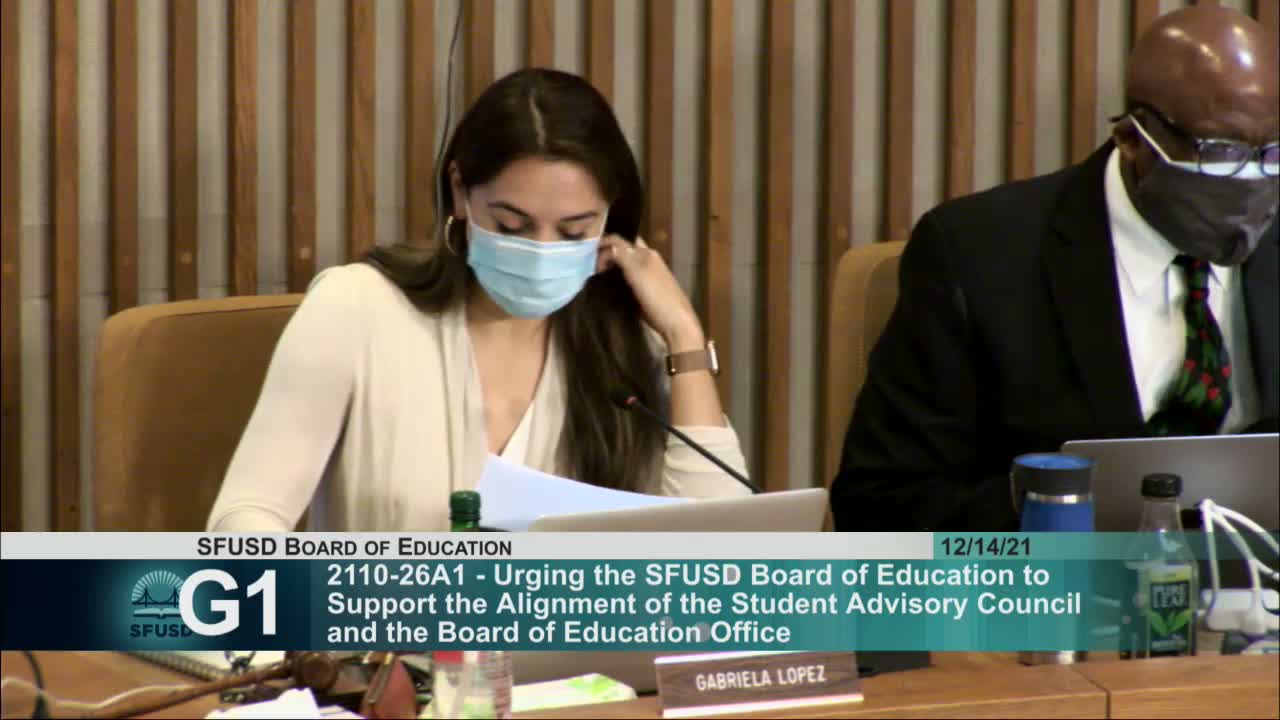
The San Francisco Board of Education voted Dec. 14 to approve a budget-balancing plan staff say is needed to prevent a potential state takeover. The plan, which staff described as the superintendent’s recommendation, includes roughly $90 million in proposed expenditure reductions and financing changes aimed at addressing a structural deficit identified in the district’s 2021–22 interim reporting.
Superintendent Dr. Lyndon Matthews framed the document as his recommendation to the board and said he has been working with staff and community partners to shape the proposal. "If you want to blame anyone, staff is working with me, but it's my proposal," Matthews said as he introduced the presentation.
State-appointed fiscal expert Elliot Duchamp, who alongside a colleague was tapped by the California Department of Education to review SFUSD's finances, told the board the district was in a precarious position and recommended approving the stabilization plan and filing the interim report with the Department of Education. "Approve the budget stabilization plan as presented," Duchamp said, summarizing the experts’ guidance.
Staff said the plan includes about $50 million in reductions that would affect school-site allocations (weighted student formula and multi-tiered systems of support, direct services and indirect services) and about $35 million in funding-source adjustments. Chief Financial Officer Megan Wallace and Deputy Superintendent Myung Lee emphasized that the document is the first step and that staff will continue to explore ways to limit harm to classrooms if additional revenue is identified in the governor’s January budget or via grants.
The public comment period on the budget lasted more than an hour, with parents, students, teachers and union leaders sharply divided. A substantial contingent urged the board to pass the staff plan to preserve local control and avoid a state takeover; many teachers, UESF representatives and parents warned that cuts to site budgets and programs such as AVID, JROTC and peer resources would lead to staff departures and larger harms for students. "We are trying our hardest to do what we can with the bare, bare budget we've got," said a UESF leader during public comment, calling on the board to "vote our values." Student delegates also urged the board to prioritize classrooms while acknowledging the need to avoid state takeover.
Several board members, including Commissioner Matt Alexander, said the vote represents a painful first step and pledged a process to revisit central-office realignment and program restorations in January and February. Alexander said he planned to withdraw a separate proposal formally but asked the board to pursue a deeper analysis of central-office duplication and possible reallocations in the new year.
The board adopted the staff plan by roll-call vote; most commissioners and both student delegates voted yes, while President Lopez recorded a no. Staff will submit the balancing plan and a first interim report to the California Department of Education by the statutory deadline and said they will return in the coming months with additional analyses and, if new state or federal revenues materialize, proposals to restore prioritized programs.
What changes may look like: staff pointed to program-level impacts they had identified in the presentation. AVID funding at the district level is included among proposed reductions in 2022–23 (staff said they are exploring state grant options to restore some funding). Peer resources central funding is proposed for reduction and could move to site funding via weighted student formula allocations; staff warned that the effect will vary by school and could reduce course sections or increase class sizes where sites cannot fully absorb the cost.
Next steps: staff and several commissioners said they will pursue a short, mid- and long-term process: (1) submit the approved plan and first interim report to the state, (2) continue budget development and seek opportunities to limit site harm as enrollment projections and the governor’s budget update become available, and (3) analyze central-office structure and staffing with possible outside review, then return with options in late January–early February.
Superintendent Dr. Lyndon Matthews framed the document as his recommendation to the board and said he has been working with staff and community partners to shape the proposal. "If you want to blame anyone, staff is working with me, but it's my proposal," Matthews said as he introduced the presentation.
State-appointed fiscal expert Elliot Duchamp, who alongside a colleague was tapped by the California Department of Education to review SFUSD's finances, told the board the district was in a precarious position and recommended approving the stabilization plan and filing the interim report with the Department of Education. "Approve the budget stabilization plan as presented," Duchamp said, summarizing the experts’ guidance.
Staff said the plan includes about $50 million in reductions that would affect school-site allocations (weighted student formula and multi-tiered systems of support, direct services and indirect services) and about $35 million in funding-source adjustments. Chief Financial Officer Megan Wallace and Deputy Superintendent Myung Lee emphasized that the document is the first step and that staff will continue to explore ways to limit harm to classrooms if additional revenue is identified in the governor’s January budget or via grants.
The public comment period on the budget lasted more than an hour, with parents, students, teachers and union leaders sharply divided. A substantial contingent urged the board to pass the staff plan to preserve local control and avoid a state takeover; many teachers, UESF representatives and parents warned that cuts to site budgets and programs such as AVID, JROTC and peer resources would lead to staff departures and larger harms for students. "We are trying our hardest to do what we can with the bare, bare budget we've got," said a UESF leader during public comment, calling on the board to "vote our values." Student delegates also urged the board to prioritize classrooms while acknowledging the need to avoid state takeover.
Several board members, including Commissioner Matt Alexander, said the vote represents a painful first step and pledged a process to revisit central-office realignment and program restorations in January and February. Alexander said he planned to withdraw a separate proposal formally but asked the board to pursue a deeper analysis of central-office duplication and possible reallocations in the new year.
The board adopted the staff plan by roll-call vote; most commissioners and both student delegates voted yes, while President Lopez recorded a no. Staff will submit the balancing plan and a first interim report to the California Department of Education by the statutory deadline and said they will return in the coming months with additional analyses and, if new state or federal revenues materialize, proposals to restore prioritized programs.
What changes may look like: staff pointed to program-level impacts they had identified in the presentation. AVID funding at the district level is included among proposed reductions in 2022–23 (staff said they are exploring state grant options to restore some funding). Peer resources central funding is proposed for reduction and could move to site funding via weighted student formula allocations; staff warned that the effect will vary by school and could reduce course sections or increase class sizes where sites cannot fully absorb the cost.
Next steps: staff and several commissioners said they will pursue a short, mid- and long-term process: (1) submit the approved plan and first interim report to the state, (2) continue budget development and seek opportunities to limit site harm as enrollment projections and the governor’s budget update become available, and (3) analyze central-office structure and staffing with possible outside review, then return with options in late January–early February.
View the Full Meeting & All Its Details
This article offers just a summary. Unlock complete video, transcripts, and insights as a Founder Member.
✓
Watch full, unedited meeting videos
✓
Search every word spoken in unlimited transcripts
✓
AI summaries & real-time alerts (all government levels)
✓
Permanent access to expanding government content
30-day money-back guarantee
