SF Board adopts three strategic goals and guardrails, flags equity and accountability
October 25, 2022 | San Francisco City, San Francisco County, California
This article was created by AI summarizing key points discussed. AI makes mistakes, so for full details and context, please refer to the video of the full meeting. Please report any errors so we can fix them. Report an error »
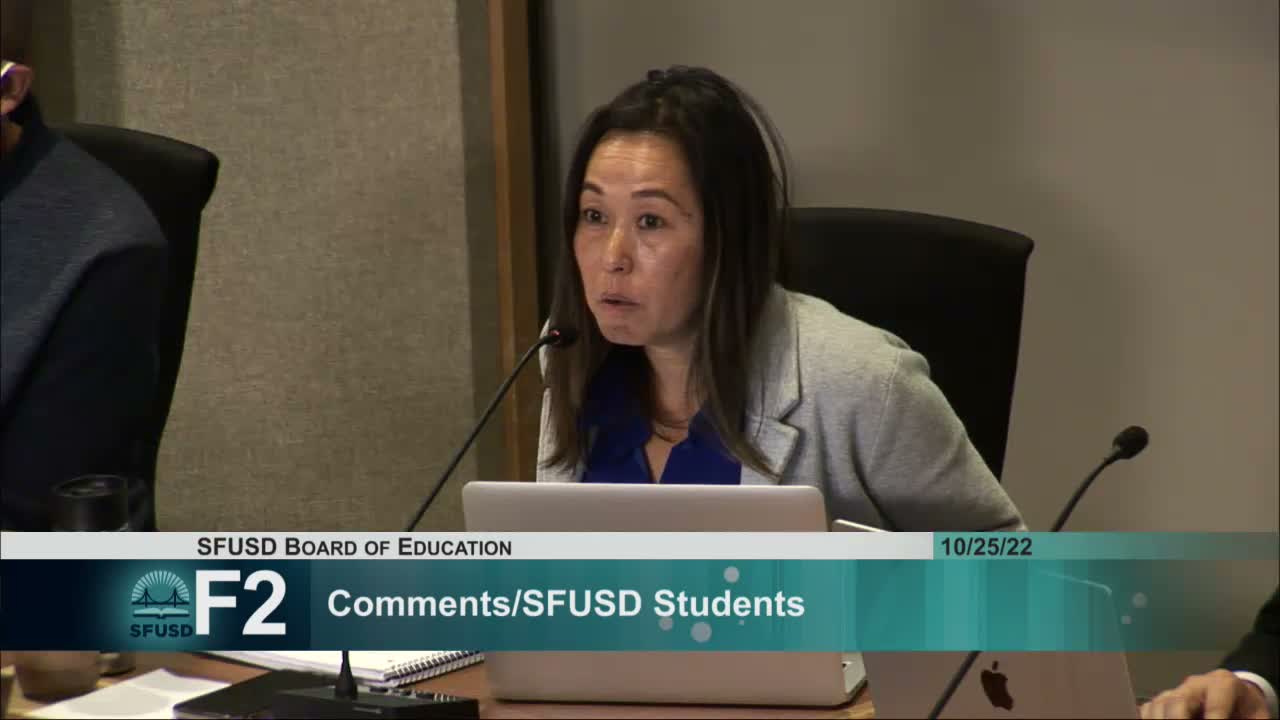
The San Francisco Board of Education voted unanimously Oct. 25 to adopt an updated strategic framework that sets a district vision, values, three five-year goals and five guardrails intended to shape governance and hold the superintendent accountable.
Board members said they reduced the goals from four to three after public input and workshops. The three goals announced include third-grade literacy (move from 52% to 70% proficiency in five years), eighth-grade math (42% to 65%) and college and career readiness (57% to 70%). Commissioners said they will use multiple measures, including but not limited to SBAC results, and that the superintendent will propose measurable interim goals and benchmarks for focal student groups.
The five guardrails are designed to constrain superintendent action and preserve community values while pursuing the goals: effective decision-making processes, serving the whole child, curriculum and instruction standards, transparent resource allocation, and strategic partnerships with city, state and community organizations. Commissioners described guardrails as limits on the superintendent meant to protect students' holistic needs and to ensure transparent use of resources.
The board presented the framework as the product of over 20 listening events, roughly 988 attendees/respondents and nearly 4,000 pieces of community input. Public commenters at the Oct. 25 meeting both praised the effort and pressed for sharper equity measures. Several parent and advocacy speakers urged that interim benchmarks be specified by student subgroups (for example African American, Latinx, Pacific Islander, English learners and students with disabilities) to avoid masking persistent gaps beneath district averages.
Superintendent Dr. Wayne said interim goals and targeted benchmarks are the superintendent's responsibility to draft and will be published in board documents and on the district website; he committed to finalizing drafts no later than January to permit alignment with next year's budget and Local Control and Accountability Plan (LCAP).
Board members emphasized that adopting the framework begins a longer implementation process that includes regular progress monitoring and budget alignment, and said the board expects to use the framework to evaluate and, if necessary, hold the superintendent accountable for progress.
Board members said they reduced the goals from four to three after public input and workshops. The three goals announced include third-grade literacy (move from 52% to 70% proficiency in five years), eighth-grade math (42% to 65%) and college and career readiness (57% to 70%). Commissioners said they will use multiple measures, including but not limited to SBAC results, and that the superintendent will propose measurable interim goals and benchmarks for focal student groups.
The five guardrails are designed to constrain superintendent action and preserve community values while pursuing the goals: effective decision-making processes, serving the whole child, curriculum and instruction standards, transparent resource allocation, and strategic partnerships with city, state and community organizations. Commissioners described guardrails as limits on the superintendent meant to protect students' holistic needs and to ensure transparent use of resources.
The board presented the framework as the product of over 20 listening events, roughly 988 attendees/respondents and nearly 4,000 pieces of community input. Public commenters at the Oct. 25 meeting both praised the effort and pressed for sharper equity measures. Several parent and advocacy speakers urged that interim benchmarks be specified by student subgroups (for example African American, Latinx, Pacific Islander, English learners and students with disabilities) to avoid masking persistent gaps beneath district averages.
Superintendent Dr. Wayne said interim goals and targeted benchmarks are the superintendent's responsibility to draft and will be published in board documents and on the district website; he committed to finalizing drafts no later than January to permit alignment with next year's budget and Local Control and Accountability Plan (LCAP).
Board members emphasized that adopting the framework begins a longer implementation process that includes regular progress monitoring and budget alignment, and said the board expects to use the framework to evaluate and, if necessary, hold the superintendent accountable for progress.
Don't Miss a Word: See the Full Meeting!
Go beyond summaries. Unlock every video, transcript, and key insight with a Founder Membership.
✓
Get instant access to full meeting videos
✓
Search and clip any phrase from complete transcripts
✓
Receive AI-powered summaries & custom alerts
✓
Enjoy lifetime, unrestricted access to government data
30-day money-back guarantee
