Educators, unions and parents press SFUSD for raises and fixes to payroll system as school year opens
August 23, 2022 | San Francisco City, San Francisco County, California
This article was created by AI summarizing key points discussed. AI makes mistakes, so for full details and context, please refer to the video of the full meeting. Please report any errors so we can fix them. Report an error »
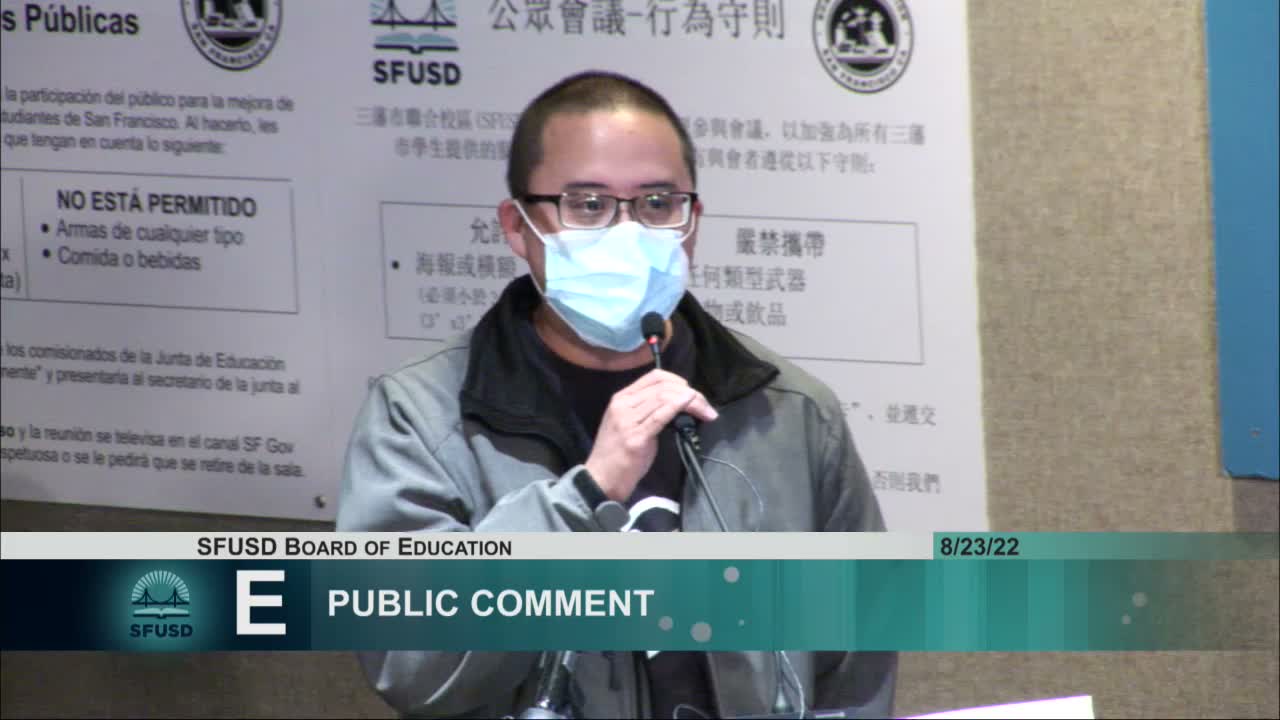
Dozens of teachers, paraeducators and parents urged the San Francisco Board of Education to raise wages and fix payroll problems during a lengthy public-comment period the night the board returned from closed session.
“Please pay us correctly,” said David Ko, a teacher who told the board he has worked in the district for 17 years and highlighted research placing a “teacher pay penalty” in the range of 17 percent. Other classroom and site employees described unpaid or incorrect pay stubs, missed stipends and the emotional and financial toll on staff who have had to borrow or take extra jobs to make ends meet.
Speakers described staffing shortages across the district. One paraprofessional reported 175 vacancies districtwide before the school year began; another speaker said Lowell High School was short 22 paraeducators. “We started this year with more than 100 teacher vacancies,” said a teacher who asked the board to “keep schools staffed” and provide competitive wages.
Union and parent leaders framed the issues as both practical and moral. Cassandra Curiel, identified in the transcript as president of the United Educators of San Francisco (UESF), said the core problem is respect for educators and staff, and urged the board to translate commitments into “actionable and substantial gains” in working conditions, onboarding and timely pay.
Multiple commenters singled out the district’s payroll platform (referred to in public comment as Empower) for persistent errors. Chris Klaus, a special-education teacher, warned that some colleagues have gone months without correct pay, and that the glitches have caused severe financial hardship for affected employees.
The superintendent responded in his report that the district had presented a 45-day budget revision and that the state has provided additional funding, which the district intends to prioritize toward recruitment and compensation. He also noted the “sunshine” step in bargaining — an initial public posting of proposals required before negotiations — and said the district would proceed with formal bargaining steps while acknowledging the urgency voiced by union members.
Board members did not take substantive public action on wages that night beyond approving procedural items and moving several tentative agreements and contracts forward for ratification. Several public speakers also urged the board to keep two proposed Muslim holidays (Eid) on the district calendar despite litigation over that policy change; others called for greater transparency on outdoor-learning bond awards and for improved translation and accessibility during board meetings.
The meeting record shows broad public demand for immediate pay remedies, payroll corrections and staffing investments; board leaders and district staff said they would continue negotiations and follow the procedural steps needed to reach agreements with unions.
“Please pay us correctly,” said David Ko, a teacher who told the board he has worked in the district for 17 years and highlighted research placing a “teacher pay penalty” in the range of 17 percent. Other classroom and site employees described unpaid or incorrect pay stubs, missed stipends and the emotional and financial toll on staff who have had to borrow or take extra jobs to make ends meet.
Speakers described staffing shortages across the district. One paraprofessional reported 175 vacancies districtwide before the school year began; another speaker said Lowell High School was short 22 paraeducators. “We started this year with more than 100 teacher vacancies,” said a teacher who asked the board to “keep schools staffed” and provide competitive wages.
Union and parent leaders framed the issues as both practical and moral. Cassandra Curiel, identified in the transcript as president of the United Educators of San Francisco (UESF), said the core problem is respect for educators and staff, and urged the board to translate commitments into “actionable and substantial gains” in working conditions, onboarding and timely pay.
Multiple commenters singled out the district’s payroll platform (referred to in public comment as Empower) for persistent errors. Chris Klaus, a special-education teacher, warned that some colleagues have gone months without correct pay, and that the glitches have caused severe financial hardship for affected employees.
The superintendent responded in his report that the district had presented a 45-day budget revision and that the state has provided additional funding, which the district intends to prioritize toward recruitment and compensation. He also noted the “sunshine” step in bargaining — an initial public posting of proposals required before negotiations — and said the district would proceed with formal bargaining steps while acknowledging the urgency voiced by union members.
Board members did not take substantive public action on wages that night beyond approving procedural items and moving several tentative agreements and contracts forward for ratification. Several public speakers also urged the board to keep two proposed Muslim holidays (Eid) on the district calendar despite litigation over that policy change; others called for greater transparency on outdoor-learning bond awards and for improved translation and accessibility during board meetings.
The meeting record shows broad public demand for immediate pay remedies, payroll corrections and staffing investments; board leaders and district staff said they would continue negotiations and follow the procedural steps needed to reach agreements with unions.
Don't Miss a Word: See the Full Meeting!
Go beyond summaries. Unlock every video, transcript, and key insight with a Founder Membership.
✓
Get instant access to full meeting videos
✓
Search and clip any phrase from complete transcripts
✓
Receive AI-powered summaries & custom alerts
✓
Enjoy lifetime, unrestricted access to government data
30-day money-back guarantee
