Board adopts superintendent-led process to set criteria for adding holidays; community urges immediate implementation of Eid
September 20, 2022 | San Francisco City, San Francisco County, California
This article was created by AI summarizing key points discussed. AI makes mistakes, so for full details and context, please refer to the video of the full meeting. Please report any errors so we can fix them. Report an error »
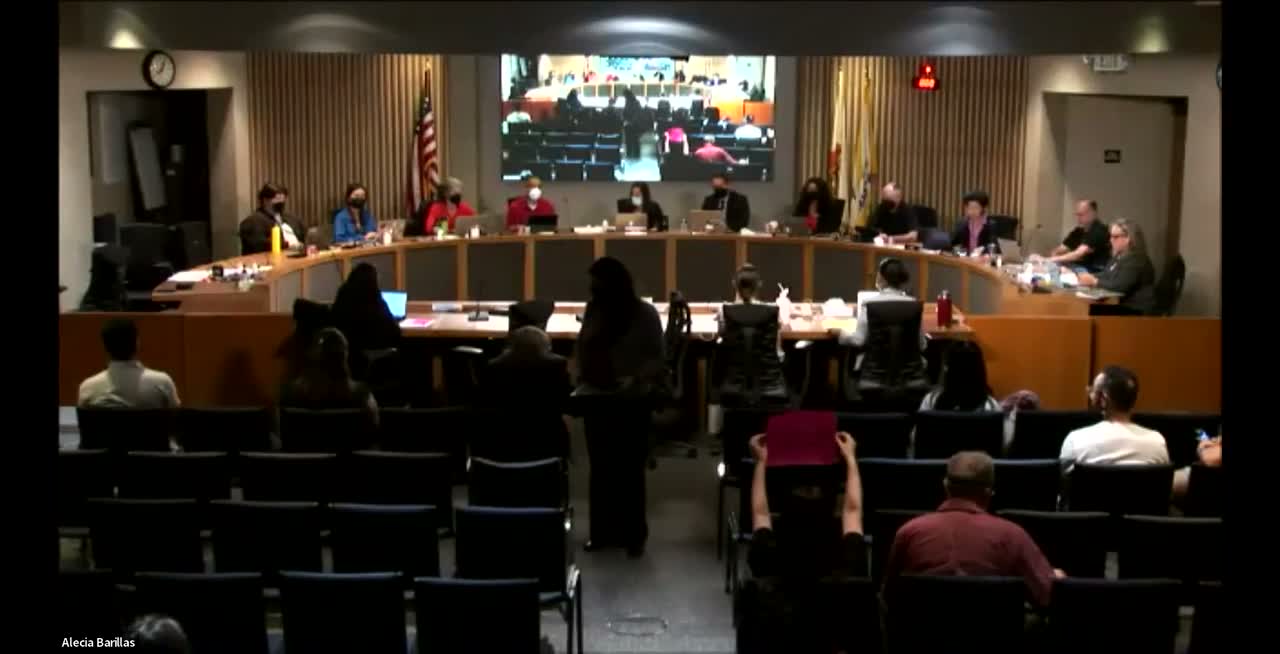
The San Francisco Board of Education voted to adopt a superintendent-led resolution asking staff to develop a clear, equity-centered process and timeline for determining which culturally significant days should be added to the district academic calendar. The motion holds implementation of earlier Resolution 22510 A1 — which had adopted Eid al-Fitr and Eid al-Adha as school holidays — in abeyance until staff returns with recommendations by Jan. 31.
Dozens of students, parents and community leaders traveled to the podium to urge the board not to backtrack. “Eid to us is Christmas to you,” said Ayesha, a sophomore at Galileo High School, pleading directly for an official day off. Multiple student speakers described repeated absences and formal discipline when they observed religious holidays in prior years.
Lara Kiswani, executive director of the Arab Resource and Organizing Center, criticized the board for what she called a disrespectful and delay-prone process and urged immediate implementation in 2023–24. Student speakers and allied community members framed the issue as part of psychological safety and anti-discrimination.
The discussion in the board chamber turned to legal exposure after the district received a threat of litigation. Commissioner Shue moved an amendment to vacate (erase) the earlier Eid resolution; that amendment failed on a roll-call vote. The board then voted to adopt the superintendent’s resolution (the approach calls for staff to produce legal, operational and budget analyses and a proposed calendar for the board by January). The roll-call on the superintendent motion recorded six affirmative votes and one dissenting vote.
Board members who supported the superintendent-led approach said it balances urgency with the need for defensible legal and budgetary analysis. Those who opposed resurrected frustration about changing course after the board had previously approved Eid; one commissioner said the delay felt like a broken promise to Muslim and Arab students.
Next steps: Superintendent Wayne will return with criteria, analysis of legal/financial/operational impacts and a recommended calendar for the 2023–24 year by Jan. 31. The board retained final authority to adopt or reject any recommended calendar.
Dozens of students, parents and community leaders traveled to the podium to urge the board not to backtrack. “Eid to us is Christmas to you,” said Ayesha, a sophomore at Galileo High School, pleading directly for an official day off. Multiple student speakers described repeated absences and formal discipline when they observed religious holidays in prior years.
Lara Kiswani, executive director of the Arab Resource and Organizing Center, criticized the board for what she called a disrespectful and delay-prone process and urged immediate implementation in 2023–24. Student speakers and allied community members framed the issue as part of psychological safety and anti-discrimination.
The discussion in the board chamber turned to legal exposure after the district received a threat of litigation. Commissioner Shue moved an amendment to vacate (erase) the earlier Eid resolution; that amendment failed on a roll-call vote. The board then voted to adopt the superintendent’s resolution (the approach calls for staff to produce legal, operational and budget analyses and a proposed calendar for the board by January). The roll-call on the superintendent motion recorded six affirmative votes and one dissenting vote.
Board members who supported the superintendent-led approach said it balances urgency with the need for defensible legal and budgetary analysis. Those who opposed resurrected frustration about changing course after the board had previously approved Eid; one commissioner said the delay felt like a broken promise to Muslim and Arab students.
Next steps: Superintendent Wayne will return with criteria, analysis of legal/financial/operational impacts and a recommended calendar for the 2023–24 year by Jan. 31. The board retained final authority to adopt or reject any recommended calendar.
Don't Miss a Word: See the Full Meeting!
Go beyond summaries. Unlock every video, transcript, and key insight with a Founder Membership.
✓
Get instant access to full meeting videos
✓
Search and clip any phrase from complete transcripts
✓
Receive AI-powered summaries & custom alerts
✓
Enjoy lifetime, unrestricted access to government data
30-day money-back guarantee
