SFUSD superintendent outlines high‑school portfolio plan as heated Lowell admissions debate erupts
November 14, 2023 | San Francisco City, San Francisco County, California
This article was created by AI summarizing key points discussed. AI makes mistakes, so for full details and context, please refer to the video of the full meeting. Please report any errors so we can fix them. Report an error »
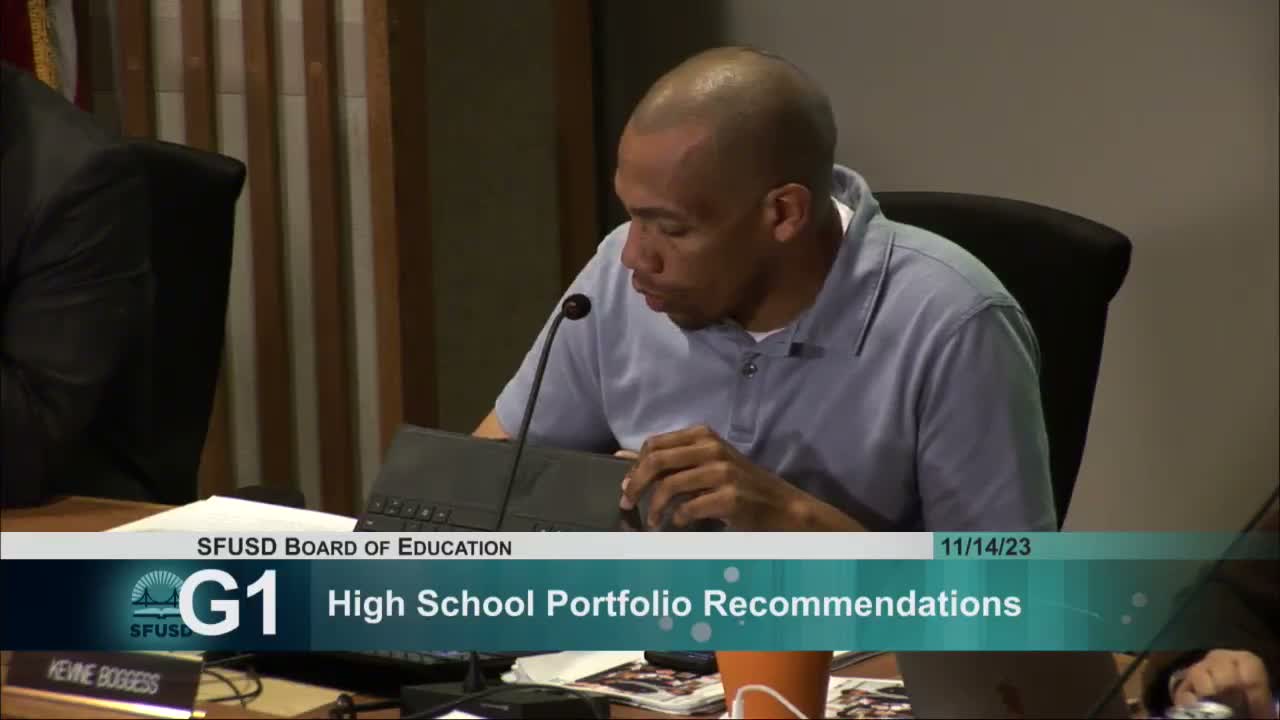
Superintendent Brent Wayne on Nov. 14 presented a set of recommendations to re‑envision San Francisco Unified School District's high‑school portfolio, saying the proposals prioritize classroom instruction, postsecondary planning and a baseline of universal opportunities across schools.
The superintendent framed the presentation as phase 1 of a multi‑stage effort informed by a yearlong high‑school task force. Wayne summarized three "key moves": define and deliver high‑quality instruction in every high‑school classroom; ensure consistent postsecondary readiness supports and common artifacts (for example, unified five‑year plans and personal statements); and create a portfolio of schools with universal baseline course offerings while preserving unique programmatic experiences.
Task‑force members and several student presenters described the process of 22 meetings and cross‑school review, urging the board to focus on equitable instruction, clearer course information (a proposed course matrix) and better communication to families. Student Langston Montgomery said participation broadened his view of district decision‑making and hoped the proposals would strengthen opportunities for all schools. Student Charlie Noel Tevis, a Lowell junior and task‑force member, thanked staff and emphasized that student voice shaped many recommendations.
The presentation included several operational proposals: a district course matrix to show course availability across schools, an app to help middle‑school students match interests with high‑school offerings, instructional walk‑throughs and shared professional development, and prototypes for how selective admissions might be clarified. Staff noted the superintendent's information item included a recommendation to shift some selective admissions (for example, Lowell) toward a clear minimum GPA as one possible criterion; staff did not propose a specific GPA yet and said data analysis and focus‑group review remain under way.
Public comment before and during the discussion was dominated by Lowell admissions: dozens of parents, alumni and students addressed the board with sharply divided views. Some speakers urged maintaining Lowell's three‑band merit system or other merit‑based criteria; others, including advocates and members of the task force and community groups, argued that testing and current criteria create barriers and urged moves toward clearer, more equitable admission standards. Several commenters asked the board to prioritize raising the quality of all comprehensive high schools rather than focusing only on admissions at a single school.
Board members asked staff for concrete timelines, budget implications and measurable outcomes. Commissioners repeatedly requested a phase‑2 operational plan in the next six months with specific dates tied to enrollment, staffing and budget decisions. Several members pressed for clarity on how a GPA‑based criterion would be calculated and raised concerns about inconsistent grading practices across the district; staff said they would run cohort analyses to identify thresholds most predictive of student success and would return with data before any policy change.
Superintendent Wayne responded that the next steps include developing implementation details during phase 2 (the coming six months), drafting operational prototypes for admission options, and mapping budget dependencies. He said the district would prioritize establishing universal baseline opportunities across comprehensive high schools before finalizing any selective‑admissions changes, to ensure families have confidence that alternatives will meet students' needs.
Next steps and procedural context: the item was information only; the board did not vote on admission policy tonight. Staff said a timeline for operational proposals and budget recommendations will be presented in subsequent meetings (updates expected in January and a formal set of policy recommendations by February through June depending on budget alignment).
The superintendent framed the presentation as phase 1 of a multi‑stage effort informed by a yearlong high‑school task force. Wayne summarized three "key moves": define and deliver high‑quality instruction in every high‑school classroom; ensure consistent postsecondary readiness supports and common artifacts (for example, unified five‑year plans and personal statements); and create a portfolio of schools with universal baseline course offerings while preserving unique programmatic experiences.
Task‑force members and several student presenters described the process of 22 meetings and cross‑school review, urging the board to focus on equitable instruction, clearer course information (a proposed course matrix) and better communication to families. Student Langston Montgomery said participation broadened his view of district decision‑making and hoped the proposals would strengthen opportunities for all schools. Student Charlie Noel Tevis, a Lowell junior and task‑force member, thanked staff and emphasized that student voice shaped many recommendations.
The presentation included several operational proposals: a district course matrix to show course availability across schools, an app to help middle‑school students match interests with high‑school offerings, instructional walk‑throughs and shared professional development, and prototypes for how selective admissions might be clarified. Staff noted the superintendent's information item included a recommendation to shift some selective admissions (for example, Lowell) toward a clear minimum GPA as one possible criterion; staff did not propose a specific GPA yet and said data analysis and focus‑group review remain under way.
Public comment before and during the discussion was dominated by Lowell admissions: dozens of parents, alumni and students addressed the board with sharply divided views. Some speakers urged maintaining Lowell's three‑band merit system or other merit‑based criteria; others, including advocates and members of the task force and community groups, argued that testing and current criteria create barriers and urged moves toward clearer, more equitable admission standards. Several commenters asked the board to prioritize raising the quality of all comprehensive high schools rather than focusing only on admissions at a single school.
Board members asked staff for concrete timelines, budget implications and measurable outcomes. Commissioners repeatedly requested a phase‑2 operational plan in the next six months with specific dates tied to enrollment, staffing and budget decisions. Several members pressed for clarity on how a GPA‑based criterion would be calculated and raised concerns about inconsistent grading practices across the district; staff said they would run cohort analyses to identify thresholds most predictive of student success and would return with data before any policy change.
Superintendent Wayne responded that the next steps include developing implementation details during phase 2 (the coming six months), drafting operational prototypes for admission options, and mapping budget dependencies. He said the district would prioritize establishing universal baseline opportunities across comprehensive high schools before finalizing any selective‑admissions changes, to ensure families have confidence that alternatives will meet students' needs.
Next steps and procedural context: the item was information only; the board did not vote on admission policy tonight. Staff said a timeline for operational proposals and budget recommendations will be presented in subsequent meetings (updates expected in January and a formal set of policy recommendations by February through June depending on budget alignment).
Don't Miss a Word: See the Full Meeting!
Go beyond summaries. Unlock every video, transcript, and key insight with a Founder Membership.
✓
Get instant access to full meeting videos
✓
Search and clip any phrase from complete transcripts
✓
Receive AI-powered summaries & custom alerts
✓
Enjoy lifetime, unrestricted access to government data
30-day money-back guarantee
