Parents and unions press SFUSD on bond, school split and contracts during extended public comment
October 10, 2023 | San Francisco City, San Francisco County, California
This article was created by AI summarizing key points discussed. AI makes mistakes, so for full details and context, please refer to the video of the full meeting. Please report any errors so we can fix them. Report an error »
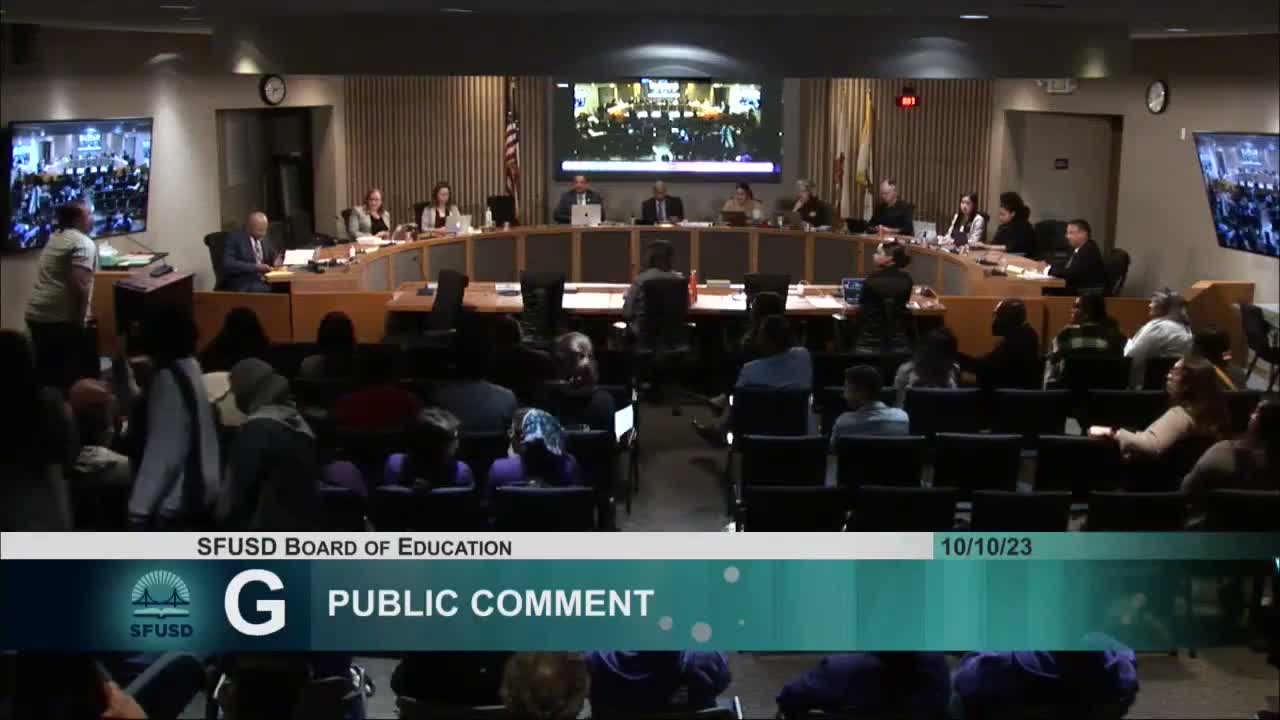
An extended public comment period at the San Francisco Board of Education’s Oct. 10 meeting concentrated community attention on a proposed phasing plan that would split Buena Vista/Hunters Point (BVHM) during construction, a forthcoming bond measure and stalled contract talks with classified staff.
Multiple speakers from BVHM said phasing and an interim split would fracture community ties, impede access for families and create traumatic transitions for students. Parent Bernice Casey recounted delayed district responses to community requests and read a statement from a fourth grader who said, "You cannot break us up." Another parent asked the district to provide written assurances that families would retain the right to return to their school after construction.
Union leaders and labor allies used public comment to press the board on bargaining and bond priorities. Tracy Breager of Jobs with Justice and union representatives urged a “right‑sized, accountable” bond large enough to address deferred maintenance, air quality and kitchen upgrades; Breager warned that a recurring $1 billion bond every five to eight years would not close a multibillion‑dollar backlog. SEIU and other unions described long open contracts and sought pay parity and fair negotiations; SEIU speakers at times threatened coordinated work actions if bargaining did not move forward.
Several education‑sector union leaders addressed the board, including leaders from United Educators of San Francisco and United Teachers of Richmond, urging adoption of shared governance and community‑schools language in bargaining agreements. Commenters from other California districts described contracts that enshrine shared decision making and asked San Francisco to follow those models.
NAACP representatives urged the district to address disproportionate suspension rates and to remove nearby encampments outside affected schools. Parents and community advocates also requested more timely translation of IEPs and other technical documents to allow meaningful participation in meetings.
The board acknowledged the concerns and noted the items will inform upcoming bond discussions and contract negotiations, but took no new immediate action beyond hearing comments.
The meeting’s public comment period also generated procedural pushback: a number of speakers criticized a decision to limit public comment to one minute and to consolidate public comment into a single meeting each month, calling the change restrictive to community participation.
Multiple speakers from BVHM said phasing and an interim split would fracture community ties, impede access for families and create traumatic transitions for students. Parent Bernice Casey recounted delayed district responses to community requests and read a statement from a fourth grader who said, "You cannot break us up." Another parent asked the district to provide written assurances that families would retain the right to return to their school after construction.
Union leaders and labor allies used public comment to press the board on bargaining and bond priorities. Tracy Breager of Jobs with Justice and union representatives urged a “right‑sized, accountable” bond large enough to address deferred maintenance, air quality and kitchen upgrades; Breager warned that a recurring $1 billion bond every five to eight years would not close a multibillion‑dollar backlog. SEIU and other unions described long open contracts and sought pay parity and fair negotiations; SEIU speakers at times threatened coordinated work actions if bargaining did not move forward.
Several education‑sector union leaders addressed the board, including leaders from United Educators of San Francisco and United Teachers of Richmond, urging adoption of shared governance and community‑schools language in bargaining agreements. Commenters from other California districts described contracts that enshrine shared decision making and asked San Francisco to follow those models.
NAACP representatives urged the district to address disproportionate suspension rates and to remove nearby encampments outside affected schools. Parents and community advocates also requested more timely translation of IEPs and other technical documents to allow meaningful participation in meetings.
The board acknowledged the concerns and noted the items will inform upcoming bond discussions and contract negotiations, but took no new immediate action beyond hearing comments.
The meeting’s public comment period also generated procedural pushback: a number of speakers criticized a decision to limit public comment to one minute and to consolidate public comment into a single meeting each month, calling the change restrictive to community participation.
View the Full Meeting & All Its Details
This article offers just a summary. Unlock complete video, transcripts, and insights as a Founder Member.
✓
Watch full, unedited meeting videos
✓
Search every word spoken in unlimited transcripts
✓
AI summaries & real-time alerts (all government levels)
✓
Permanent access to expanding government content
30-day money-back guarantee
