SFUSD board adopts amended resolution to respond to CVRA demand, agrees to explore trustee areas and other legal alternatives
February 13, 2024 | San Francisco City, San Francisco County, California
This article was created by AI summarizing key points discussed. AI makes mistakes, so for full details and context, please refer to the video of the full meeting. Please report any errors so we can fix them. Report an error »
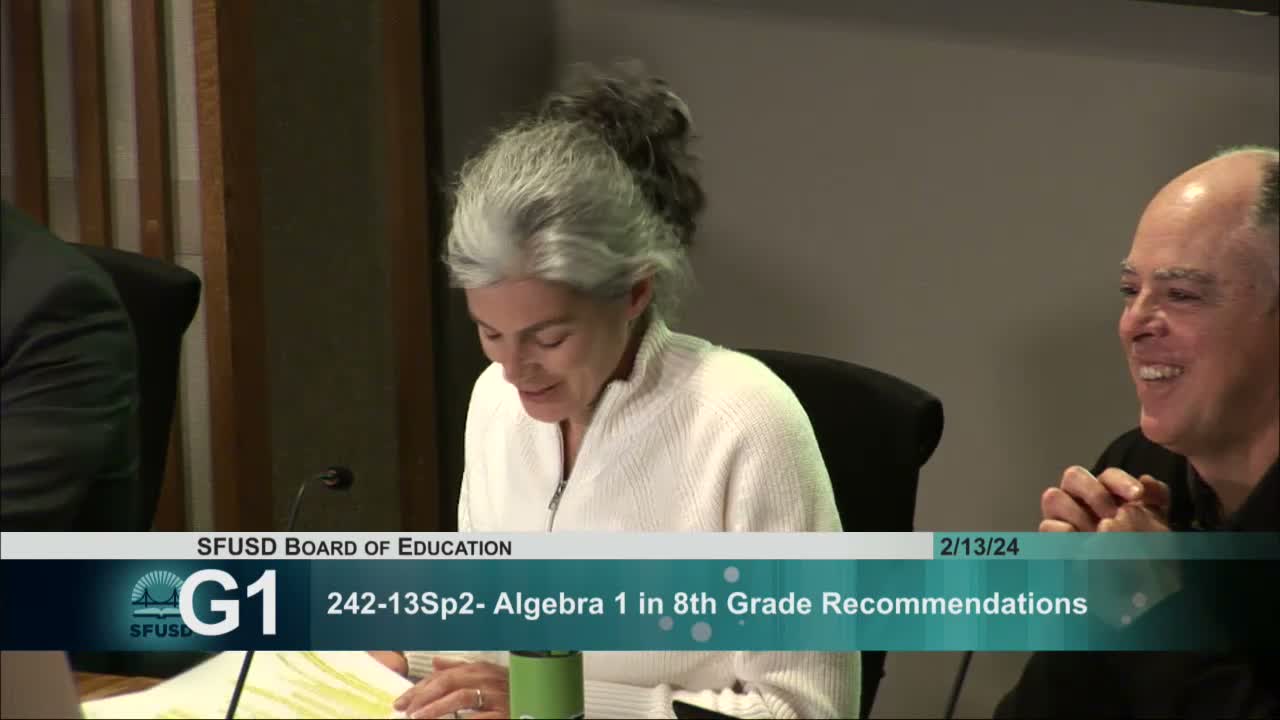
The San Francisco Unified School District board on Feb. 13 voted to adopt a resolution as its formal response to a demand letter alleging potential violations of the California Voting Rights Act (CVRA). The board first approved amendments and then passed the resolution as amended, 6–1.
General Counsel Rodney Moore summarized the deadline and legal context: the district received a demand letter calling for a transition from at‑large board elections to trustee‑area elections and has 45 days to respond. Commissioner Lisa Weisman Ward proposed amendments to the resolution to reflect recent California Supreme Court guidance (Pico Neighborhood Association v. City of Santa Monica, often referred to as the PECO decision) and to require staff to explore “other legal methods that were specifically named” in that decision in addition to trustee‑area elections.
Commissioner Weisman Ward described the intent behind the edits: to ensure the district considers alternatives such as proportional options that the state supreme court recognized may also address CVRA concerns. She moved the amendments, which were approved by roll call. The board then voted on the resolution as amended; the roll call recorded six ayes and one no (Commissioner Bogus opposed).
General Counsel Moore said the amended resolution formalizes a process: staff will engage a demographer, gather community input, and evaluate both trustee‑area maps and other lawful alternatives consistent with the state Supreme Court’s guidance. The resolution directs staff to return to the board with recommended next steps consistent with legal timelines.
Vote detail: The board first voted to accept amendments (6 ayes, 1 no) and then approved the amended resolution (6 ayes, 1 no). Commissioner Bogus voted no on both procedural and substantive grounds.
What happens next: staff will solicit demographer work, begin community outreach, consider multiple legal pathways (trustee areas or alternatives identified in the PECO decision), and present options for board consideration within the required response period.
General Counsel Rodney Moore summarized the deadline and legal context: the district received a demand letter calling for a transition from at‑large board elections to trustee‑area elections and has 45 days to respond. Commissioner Lisa Weisman Ward proposed amendments to the resolution to reflect recent California Supreme Court guidance (Pico Neighborhood Association v. City of Santa Monica, often referred to as the PECO decision) and to require staff to explore “other legal methods that were specifically named” in that decision in addition to trustee‑area elections.
Commissioner Weisman Ward described the intent behind the edits: to ensure the district considers alternatives such as proportional options that the state supreme court recognized may also address CVRA concerns. She moved the amendments, which were approved by roll call. The board then voted on the resolution as amended; the roll call recorded six ayes and one no (Commissioner Bogus opposed).
General Counsel Moore said the amended resolution formalizes a process: staff will engage a demographer, gather community input, and evaluate both trustee‑area maps and other lawful alternatives consistent with the state Supreme Court’s guidance. The resolution directs staff to return to the board with recommended next steps consistent with legal timelines.
Vote detail: The board first voted to accept amendments (6 ayes, 1 no) and then approved the amended resolution (6 ayes, 1 no). Commissioner Bogus voted no on both procedural and substantive grounds.
What happens next: staff will solicit demographer work, begin community outreach, consider multiple legal pathways (trustee areas or alternatives identified in the PECO decision), and present options for board consideration within the required response period.
View the Full Meeting & All Its Details
This article offers just a summary. Unlock complete video, transcripts, and insights as a Founder Member.
✓
Watch full, unedited meeting videos
✓
Search every word spoken in unlimited transcripts
✓
AI summaries & real-time alerts (all government levels)
✓
Permanent access to expanding government content
30-day money-back guarantee
