Audit finds gaps in SFUSD K–8 math materials and instruction; district plans K–8 pilots, expanded DreamBox and 1,500 tutoring seats
January 23, 2024 | San Francisco City, San Francisco County, California
This article was created by AI summarizing key points discussed. AI makes mistakes, so for full details and context, please refer to the video of the full meeting. Please report any errors so we can fix them. Report an error »
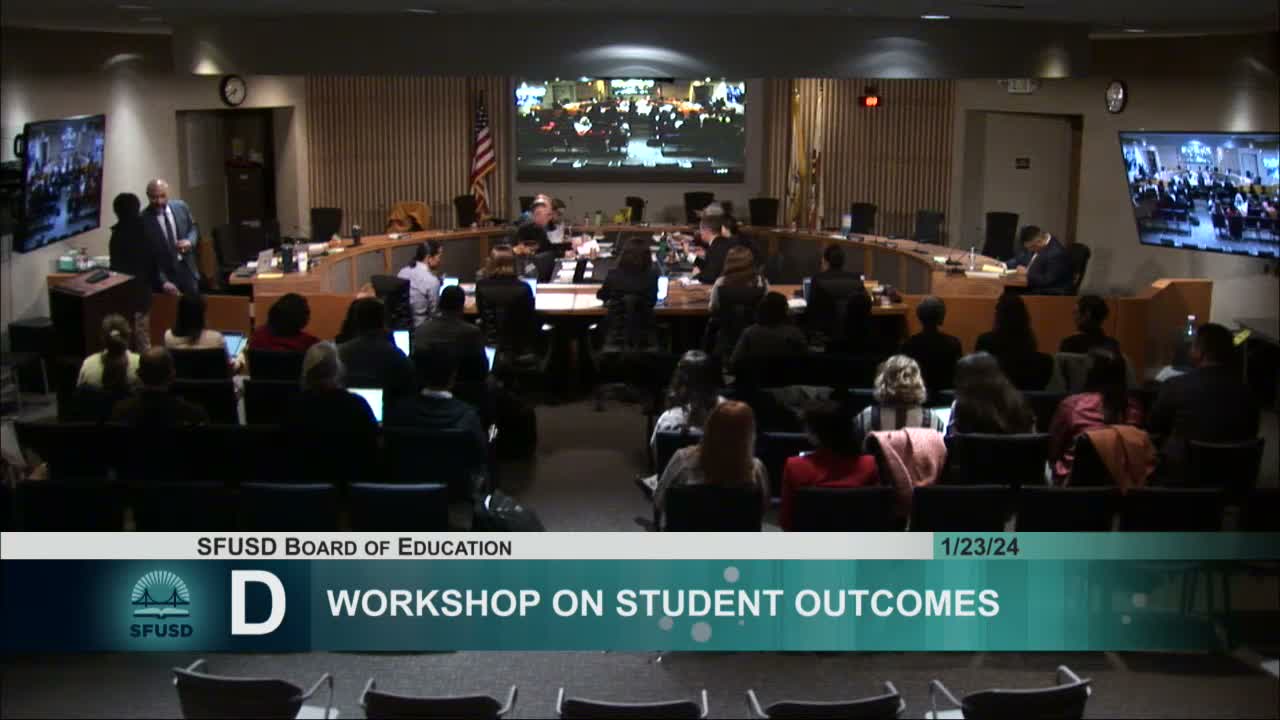
An outside audit of San Francisco Unified School District’s K–8 math program found key gaps in curriculum and classroom practice and prompted district leaders to outline a phased response combining short-term digital supports with longer-term curriculum pilots and coaching.
"We are at 39.7% right now based on our STAR math performance," Superintendent Wayne told the board at the Jan. 3 progress-monitoring workshop, citing the district’s interim target of 65% of eighth graders meeting standards by October 2027. Wayne and TNTP presenters pointed to a drop from roughly 55% proficiency in third grade to 39.7% by eighth grade as a signal that foundational skills are not sustained.
Jeff Tsang of TNTP, the national education nonprofit that conducted the audit, said the curriculum review and classroom observations produced mixed results: elementary materials often focused on the major work of the grade, but the seventh-grade materials the team reviewed “did not spend the large majority of the year on the major work or most critical concepts,” and lacked sufficient practice on fractions and multistep problems. TNTP also reported that while 68% of sampled assignments were grade-appropriate, only 28% of observed lessons offered “strong instruction,” with lower teacher expectations and student sense of belonging in classes serving higher proportions of English learners and students of color.
"When students who started far behind made 7.3 months more progress when they had access to grade-appropriate assignments," Tsang noted during the presentation, citing audit analyses that link specific instructional resources to measurable learning gains.
District staff described a three-part strategy. In the short term, the district will leverage existing digital platforms — DreamBox and a new IXL rollout — as supplemental tools, and the district plans to open about 1,500 tutoring seats through IXL beginning in March. For the longer term, staff said the district will pilot new K–8 math curricula in a voluntary, targeted set of schools beginning in August 2024 and provide job-embedded coaching and professional learning to support implementation.
Devin Krugman and Doctor Nicole Prisley said the pilot approach will include full-year pilots in middle schools and targeted sites with higher shares of focal populations (African American students, Latinx students, multilingual learners and students with IEPs). "One is that we want it to be pretty expansive," a district presenter said of the K–8 pilot, adding the effort will be voluntary until a full curriculum adoption makes it mandatory across the district.
Principals and teachers from schools that have shown gains described concrete site practices. Sarah Liebert, principal at John Muir, said her site uses lesson study as its main professional development and that Japan Math, a teaching-through-problem-solving curriculum, is used at the site to deepen students’ conceptual understanding. "Every teacher is comfortable facilitating a teaching through problem solving methodology," Liebert said, describing whole-school lesson study, common planning time and a sustained focus on student agency.
Presidio Middle School principal Kevin Chu and teacher Corina Chu described long-term, consistent DreamBox use and a seven-period schedule that yields 140 minutes a week of common planning time, which they said supports cycles of inquiry, frequent data review and aligned instruction. "We use DreamBox more than more than any other middle school," Kevin Chu said and credited common planning and teacher collaboration for improved outcomes at Presidio.
Board members pressed for measurable expectations for narrowing gaps for Black and Latinx students and for explicit short-term metrics tied to tools such as DreamBox. TNTP and district staff recommended using the digital platforms strategically (teacher-assigned lessons tied to classroom units or targeted scaffolded practice) and pursuing full curriculum pilots paired with coaching and real-time classroom observations to improve instruction.
Public commenters raised questions about DreamBox accessibility for students who are blind or have motor challenges, cautioned against overreliance on EdTech, and urged stronger tier 2 and tier 3 interventions and targeted plans for students with disabilities and multilingual learners.
District leaders said they will monitor pilot participation, use data from observations and surveys, and return to the board with further monitoring reports; specific counts of pilot schools, teacher participants and student-level projections were discussed as goals but remain "not specified" in the presentation materials.
The board also discussed budget and scheduling constraints that could affect scale-up, noting that changes to library, art and PE allocations may reduce the available common planning time elementary schools currently use to run lesson-study cycles.
"We are at 39.7% right now based on our STAR math performance," Superintendent Wayne told the board at the Jan. 3 progress-monitoring workshop, citing the district’s interim target of 65% of eighth graders meeting standards by October 2027. Wayne and TNTP presenters pointed to a drop from roughly 55% proficiency in third grade to 39.7% by eighth grade as a signal that foundational skills are not sustained.
Jeff Tsang of TNTP, the national education nonprofit that conducted the audit, said the curriculum review and classroom observations produced mixed results: elementary materials often focused on the major work of the grade, but the seventh-grade materials the team reviewed “did not spend the large majority of the year on the major work or most critical concepts,” and lacked sufficient practice on fractions and multistep problems. TNTP also reported that while 68% of sampled assignments were grade-appropriate, only 28% of observed lessons offered “strong instruction,” with lower teacher expectations and student sense of belonging in classes serving higher proportions of English learners and students of color.
"When students who started far behind made 7.3 months more progress when they had access to grade-appropriate assignments," Tsang noted during the presentation, citing audit analyses that link specific instructional resources to measurable learning gains.
District staff described a three-part strategy. In the short term, the district will leverage existing digital platforms — DreamBox and a new IXL rollout — as supplemental tools, and the district plans to open about 1,500 tutoring seats through IXL beginning in March. For the longer term, staff said the district will pilot new K–8 math curricula in a voluntary, targeted set of schools beginning in August 2024 and provide job-embedded coaching and professional learning to support implementation.
Devin Krugman and Doctor Nicole Prisley said the pilot approach will include full-year pilots in middle schools and targeted sites with higher shares of focal populations (African American students, Latinx students, multilingual learners and students with IEPs). "One is that we want it to be pretty expansive," a district presenter said of the K–8 pilot, adding the effort will be voluntary until a full curriculum adoption makes it mandatory across the district.
Principals and teachers from schools that have shown gains described concrete site practices. Sarah Liebert, principal at John Muir, said her site uses lesson study as its main professional development and that Japan Math, a teaching-through-problem-solving curriculum, is used at the site to deepen students’ conceptual understanding. "Every teacher is comfortable facilitating a teaching through problem solving methodology," Liebert said, describing whole-school lesson study, common planning time and a sustained focus on student agency.
Presidio Middle School principal Kevin Chu and teacher Corina Chu described long-term, consistent DreamBox use and a seven-period schedule that yields 140 minutes a week of common planning time, which they said supports cycles of inquiry, frequent data review and aligned instruction. "We use DreamBox more than more than any other middle school," Kevin Chu said and credited common planning and teacher collaboration for improved outcomes at Presidio.
Board members pressed for measurable expectations for narrowing gaps for Black and Latinx students and for explicit short-term metrics tied to tools such as DreamBox. TNTP and district staff recommended using the digital platforms strategically (teacher-assigned lessons tied to classroom units or targeted scaffolded practice) and pursuing full curriculum pilots paired with coaching and real-time classroom observations to improve instruction.
Public commenters raised questions about DreamBox accessibility for students who are blind or have motor challenges, cautioned against overreliance on EdTech, and urged stronger tier 2 and tier 3 interventions and targeted plans for students with disabilities and multilingual learners.
District leaders said they will monitor pilot participation, use data from observations and surveys, and return to the board with further monitoring reports; specific counts of pilot schools, teacher participants and student-level projections were discussed as goals but remain "not specified" in the presentation materials.
The board also discussed budget and scheduling constraints that could affect scale-up, noting that changes to library, art and PE allocations may reduce the available common planning time elementary schools currently use to run lesson-study cycles.
View the Full Meeting & All Its Details
This article offers just a summary. Unlock complete video, transcripts, and insights as a Founder Member.
✓
Watch full, unedited meeting videos
✓
Search every word spoken in unlimited transcripts
✓
AI summaries & real-time alerts (all government levels)
✓
Permanent access to expanding government content
30-day money-back guarantee
