SFUSD reports midyear gains for ninth‑grade EWI exits but tenth‑grade on‑track rates lag
February 27, 2024 | San Francisco City, San Francisco County, California
This article was created by AI summarizing key points discussed. AI makes mistakes, so for full details and context, please refer to the video of the full meeting. Please report any errors so we can fix them. Report an error »
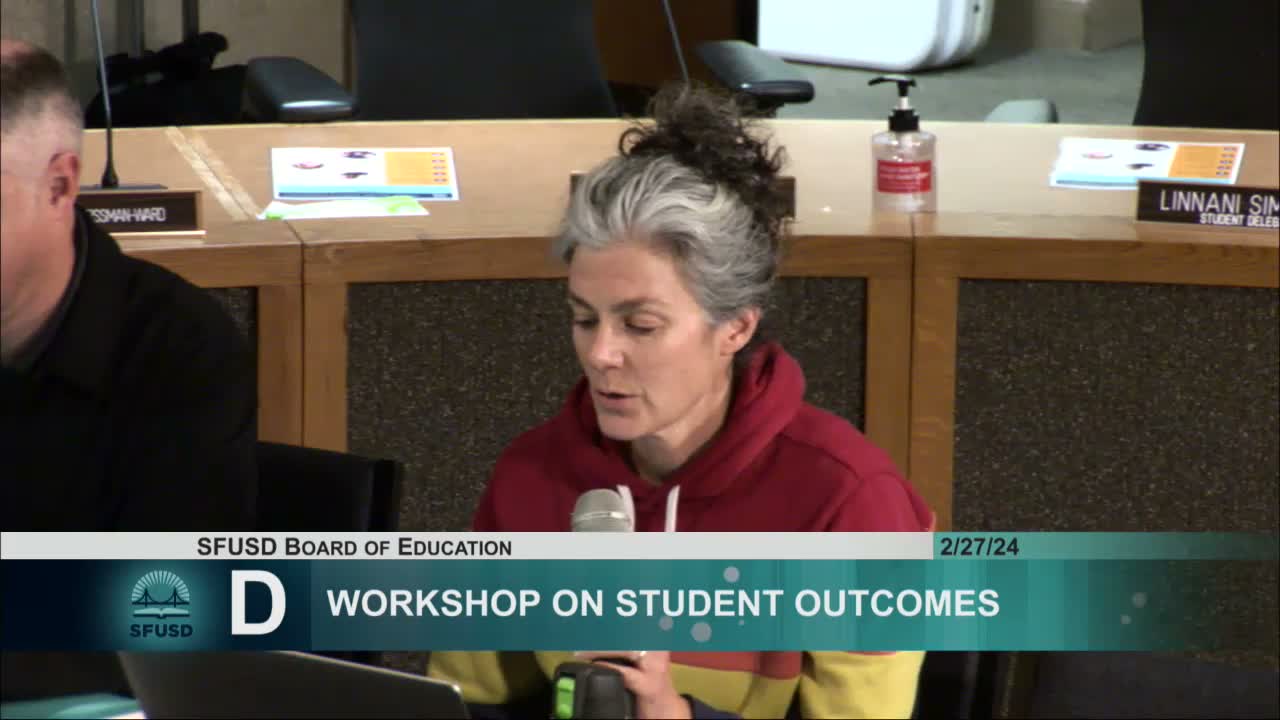
The San Francisco Unified School District presented its Year‑2 progress monitoring report on college and career readiness, telling the board staff that 30% of ninth graders had exited the Early Warning Indicator (EWI) at midyear—above the interim goal of 25%—but that the current tenth‑grade cohort is not yet on pace to meet the district’s target for being on track to graduate.
District leaders said the EWI exit rate suggests progress in early high‑school interventions while the tenth‑grade shortfall (currently reported as 65% on track versus a 71% goal) shows additional work is needed. "Midyear we had 30 percent of our ninth grade students exit EWI," said Patrick West, interim executive director of college and career readiness, summarizing the midyear numbers and noting staff consider that ahead of the interim target. Staff framed the ninth‑grade improvement as evidence that interventions—when implemented—can accelerate early progress.
The report included school‑level examples. Balboa High School staff described coordinated care team (CCT) meetings, point‑person case management, targeted incentives and a weekly tracker that combines Synergy and Illuminate data for near‑real‑time monitoring. "I really do meet students where they're at in the halls," said Victor Yu, a Balboa counselor and the school's 'fresh specialist', describing outreach and daily progress trackers used to raise attendance and grades.
Staff outlined specific levers for sites: requiring consistent off‑track conferences between counselors and families, improving counselor data entry in Synergy so progress is visible districtwide, piloting freshman‑on‑track initiatives, expanding dual‑enrollment and career pathway opportunities and running a summer bridge program in partnership with DCYF to recruit rising ninth graders on the EWI list.
Board members pressed staff for more school‑level and subgroup breakdowns. Multiple commissioners requested data showing whether improvements were equitably distributed across focal populations, and one asked for the percentage of students who fall back off track after exiting EWI; staff acknowledged focal populations remain underperforming and committed to providing disaggregated data at future monitoring (staff said the next round is scheduled for May).
On academic drivers, staff highlighted math and English course performance as primary contributors to off‑track status and said structural changes—such as moving more schools to a seven‑period day to create in‑day credit recovery and teacher office hours—are being pursued to increase in‑school opportunities. Staff also cited grading‑for‑equity work and peer‑led programs as promising approaches to increase classroom engagement and sense of belonging.
What happens next: staff said they will return with school‑level and subgroup breakdowns, additional analysis of students who fall back after exiting EWI, and plans to scale district practices that showed evidence of success. The board asked for clearer operational metrics and additional evidence on which practices produced the strongest exits from EWI.
District leaders said the EWI exit rate suggests progress in early high‑school interventions while the tenth‑grade shortfall (currently reported as 65% on track versus a 71% goal) shows additional work is needed. "Midyear we had 30 percent of our ninth grade students exit EWI," said Patrick West, interim executive director of college and career readiness, summarizing the midyear numbers and noting staff consider that ahead of the interim target. Staff framed the ninth‑grade improvement as evidence that interventions—when implemented—can accelerate early progress.
The report included school‑level examples. Balboa High School staff described coordinated care team (CCT) meetings, point‑person case management, targeted incentives and a weekly tracker that combines Synergy and Illuminate data for near‑real‑time monitoring. "I really do meet students where they're at in the halls," said Victor Yu, a Balboa counselor and the school's 'fresh specialist', describing outreach and daily progress trackers used to raise attendance and grades.
Staff outlined specific levers for sites: requiring consistent off‑track conferences between counselors and families, improving counselor data entry in Synergy so progress is visible districtwide, piloting freshman‑on‑track initiatives, expanding dual‑enrollment and career pathway opportunities and running a summer bridge program in partnership with DCYF to recruit rising ninth graders on the EWI list.
Board members pressed staff for more school‑level and subgroup breakdowns. Multiple commissioners requested data showing whether improvements were equitably distributed across focal populations, and one asked for the percentage of students who fall back off track after exiting EWI; staff acknowledged focal populations remain underperforming and committed to providing disaggregated data at future monitoring (staff said the next round is scheduled for May).
On academic drivers, staff highlighted math and English course performance as primary contributors to off‑track status and said structural changes—such as moving more schools to a seven‑period day to create in‑day credit recovery and teacher office hours—are being pursued to increase in‑school opportunities. Staff also cited grading‑for‑equity work and peer‑led programs as promising approaches to increase classroom engagement and sense of belonging.
What happens next: staff said they will return with school‑level and subgroup breakdowns, additional analysis of students who fall back after exiting EWI, and plans to scale district practices that showed evidence of success. The board asked for clearer operational metrics and additional evidence on which practices produced the strongest exits from EWI.
View the Full Meeting & All Its Details
This article offers just a summary. Unlock complete video, transcripts, and insights as a Founder Member.
✓
Watch full, unedited meeting videos
✓
Search every word spoken in unlimited transcripts
✓
AI summaries & real-time alerts (all government levels)
✓
Permanent access to expanding government content
30-day money-back guarantee
