SFUSD votes to replace payroll/HR system, approves Frontline ERP with new governance and oversight
March 12, 2024 | San Francisco City, San Francisco County, California
This article was created by AI summarizing key points discussed. AI makes mistakes, so for full details and context, please refer to the video of the full meeting. Please report any errors so we can fix them. Report an error »
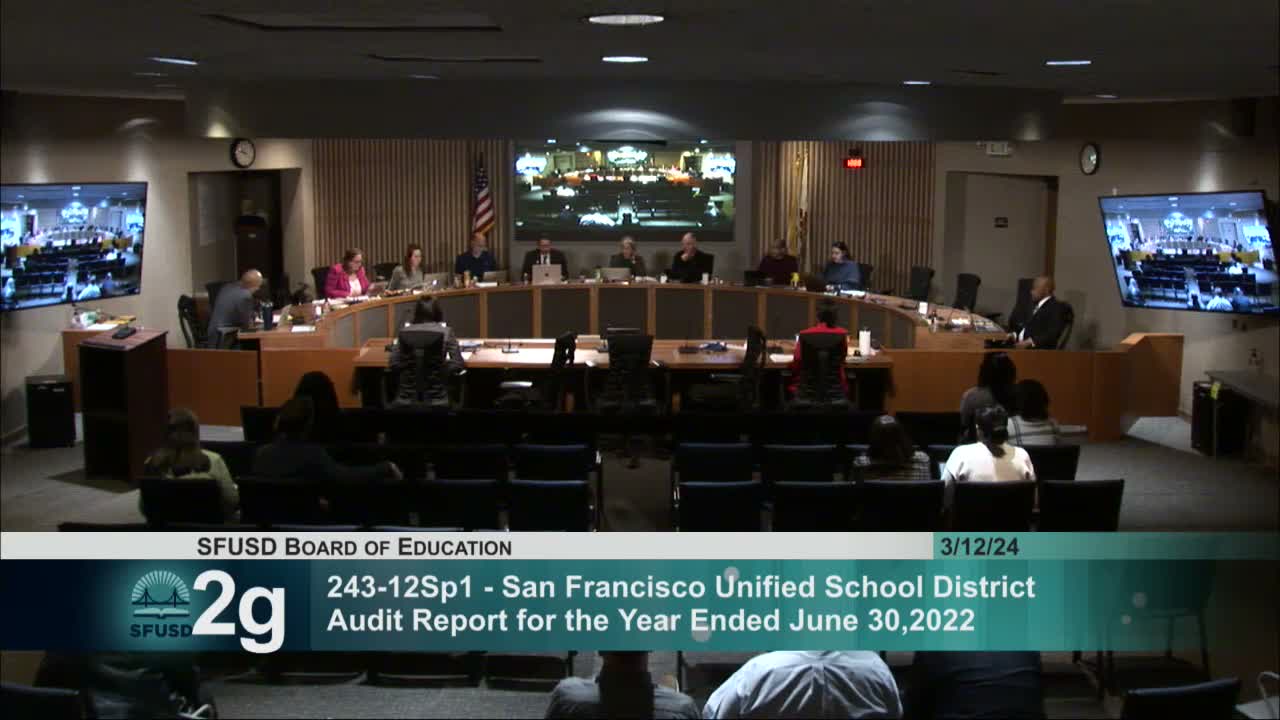
The San Francisco Board of Education voted to adopt a new Frontline enterprise resource planning (ERP) system and human capital management module to replace the district's existing SAP/Empower environment.
Superintendent and staff framed the decision as a move away from a fragmented collection of 11 separate platforms to two integrated systems (an ERP plus HR module) that are widely used by California school districts. The superintendent described the choice as avoiding the "sunk cost fallacy" — stopping further expensive investment in a system that has repeatedly produced data integrity and payroll issues.
Education expert Dr. Candy Clark and head of staff Marin Trujillo said the district will do several things differently this time: assess staffing capacity before implementation, run new and old systems in parallel during testing, create governance groups to triage issues and escalate unresolved problems, commit to extensive training, and bring an external evaluator to monitor progress and raise independent accountability flags.
Frontline representatives said they engaged collaboratively with district staff and labor partners during review and pledged California K–12 implementation expertise. They also emphasized that Frontline is a widely used solution in California and typically requires less custom configuration than the previously adopted platform.
Labor concerns and implementation risks were a central part of the board's discussion. Commissioners sought assurances the district would actively involve union partners and frontline users during configuration, training and role testing; staff said unions and impacted members will be part of configuration decisions, testing and training timelines.
Costs and timeline: Staff presented an implementation plan (module sequencing, training and governance) and indicated that the project can be funded from board‑approved reserves set aside for ERP modernization; the board approved contract authority and voted unanimously (7 ayes) to move forward.
Next steps: After contract execution, staff said they will finalize a detailed implementation schedule, identify staff and temporary resources needed to maintain day‑to‑day operations during the transition, and publish regular, public progress reports to the board.
Superintendent and staff framed the decision as a move away from a fragmented collection of 11 separate platforms to two integrated systems (an ERP plus HR module) that are widely used by California school districts. The superintendent described the choice as avoiding the "sunk cost fallacy" — stopping further expensive investment in a system that has repeatedly produced data integrity and payroll issues.
Education expert Dr. Candy Clark and head of staff Marin Trujillo said the district will do several things differently this time: assess staffing capacity before implementation, run new and old systems in parallel during testing, create governance groups to triage issues and escalate unresolved problems, commit to extensive training, and bring an external evaluator to monitor progress and raise independent accountability flags.
Frontline representatives said they engaged collaboratively with district staff and labor partners during review and pledged California K–12 implementation expertise. They also emphasized that Frontline is a widely used solution in California and typically requires less custom configuration than the previously adopted platform.
Labor concerns and implementation risks were a central part of the board's discussion. Commissioners sought assurances the district would actively involve union partners and frontline users during configuration, training and role testing; staff said unions and impacted members will be part of configuration decisions, testing and training timelines.
Costs and timeline: Staff presented an implementation plan (module sequencing, training and governance) and indicated that the project can be funded from board‑approved reserves set aside for ERP modernization; the board approved contract authority and voted unanimously (7 ayes) to move forward.
Next steps: After contract execution, staff said they will finalize a detailed implementation schedule, identify staff and temporary resources needed to maintain day‑to‑day operations during the transition, and publish regular, public progress reports to the board.
View the Full Meeting & All Its Details
This article offers just a summary. Unlock complete video, transcripts, and insights as a Founder Member.
✓
Watch full, unedited meeting videos
✓
Search every word spoken in unlimited transcripts
✓
AI summaries & real-time alerts (all government levels)
✓
Permanent access to expanding government content
30-day money-back guarantee
