San Francisco DOS approves ARP spending plans, multiple grant modifications and procedural rules in unanimous votes
April 06, 2022 | San Francisco City, San Francisco County, California
This article was created by AI summarizing key points discussed. AI makes mistakes, so for full details and context, please refer to the video of the full meeting. Please report any errors so we can fix them. Report an error »
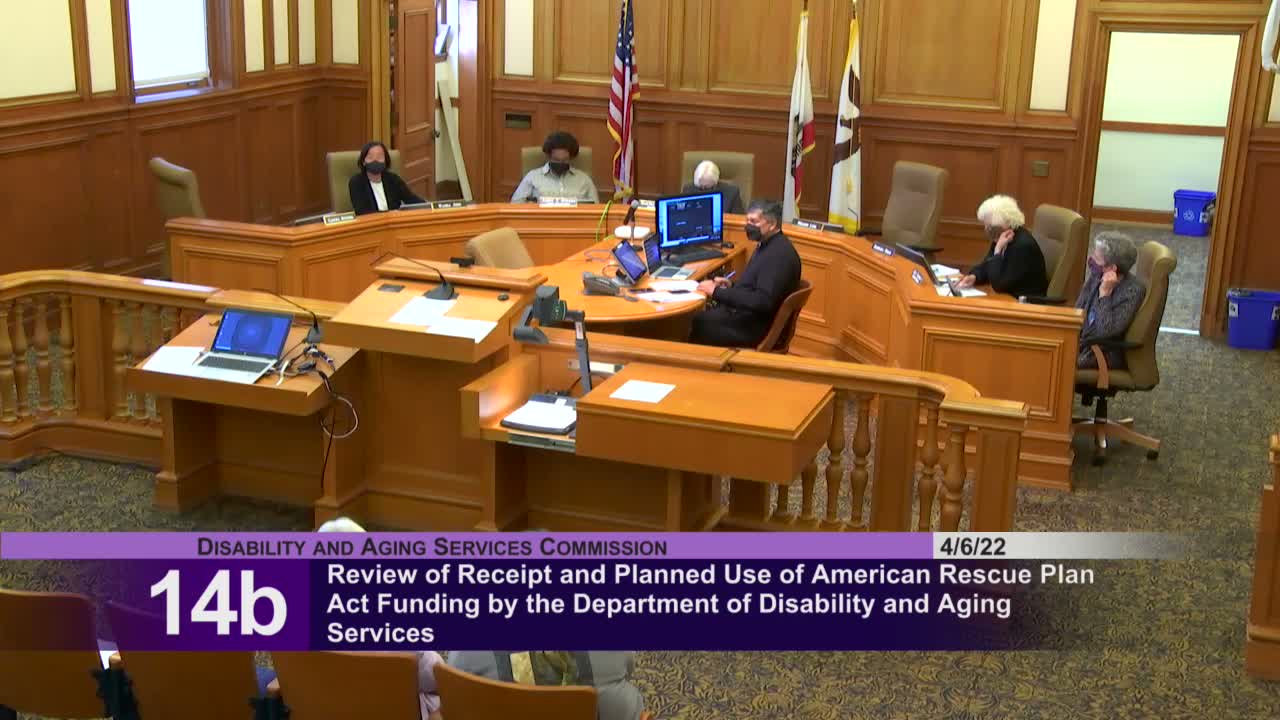
At a March 16, 2022 joint meeting, the San Francisco Department of Disability and Aging Services Commission approved a set of procedural resolutions and contract modifications to expand service capacity and implement short-term ARP-supported pilots.
Commissioners voted unanimously to adopt a resolution permitting in-person meetings with some members appearing remotely and to authorize third-party presenters who are not city employees to participate virtually pending state guidance. Commissioners also approved the FY2023 Area Agency on Aging plan update, which incorporates recent public-hearing input on technology access and resource navigation.
On funding and contracts, DOS staff presented ARP-derived Older Americans Act allocations of $3,362,507 from the California Department of Aging for digital inclusion, legal services, benefits counseling pilots, nutrition and caregiver supports; staff said the funds are one-time dollars to be used by September 2024.
The commission approved multiple contract and grant actions (all roll-call approvals recorded as unanimous): a $41,508 modification (plus 10% contingency) to Self Help for the Elderly to expand short-term home-care services (new total not to exceed $592,275); a 12% increase to Shanti Project grants (total not to exceed $993,084) to expand animal companion and peer-support navigation; a new contract with Central Communications for 24-hour hotline backup services ($106,250 with 10% contingency); a $147,740 modification to Catholic Charities to expand the Breaking Bread congregate/socialization program; and eight nutrition grant modifications totaling $1,328,793 to expand culturally responsive congregate and home-delivered meals (Bayview Senior Services, Episcopal Community Services, Kimochi, Self Help for the Elderly) and reduce home-delivery wait lists.
Commissioners discussed program details during presentations: one asked whether inflation was accounted for in a contractor modification and whether pet-supplies line items matched short-term increases; presenters said many modifications increased service units proportionally and that some cost-of-doing-business adjustments would be reflected in future years' budgets. Staff repeatedly said individual implementation plans, monitoring and further commission approvals would follow.
The meeting adjourned after unanimous approval of the slate of items. Several commissioners and presenters emphasized hybrid service models for nutrition and continued attention to outreach and culturally responsive programming.
Commissioners voted unanimously to adopt a resolution permitting in-person meetings with some members appearing remotely and to authorize third-party presenters who are not city employees to participate virtually pending state guidance. Commissioners also approved the FY2023 Area Agency on Aging plan update, which incorporates recent public-hearing input on technology access and resource navigation.
On funding and contracts, DOS staff presented ARP-derived Older Americans Act allocations of $3,362,507 from the California Department of Aging for digital inclusion, legal services, benefits counseling pilots, nutrition and caregiver supports; staff said the funds are one-time dollars to be used by September 2024.
The commission approved multiple contract and grant actions (all roll-call approvals recorded as unanimous): a $41,508 modification (plus 10% contingency) to Self Help for the Elderly to expand short-term home-care services (new total not to exceed $592,275); a 12% increase to Shanti Project grants (total not to exceed $993,084) to expand animal companion and peer-support navigation; a new contract with Central Communications for 24-hour hotline backup services ($106,250 with 10% contingency); a $147,740 modification to Catholic Charities to expand the Breaking Bread congregate/socialization program; and eight nutrition grant modifications totaling $1,328,793 to expand culturally responsive congregate and home-delivered meals (Bayview Senior Services, Episcopal Community Services, Kimochi, Self Help for the Elderly) and reduce home-delivery wait lists.
Commissioners discussed program details during presentations: one asked whether inflation was accounted for in a contractor modification and whether pet-supplies line items matched short-term increases; presenters said many modifications increased service units proportionally and that some cost-of-doing-business adjustments would be reflected in future years' budgets. Staff repeatedly said individual implementation plans, monitoring and further commission approvals would follow.
The meeting adjourned after unanimous approval of the slate of items. Several commissioners and presenters emphasized hybrid service models for nutrition and continued attention to outreach and culturally responsive programming.
View the Full Meeting & All Its Details
This article offers just a summary. Unlock complete video, transcripts, and insights as a Founder Member.
✓
Watch full, unedited meeting videos
✓
Search every word spoken in unlimited transcripts
✓
AI summaries & real-time alerts (all government levels)
✓
Permanent access to expanding government content
30-day money-back guarantee
