DAS presents draft Area Plan 2024–2028, flags senior population growth and equity gaps
March 06, 2024 | San Francisco City, San Francisco County, California
This article was created by AI summarizing key points discussed. AI makes mistakes, so for full details and context, please refer to the video of the full meeting. Please report any errors so we can fix them. Report an error »
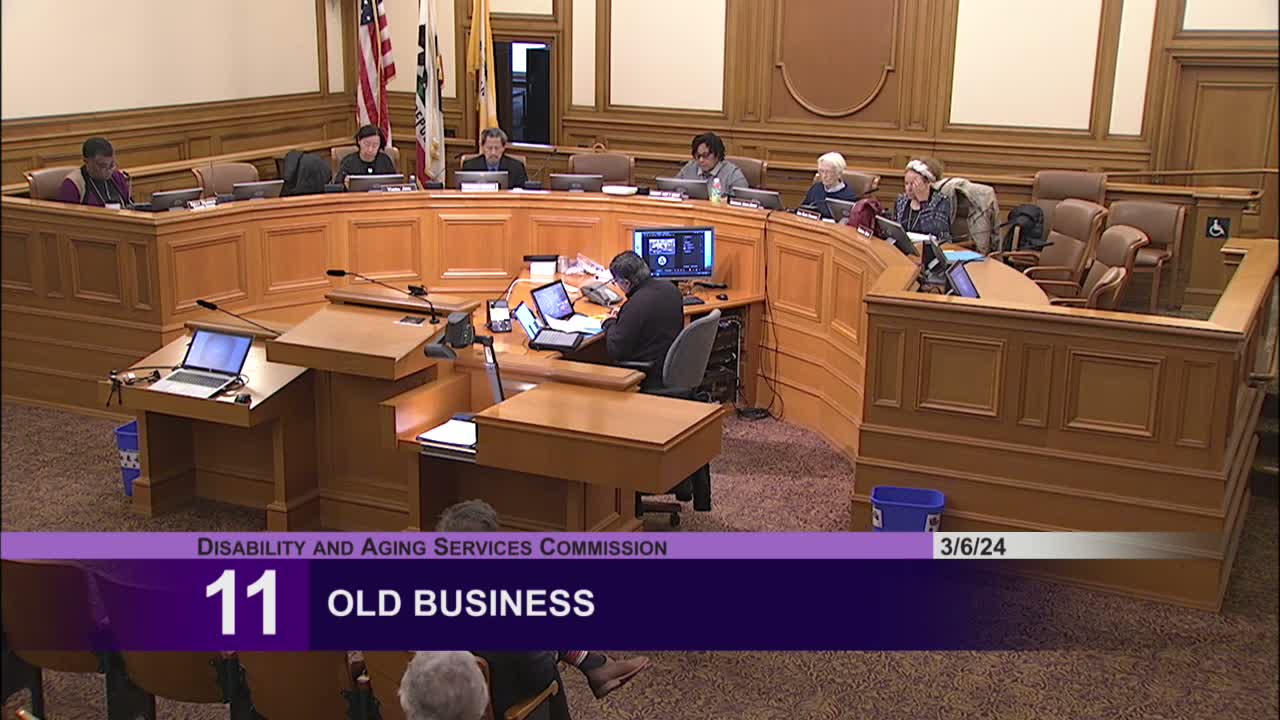
The San Francisco Department of Disability and Aging Services on March 6 presented a draft Area Plan for fiscal years 2024–25 through 2027–28 that frames the department’s priorities for older adults and adults with disabilities and must be finalized and submitted to the California Department of Aging by May 1.
The plan, presented by Aditi Velour, an analyst with the Human Services Agency planning unit, is structured to meet Older Americans Act requirements and focuses on demographic trends, needs-assessment findings and service-level projections. Velour said the plan is intended to guide use of Older Americans Act revenues — about $8 million annually — and align DAS goals with the SFHSA strategic plan.
Velour highlighted population shifts: since 2000 the city’s senior population has grown by roughly 53,000 people (about a 39% increase), while the overall city population rose about 5%. Charts in the presentation showed seniors now make up a rapidly growing share of the population, with the California Department of Finance projecting people 60 and older will account for over 30% of the city’s population by 2030. Velour also described racial and economic disparities: Asian Pacific Islander seniors account for about 44% of the older adult population, white seniors about 37%, Latinx about 10% and Black/African American seniors about 5%; Black older adults are disproportionately represented among seniors living in poverty.
The presentation summarized nine needs-assessment findings that informed priority populations and service targeting: barriers to service connection, higher unmet needs for adults with disabilities, social connectivity and mental health concerns, reliance on technology and the digital divide, safety and transportation barriers, culturally responsive service needs for BIPOC and LGBTQ older adults, caregivers’ need for navigation support, service provider capacity constraints, and significant unmet needs in areas outside DAS’s primary remit, such as housing.
Velour also outlined programmatic requirements set by the state and noted certain funding allocations: Title III-B funds total about $1.1 million, with a minimum 45% allocation to access or legal assistance categories and 5% to in-home services over the four-year plan. The presentation said most service-level projections for 2024–25 remain similar to prior years, with a notable exception: expansion of elder-abuse prevention services driven by adding a provider to reach victims with limited English proficiency.
In discussion, Executive Director Kelly Dearman said DAS is three months into implementation of SB 43 and that the law has driven increased collaboration across departments. Dearman told commissioners, “I can only report that we continue to go back and forth with the mayor's office to make sure we are, maintaining as much staffing as possible,” and cautioned that new programming may be limited while funding is constrained. DAS staff also described early CalAIM work, including filing the first enhanced care management claim and coordinating with the San Francisco Health Plan and Anthem to leverage Medi‑Cal strategies.
Commissioners praised the report’s clarity and maps of senior centers, asked for better website language access and updates following site visits, and probed how Older Americans Act funds are allocated year to year. Velour and staff said allocation notices arrive annually in April from the state and that formula changes had yielded a recent $90,000 increase for local funding.
The commission held a second public hearing on the area plan per the required process and will return the revised document to the advisory council on March 20 and to the commission on April 3 for approval before the May 1 submission deadline.
The advisory council and commission will accept public input during those hearings and DAS staff said they will incorporate feedback before final submission.
The plan, presented by Aditi Velour, an analyst with the Human Services Agency planning unit, is structured to meet Older Americans Act requirements and focuses on demographic trends, needs-assessment findings and service-level projections. Velour said the plan is intended to guide use of Older Americans Act revenues — about $8 million annually — and align DAS goals with the SFHSA strategic plan.
Velour highlighted population shifts: since 2000 the city’s senior population has grown by roughly 53,000 people (about a 39% increase), while the overall city population rose about 5%. Charts in the presentation showed seniors now make up a rapidly growing share of the population, with the California Department of Finance projecting people 60 and older will account for over 30% of the city’s population by 2030. Velour also described racial and economic disparities: Asian Pacific Islander seniors account for about 44% of the older adult population, white seniors about 37%, Latinx about 10% and Black/African American seniors about 5%; Black older adults are disproportionately represented among seniors living in poverty.
The presentation summarized nine needs-assessment findings that informed priority populations and service targeting: barriers to service connection, higher unmet needs for adults with disabilities, social connectivity and mental health concerns, reliance on technology and the digital divide, safety and transportation barriers, culturally responsive service needs for BIPOC and LGBTQ older adults, caregivers’ need for navigation support, service provider capacity constraints, and significant unmet needs in areas outside DAS’s primary remit, such as housing.
Velour also outlined programmatic requirements set by the state and noted certain funding allocations: Title III-B funds total about $1.1 million, with a minimum 45% allocation to access or legal assistance categories and 5% to in-home services over the four-year plan. The presentation said most service-level projections for 2024–25 remain similar to prior years, with a notable exception: expansion of elder-abuse prevention services driven by adding a provider to reach victims with limited English proficiency.
In discussion, Executive Director Kelly Dearman said DAS is three months into implementation of SB 43 and that the law has driven increased collaboration across departments. Dearman told commissioners, “I can only report that we continue to go back and forth with the mayor's office to make sure we are, maintaining as much staffing as possible,” and cautioned that new programming may be limited while funding is constrained. DAS staff also described early CalAIM work, including filing the first enhanced care management claim and coordinating with the San Francisco Health Plan and Anthem to leverage Medi‑Cal strategies.
Commissioners praised the report’s clarity and maps of senior centers, asked for better website language access and updates following site visits, and probed how Older Americans Act funds are allocated year to year. Velour and staff said allocation notices arrive annually in April from the state and that formula changes had yielded a recent $90,000 increase for local funding.
The commission held a second public hearing on the area plan per the required process and will return the revised document to the advisory council on March 20 and to the commission on April 3 for approval before the May 1 submission deadline.
The advisory council and commission will accept public input during those hearings and DAS staff said they will incorporate feedback before final submission.
Don't Miss a Word: See the Full Meeting!
Go beyond summaries. Unlock every video, transcript, and key insight with a Founder Membership.
✓
Get instant access to full meeting videos
✓
Search and clip any phrase from complete transcripts
✓
Receive AI-powered summaries & custom alerts
✓
Enjoy lifetime, unrestricted access to government data
30-day money-back guarantee
