OCII housing production report: 468 completions last year; commissioners press on COP outcomes and state bond allocations
November 16, 2021 | San Francisco City, San Francisco County, California
This article was created by AI summarizing key points discussed. AI makes mistakes, so for full details and context, please refer to the video of the full meeting. Please report any errors so we can fix them. Report an error »
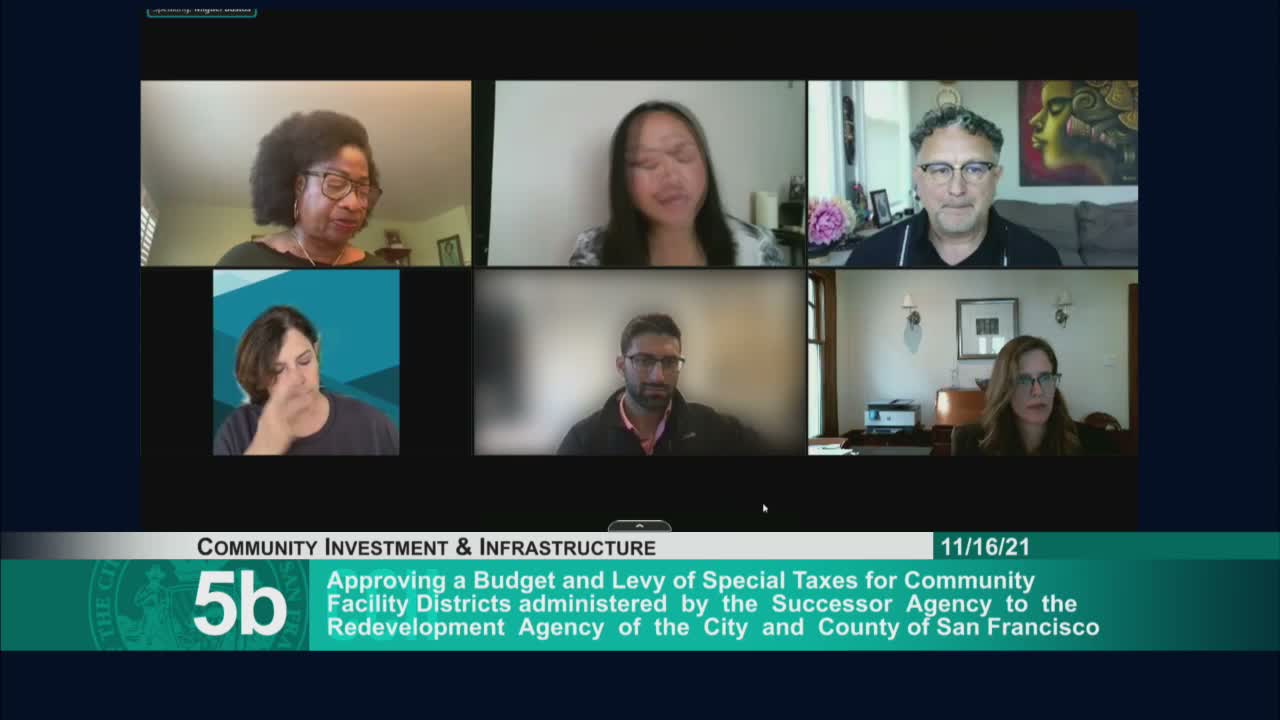
At a Nov. 16 workshop, OCII staff presented the agency's draft housing production report for fiscal 2020-21, detailing project-area progress, funding activity and marketing outcomes and prompting questions from commissioners and a public commenter about who benefits from new units and how OCII shares results with the community.
Jeff White, OCII housing program manager, said the report covers production through June 2021 and is in draft form. "There will be 21,846 housing units, of which 32% will be affordable," he said, summarizing buildout counts across OCII project areas. White said completions in the fiscal year totaled 468 units across two projects, of which 231 were affordable units, and that those units housed approximately 575 low-income San Franciscans.
White described funding and pipeline activity: OCII approved three predevelopment loans totaling $10,650,000 in Shipyard Phase 1 and Transbay, and staff flagged changes in the funding environment that have complicated affordable housing pipelines. "Current scoring of bond allocation applications are resulting in fewer San Francisco projects getting allocations," White said, adding that "in this current round... no San Francisco projects are being recommended at the state, including our Shipyard Blocks 5254." Staff said they are coordinating with the Mayor's Office of Housing and Community Development and advocacy partners to respond.
On marketing outcomes and the Certificate of Preference (COP) program, White said one project reached 100% occupancy (Transbay Block 9) and reported that out of more than 6,800 applicants for 108 units, 12 COP holders applied "but, unfortunately, none of them were housed there." The transcript records a later comment by Chair Miguel Bustos noting concern: "The fact that we have 0, number of individuals, getting housed from COP." Commissioners asked staff to provide more demographic and preference-breakdown data in marketing reports.
Peter Cohen of the Council of Community Housing Organizations praised the report's transparency and urged clearer comparisons of percent affordable produced versus the goals set at project outset. Cohen said the report is "very user friendly" and recommended making it more explicit how percent affordable maps to original project goals.
Commissioners and staff discussed outreach and dissemination: Vice Chair Rosales and others asked whether the report is distributed beyond posting on OCII's website; staff said it is sent to the mayor's office, MOHCD, planning, and the Board of Supervisors and that staff will expand dissemination to community-based organizations. Commissioners also asked for racial and neighborhood breakdowns tied to preferences and units served; staff said some of that data exists in the marketing outcomes report and offered to provide additional breakdowns by preference type.
Because the item was a workshop, no action was taken. Staff said the COP annual marketing report will be presented at the Commission's Dec. 7 meeting and encouraged commissioners to submit suggestions on the draft report.
Jeff White, OCII housing program manager, said the report covers production through June 2021 and is in draft form. "There will be 21,846 housing units, of which 32% will be affordable," he said, summarizing buildout counts across OCII project areas. White said completions in the fiscal year totaled 468 units across two projects, of which 231 were affordable units, and that those units housed approximately 575 low-income San Franciscans.
White described funding and pipeline activity: OCII approved three predevelopment loans totaling $10,650,000 in Shipyard Phase 1 and Transbay, and staff flagged changes in the funding environment that have complicated affordable housing pipelines. "Current scoring of bond allocation applications are resulting in fewer San Francisco projects getting allocations," White said, adding that "in this current round... no San Francisco projects are being recommended at the state, including our Shipyard Blocks 5254." Staff said they are coordinating with the Mayor's Office of Housing and Community Development and advocacy partners to respond.
On marketing outcomes and the Certificate of Preference (COP) program, White said one project reached 100% occupancy (Transbay Block 9) and reported that out of more than 6,800 applicants for 108 units, 12 COP holders applied "but, unfortunately, none of them were housed there." The transcript records a later comment by Chair Miguel Bustos noting concern: "The fact that we have 0, number of individuals, getting housed from COP." Commissioners asked staff to provide more demographic and preference-breakdown data in marketing reports.
Peter Cohen of the Council of Community Housing Organizations praised the report's transparency and urged clearer comparisons of percent affordable produced versus the goals set at project outset. Cohen said the report is "very user friendly" and recommended making it more explicit how percent affordable maps to original project goals.
Commissioners and staff discussed outreach and dissemination: Vice Chair Rosales and others asked whether the report is distributed beyond posting on OCII's website; staff said it is sent to the mayor's office, MOHCD, planning, and the Board of Supervisors and that staff will expand dissemination to community-based organizations. Commissioners also asked for racial and neighborhood breakdowns tied to preferences and units served; staff said some of that data exists in the marketing outcomes report and offered to provide additional breakdowns by preference type.
Because the item was a workshop, no action was taken. Staff said the COP annual marketing report will be presented at the Commission's Dec. 7 meeting and encouraged commissioners to submit suggestions on the draft report.
View the Full Meeting & All Its Details
This article offers just a summary. Unlock complete video, transcripts, and insights as a Founder Member.
✓
Watch full, unedited meeting videos
✓
Search every word spoken in unlimited transcripts
✓
AI summaries & real-time alerts (all government levels)
✓
Permanent access to expanding government content
30-day money-back guarantee
