OCII approves $62M gap loan, $4.5M predevelopment increase and ground‑lease to advance Transbay Block 2 affordable housing
August 15, 2023 | San Francisco City, San Francisco County, California
This article was created by AI summarizing key points discussed. AI makes mistakes, so for full details and context, please refer to the video of the full meeting. Please report any errors so we can fix them. Report an error »
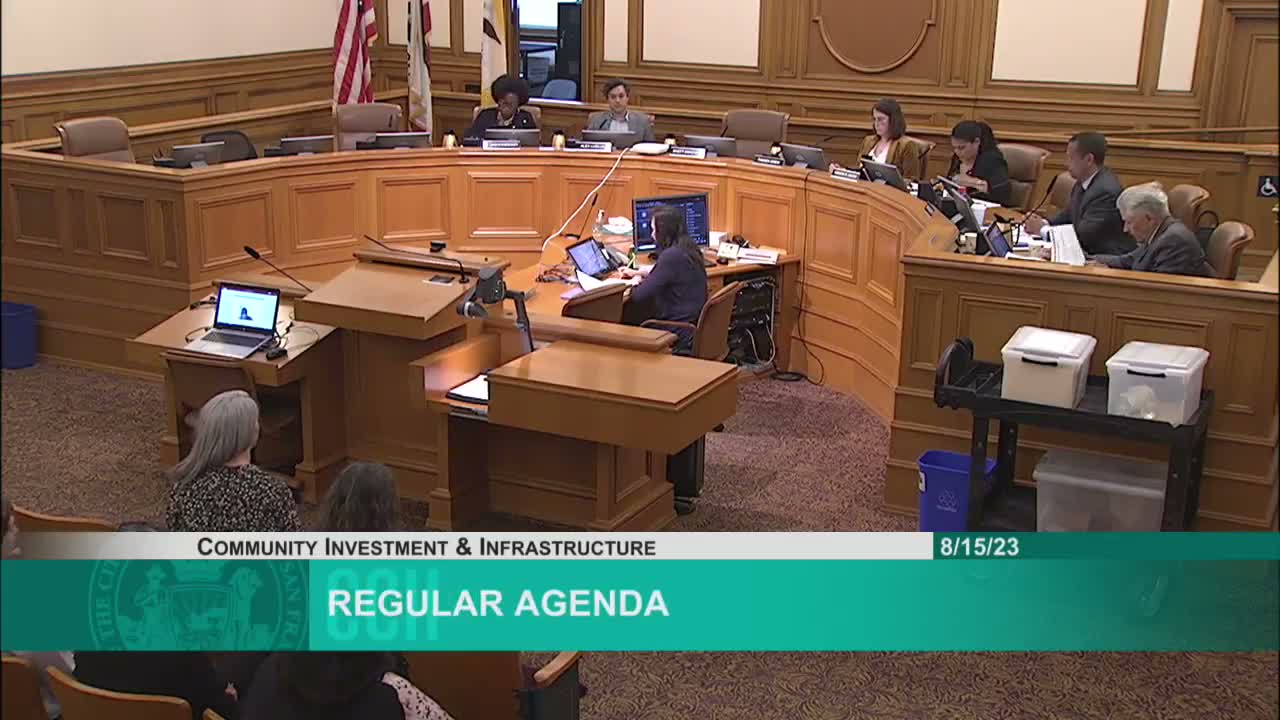
The Office of Community Investment and Infrastructure commission voted unanimously on Aug. 15 to back three actions to move forward Transbay Block 2, a two‑building, 335‑unit affordable housing development on the former temporary Transbay terminal site.
Staff said the financing and lease approvals will let the sponsor pursue bond and tax‑credit awards this fall and begin site preparation ahead of construction. Kim Obstfeld, senior development specialist on OCII’s housing team, told commissioners the package includes an approximately $61,961,845 permanent residential gap loan for Block 2 East (184 units, including two manager units), an increase of $4,500,000 to an existing predevelopment loan (bringing that loan to about $8,000,000) to pay for early trade work and permit fees, and authorization of a short‑term horizontal ground lease to reimburse up to $2,333,653 for site work and demolition.
"The actions before you today are the commitment of approximately $62,000,000 in permanent residential gap loan funding for Transbay Block 2 East," Obstfeld said during the presentation.
Obstfeld said Block 2 will be 100% affordable, with rents restricted for households earning about 40% to 80% of area median income, and that the sponsor has targeted roughly 40 units for formerly homeless families to be referred through the city’s coordinated entry program. The financing stack staff described includes federal low‑income housing tax credits, tax‑exempt bonds and a $28,000,000 AUSIC loan; staff estimated the residential project cost at about $187,000,000.
Mercy Housing California is the sponsor for the Block 2 East project and will manage the property and provide resident services, Obstfeld said. Mercy will operate a childcare facility on site, run by Wu Yi and sized to serve about 45 children. Chinatown Community Development Center is the sponsor for Block 2 West, which will serve low‑income seniors. Swinerton and Rubicon joint venture has been selected as general contractor for both projects, and staff said about 87% of contract value to date has gone to small business enterprises (SBEs) or SBE joint ventures.
During public comment, Oscar James urged the commission to prioritize certificate‑of‑preference (COP) holders from neighborhoods such as Bayview‑Hunters Point and requested outreach to probation and reentry programs so returning residents understand eligibility and preference options. Pam Sims, senior development specialist in the housing division, said COP holders receive the top preference and that previously incarcerated people are not a separate preference now, but staff would discuss Mr. James’s concerns with the Mayor’s Office of Housing and Community Development.
Commissioners questioned how the project will accommodate residents who need vehicle access or ADA support given there is no on‑site residential parking. Michael Kaplan, a Mercy Housing representative, said the project will provide free transit vouchers through the AUSIC grant, on‑site resident services to help with paratransit and other mobility needs, and multiple loading/drop‑off zones (including a childcare pickup zone on Clementina and a white‑zone on Folsom). Staff also pledged to supply commissioners with an information memo that lists background check disqualifiers and explains how tenant selection will comply with the fair‑chance ordinance.
Motions to approve items 5a (permanent residential gap loan commitment), 5b (first amendment to the predevelopment loan), and 5c (horizontal ground lease and site‑prep funding not to exceed $2,333,653) were each moved, seconded and passed by roll call, with the secretary announcing five ayes on each vote.
If financing awards follow the anticipated schedule, staff said the sponsor will return in spring 2024 to request approval of an amended and restated loan agreement for the permanent residential loan and long‑term ground lease; site preparation under the horizontal lease was scheduled to begin after the lease’s effective date of Sept. 22, 2023, and construction start for Block 2 East was estimated in spring 2024 with completion projected around 2026.
The commission’s approvals do not finalize construction financing; they authorize OCII to provide commitment letters and interim funding to make the project competitive for CDLAC and related awards. Staff emphasized that final, long‑term loan and lease agreements and any conditions attached to those documents will return to the commission for formal approval.
Staff said the financing and lease approvals will let the sponsor pursue bond and tax‑credit awards this fall and begin site preparation ahead of construction. Kim Obstfeld, senior development specialist on OCII’s housing team, told commissioners the package includes an approximately $61,961,845 permanent residential gap loan for Block 2 East (184 units, including two manager units), an increase of $4,500,000 to an existing predevelopment loan (bringing that loan to about $8,000,000) to pay for early trade work and permit fees, and authorization of a short‑term horizontal ground lease to reimburse up to $2,333,653 for site work and demolition.
"The actions before you today are the commitment of approximately $62,000,000 in permanent residential gap loan funding for Transbay Block 2 East," Obstfeld said during the presentation.
Obstfeld said Block 2 will be 100% affordable, with rents restricted for households earning about 40% to 80% of area median income, and that the sponsor has targeted roughly 40 units for formerly homeless families to be referred through the city’s coordinated entry program. The financing stack staff described includes federal low‑income housing tax credits, tax‑exempt bonds and a $28,000,000 AUSIC loan; staff estimated the residential project cost at about $187,000,000.
Mercy Housing California is the sponsor for the Block 2 East project and will manage the property and provide resident services, Obstfeld said. Mercy will operate a childcare facility on site, run by Wu Yi and sized to serve about 45 children. Chinatown Community Development Center is the sponsor for Block 2 West, which will serve low‑income seniors. Swinerton and Rubicon joint venture has been selected as general contractor for both projects, and staff said about 87% of contract value to date has gone to small business enterprises (SBEs) or SBE joint ventures.
During public comment, Oscar James urged the commission to prioritize certificate‑of‑preference (COP) holders from neighborhoods such as Bayview‑Hunters Point and requested outreach to probation and reentry programs so returning residents understand eligibility and preference options. Pam Sims, senior development specialist in the housing division, said COP holders receive the top preference and that previously incarcerated people are not a separate preference now, but staff would discuss Mr. James’s concerns with the Mayor’s Office of Housing and Community Development.
Commissioners questioned how the project will accommodate residents who need vehicle access or ADA support given there is no on‑site residential parking. Michael Kaplan, a Mercy Housing representative, said the project will provide free transit vouchers through the AUSIC grant, on‑site resident services to help with paratransit and other mobility needs, and multiple loading/drop‑off zones (including a childcare pickup zone on Clementina and a white‑zone on Folsom). Staff also pledged to supply commissioners with an information memo that lists background check disqualifiers and explains how tenant selection will comply with the fair‑chance ordinance.
Motions to approve items 5a (permanent residential gap loan commitment), 5b (first amendment to the predevelopment loan), and 5c (horizontal ground lease and site‑prep funding not to exceed $2,333,653) were each moved, seconded and passed by roll call, with the secretary announcing five ayes on each vote.
If financing awards follow the anticipated schedule, staff said the sponsor will return in spring 2024 to request approval of an amended and restated loan agreement for the permanent residential loan and long‑term ground lease; site preparation under the horizontal lease was scheduled to begin after the lease’s effective date of Sept. 22, 2023, and construction start for Block 2 East was estimated in spring 2024 with completion projected around 2026.
The commission’s approvals do not finalize construction financing; they authorize OCII to provide commitment letters and interim funding to make the project competitive for CDLAC and related awards. Staff emphasized that final, long‑term loan and lease agreements and any conditions attached to those documents will return to the commission for formal approval.
View the Full Meeting & All Its Details
This article offers just a summary. Unlock complete video, transcripts, and insights as a Founder Member.
✓
Watch full, unedited meeting videos
✓
Search every word spoken in unlimited transcripts
✓
AI summaries & real-time alerts (all government levels)
✓
Permanent access to expanding government content
30-day money-back guarantee
