OCII proposes $685.2 million FY2024–25 budget, emphasizes affordable housing and infrastructure
April 02, 2024 | San Francisco City, San Francisco County, California
This article was created by AI summarizing key points discussed. AI makes mistakes, so for full details and context, please refer to the video of the full meeting. Please report any errors so we can fix them. Report an error »
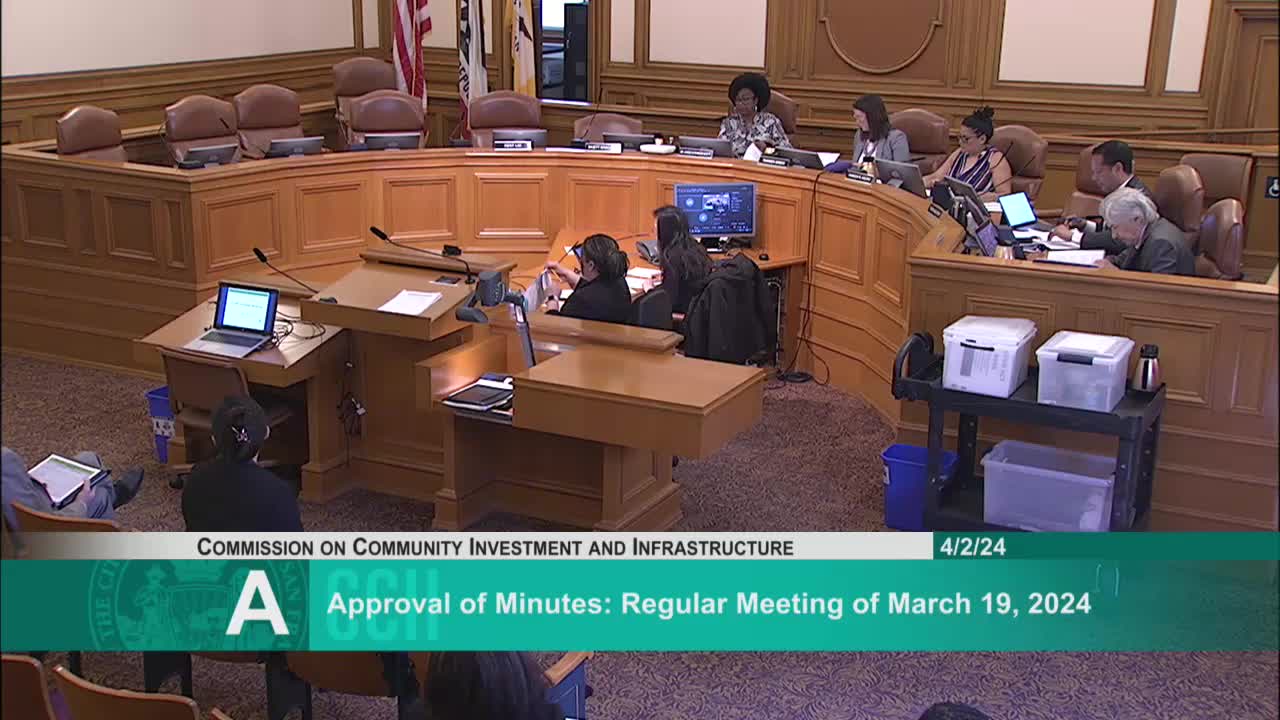
The Office of Community Investment and Infrastructure (OCII) presented a proposed $685.2 million budget for fiscal year 2024–25 at its April 2 commission workshop, with the largest uses earmarked for affordable housing and infrastructure projects.
OCII senior project and finance manager Mina Yu opened the presentation, saying, “It is presenting about $685,000,000 in programs and expenditures.” The proposal shows prior‑period authority — unspent, committed funds carried forward — as the single largest funding source at roughly $306 million. Major uses include $342.9 million for affordable housing, $170.4 million for infrastructure programs and a $21 million operating budget.
Why it matters: the budget funds long‑running construction and park projects in Mission Bay, Transbay and Hunters Point Shipyard/Candlestick Point. Staff stressed that many line items represent multiyear commitments that are budgeted at the top of a project to meet contract and bonding requirements.
Deputy director Mark Slutskin summarized project‑level funding, including Mission Bay infrastructure and public art and a Transbay allocation focused on parks and streetscape reimbursements. He noted Mission Bay work to finish Park P22 and expected public‑acceptance steps following substantial completion this summer. Slutskin said the agency expects to pay down bonds this year and use a mix of bond proceeds, developer payments and property tax increment to fund remaining work.
Commissioners pressed staff on contingency planning and staffing. Commissioner Drew asked for clearer budget‑to‑actuals in the packet, saying it was “hard to keep up” with the numbers in real time; staff agreed to add more detailed comparative tables in future materials. OCII said it has an approved headcount of 55 FTEs but currently funds roughly 43–45 positions and has about 20 vacancies; recruitment is active for several roles.
Staff said the agency’s reliance on property tax increment has increased because billable developer work has declined with slower market‑rate development. “We’ve seen a decline in what we’re able to bill to the developers,” staff said, adding that bond proceeds and reserve funds are being used where legally allowed and that property tax supplements are necessary for certain staffing and PayGo needs.
Votes at a glance: the consent agenda that opened the meeting (approval of minutes from 03/19/2024) passed by roll call with 3 ayes, 2 absences.
What’s next: OCII staff said any substantive changes identified during the state Department of Finance review will be incorporated before the action item returns to the commission for approval in mid‑April; the agency will then submit the final budget to the mayor’s office and Board of Supervisors.
OCII senior project and finance manager Mina Yu opened the presentation, saying, “It is presenting about $685,000,000 in programs and expenditures.” The proposal shows prior‑period authority — unspent, committed funds carried forward — as the single largest funding source at roughly $306 million. Major uses include $342.9 million for affordable housing, $170.4 million for infrastructure programs and a $21 million operating budget.
Why it matters: the budget funds long‑running construction and park projects in Mission Bay, Transbay and Hunters Point Shipyard/Candlestick Point. Staff stressed that many line items represent multiyear commitments that are budgeted at the top of a project to meet contract and bonding requirements.
Deputy director Mark Slutskin summarized project‑level funding, including Mission Bay infrastructure and public art and a Transbay allocation focused on parks and streetscape reimbursements. He noted Mission Bay work to finish Park P22 and expected public‑acceptance steps following substantial completion this summer. Slutskin said the agency expects to pay down bonds this year and use a mix of bond proceeds, developer payments and property tax increment to fund remaining work.
Commissioners pressed staff on contingency planning and staffing. Commissioner Drew asked for clearer budget‑to‑actuals in the packet, saying it was “hard to keep up” with the numbers in real time; staff agreed to add more detailed comparative tables in future materials. OCII said it has an approved headcount of 55 FTEs but currently funds roughly 43–45 positions and has about 20 vacancies; recruitment is active for several roles.
Staff said the agency’s reliance on property tax increment has increased because billable developer work has declined with slower market‑rate development. “We’ve seen a decline in what we’re able to bill to the developers,” staff said, adding that bond proceeds and reserve funds are being used where legally allowed and that property tax supplements are necessary for certain staffing and PayGo needs.
Votes at a glance: the consent agenda that opened the meeting (approval of minutes from 03/19/2024) passed by roll call with 3 ayes, 2 absences.
What’s next: OCII staff said any substantive changes identified during the state Department of Finance review will be incorporated before the action item returns to the commission for approval in mid‑April; the agency will then submit the final budget to the mayor’s office and Board of Supervisors.
View the Full Meeting & All Its Details
This article offers just a summary. Unlock complete video, transcripts, and insights as a Founder Member.
✓
Watch full, unedited meeting videos
✓
Search every word spoken in unlimited transcripts
✓
AI summaries & real-time alerts (all government levels)
✓
Permanent access to expanding government content
30-day money-back guarantee
