DBI projects $56–57M in revenue, warns reserves will cover only two years without cuts
January 26, 2022 | San Francisco City, San Francisco County, California
This article was created by AI summarizing key points discussed. AI makes mistakes, so for full details and context, please refer to the video of the full meeting. Please report any errors so we can fix them. Report an error »
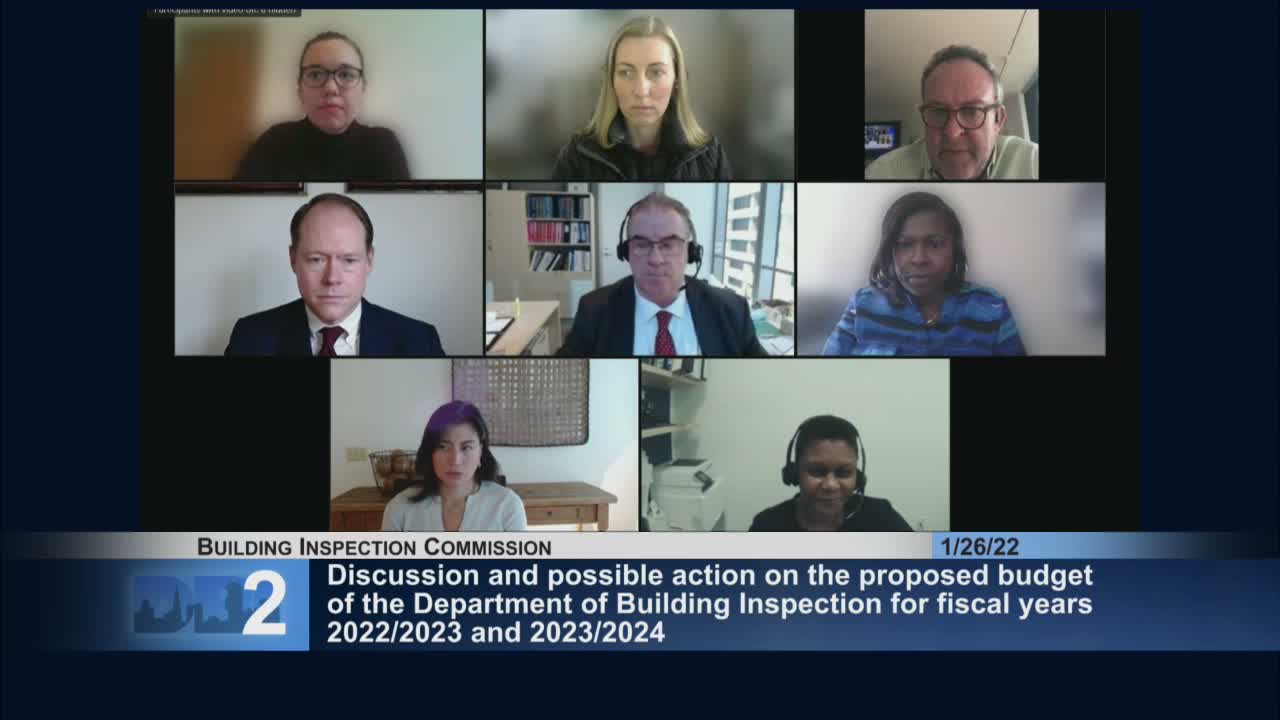
Deputy Director Taris Madison presented the Department of Building Inspection’s proposed budgets for fiscal years 2022–23 and 2023–24 at a special Building Inspection Commission meeting in February, saying the department expects roughly $56–57 million in revenue against preliminary expenditures of about $88–91 million and warning that without changes DBI’s reserves can sustain current operations for about two years.
Madison, who identified herself as "deputy director for DBI," told commissioners that DBI is "a special fund department" and that charges for services — primarily plan-check and building-permit fees — make up the bulk of the department’s revenue. "We're projecting to be at about $48,000,000" in charges for services, she said, and noted a combined bump of about $6 million in the proposed budget for plan-check and permit revenues.
Why it matters: Because DBI relies heavily on fee revenue rather than general city funds, the department said it must balance services and workforce decisions within those revenues. Madison said the mayor’s office projects a roughly $180 million citywide surplus but that DBI still faces "risk and uncertainties" that limit room for budget growth.
Key figures and risks
Madison summarized recent trends: a COVID-related drop in revenue in 2020–21, a partial recovery in plan-check activity and permit valuations, and persistent growth in interdepartmental "work order" spending. She told the commission the department’s fee contingency reserve is about $41 million and fund balance about $6 million, and that the current plan would draw from contingency to balance the next two fiscal years. "If we don't do something about our expenditures and if our revenues don't go up past $57,000,000, we are at about maybe... two years," Madison said.
Madison attributed much of the expenditure growth to salary and fringe costs (position annualizations and restored FTE funding), expanded training and a new internal safety officer, and higher work orders paid to other city departments, which she said now total about $26 million. She described planned investments in technology — including work on a permit-tracking system (PTS) that is already project-funded.
Work orders and negotiations
Commissioners pressed Madison on where cuts might come. Madison said DBI will engage the mayor’s office and partner departments (the assessor’s office, city attorney, digital services, fire) in a multi-step negotiation to reduce work-order spending over the next two fiscal years rather than via a single-year drastic cut. On the assessor-related work orders, she said the funds pay appraisers who perform reappraisals tied to construction activity and that the department will discuss those arrangements with the assessor.
Fees, fines and legal authority
Madison said DBI plans a new fee study to "right-size" fees after reductions enacted in 2015–16 and a deferred 2020 study. She emphasized caution because the mayor has prioritized limiting cost burdens on small businesses. On penalties, the city's deputy city attorney explained that the San Francisco building code sets enforcement penalties for work without permits and for work exceeding permitted scope; under the code, penalties can be assessed as multiples of inspection fees tied to the valuation of the work.
Schedule and next steps
Madison asked the commission for feedback to incorporate into the department’s second hearing and said DBI will submit its budget to the mayor and comptroller on Feb. 22, with budget negotiations in March–April when nine-month data are available. The mayor’s office will submit the recommended city budget to the Board of Supervisors on May 1, and adoption is expected by July. The commission was told that a formal DBI vote on the budget is scheduled for the commission meeting on Feb. 10 at 3 p.m.
Public comment and adjournment
No members of the public spoke during the posted public-comment period on the budget item. The commission moved to adjourn, the motion was seconded, and commissioners voted in the affirmative; the meeting was adjourned at 12:00 p.m.
What to watch next: DBI’s fee study, the work-order negotiations with other departments and the Feb. 10 commission vote when the commission will record a formal recommendation and any conditions tied to DBI’s budget submission.
Madison, who identified herself as "deputy director for DBI," told commissioners that DBI is "a special fund department" and that charges for services — primarily plan-check and building-permit fees — make up the bulk of the department’s revenue. "We're projecting to be at about $48,000,000" in charges for services, she said, and noted a combined bump of about $6 million in the proposed budget for plan-check and permit revenues.
Why it matters: Because DBI relies heavily on fee revenue rather than general city funds, the department said it must balance services and workforce decisions within those revenues. Madison said the mayor’s office projects a roughly $180 million citywide surplus but that DBI still faces "risk and uncertainties" that limit room for budget growth.
Key figures and risks
Madison summarized recent trends: a COVID-related drop in revenue in 2020–21, a partial recovery in plan-check activity and permit valuations, and persistent growth in interdepartmental "work order" spending. She told the commission the department’s fee contingency reserve is about $41 million and fund balance about $6 million, and that the current plan would draw from contingency to balance the next two fiscal years. "If we don't do something about our expenditures and if our revenues don't go up past $57,000,000, we are at about maybe... two years," Madison said.
Madison attributed much of the expenditure growth to salary and fringe costs (position annualizations and restored FTE funding), expanded training and a new internal safety officer, and higher work orders paid to other city departments, which she said now total about $26 million. She described planned investments in technology — including work on a permit-tracking system (PTS) that is already project-funded.
Work orders and negotiations
Commissioners pressed Madison on where cuts might come. Madison said DBI will engage the mayor’s office and partner departments (the assessor’s office, city attorney, digital services, fire) in a multi-step negotiation to reduce work-order spending over the next two fiscal years rather than via a single-year drastic cut. On the assessor-related work orders, she said the funds pay appraisers who perform reappraisals tied to construction activity and that the department will discuss those arrangements with the assessor.
Fees, fines and legal authority
Madison said DBI plans a new fee study to "right-size" fees after reductions enacted in 2015–16 and a deferred 2020 study. She emphasized caution because the mayor has prioritized limiting cost burdens on small businesses. On penalties, the city's deputy city attorney explained that the San Francisco building code sets enforcement penalties for work without permits and for work exceeding permitted scope; under the code, penalties can be assessed as multiples of inspection fees tied to the valuation of the work.
Schedule and next steps
Madison asked the commission for feedback to incorporate into the department’s second hearing and said DBI will submit its budget to the mayor and comptroller on Feb. 22, with budget negotiations in March–April when nine-month data are available. The mayor’s office will submit the recommended city budget to the Board of Supervisors on May 1, and adoption is expected by July. The commission was told that a formal DBI vote on the budget is scheduled for the commission meeting on Feb. 10 at 3 p.m.
Public comment and adjournment
No members of the public spoke during the posted public-comment period on the budget item. The commission moved to adjourn, the motion was seconded, and commissioners voted in the affirmative; the meeting was adjourned at 12:00 p.m.
What to watch next: DBI’s fee study, the work-order negotiations with other departments and the Feb. 10 commission vote when the commission will record a formal recommendation and any conditions tied to DBI’s budget submission.
Don't Miss a Word: See the Full Meeting!
Go beyond summaries. Unlock every video, transcript, and key insight with a Founder Membership.
✓
Get instant access to full meeting videos
✓
Search and clip any phrase from complete transcripts
✓
Receive AI-powered summaries & custom alerts
✓
Enjoy lifetime, unrestricted access to government data
30-day money-back guarantee
