DBI says preplan checks, site‑permit reforms cut backlog to six weeks; 48‑hour PTS lock and new sf.gov site coming
October 19, 2022 | San Francisco City, San Francisco County, California
This article was created by AI summarizing key points discussed. AI makes mistakes, so for full details and context, please refer to the video of the full meeting. Please report any errors so we can fix them. Report an error »
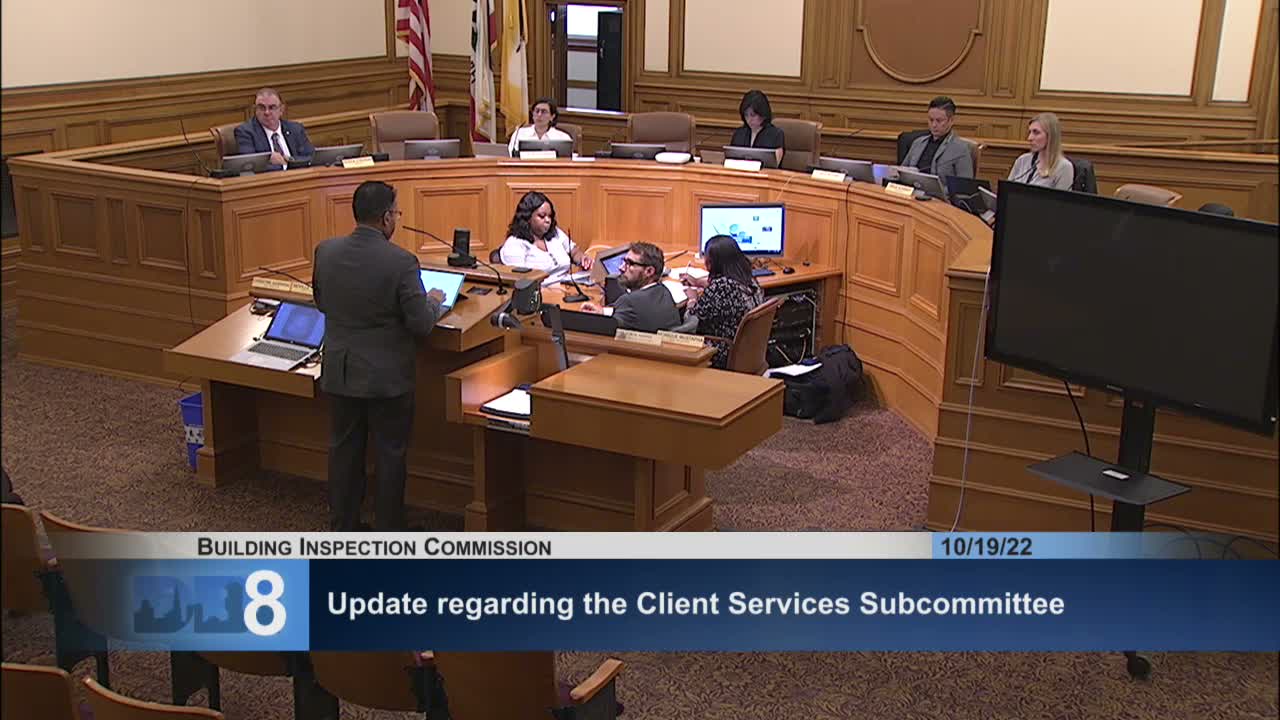
Department of Building Inspection officials on Oct. 19 described operational reforms intended to speed permitting, protect data integrity and improve customer access.
Neville Pereira, Deputy Director of Permit Services, said DBI’s recent preplan‑check change adds two senior plans examiners to screen incoming applications and make sure submissions are complete and routed to the appropriate agencies. “Currently we’re at six weeks instead of six months,” Pereira said, describing a cut in the oldest projects in the pipeline from roughly six months to a target of six to eight weeks.
Pereira outlined a site‑permit reform that would bifurcate discretionary entitlement (planning) work from ministerial construction review, so entitlements are settled before building permits are applied for. The effort, led in coordination with the Department of City Planning and the Permit Center, may require legislative code changes; DBI staff set a target implementation window around June 2023.
Compliance Manager Chris Vergara summarized work on the Controller’s recommendations, including development of a compliance program, annual risk assessments, supervisory quality‑assurance reviews, training and public outreach. Vergara highlighted recent procedural changes: preplan review rollout, weekly senior staff meetings, standardized resubmittal routing through Permit Coordination, and expanded orientation and ride‑along inspections for new inspectors.
DBI also described a technology change aimed at protecting data integrity. An MIS‑developed function now electronically locks inspection entries 48 hours after initial logging to prevent retroactive edits; that lock was implemented on Sept. 2 for building and plumbing divisions and will be extended to other divisions. Vergara said system logic will require prerequisite inspections to be recorded before allowing a final inspection to be logged.
Communications Director Patrick Hannon previewed the department’s migration from sfdbi.org to sf.gov. Hannon said the redesign emphasizes customer self‑service, mobile accessibility, human translations in Spanish, Chinese and Filipino, and clearer “how‑to” paths for common services. He described a planned soft launch later in October and a public launch in early November, while noting the permit‑tracking page—built on legacy Oracle technology—will remain on the older system until technical upgrades permit integration.
Commissioners responded favorably and asked for more frequent, bite‑sized briefings on specific reforms with quarterly summaries; staff agreed to return with updates. Several public callers urged simpler presentations and expressed concern that digital changes could advantage expediters, a point DBI said it would monitor.
Neville Pereira, Deputy Director of Permit Services, said DBI’s recent preplan‑check change adds two senior plans examiners to screen incoming applications and make sure submissions are complete and routed to the appropriate agencies. “Currently we’re at six weeks instead of six months,” Pereira said, describing a cut in the oldest projects in the pipeline from roughly six months to a target of six to eight weeks.
Pereira outlined a site‑permit reform that would bifurcate discretionary entitlement (planning) work from ministerial construction review, so entitlements are settled before building permits are applied for. The effort, led in coordination with the Department of City Planning and the Permit Center, may require legislative code changes; DBI staff set a target implementation window around June 2023.
Compliance Manager Chris Vergara summarized work on the Controller’s recommendations, including development of a compliance program, annual risk assessments, supervisory quality‑assurance reviews, training and public outreach. Vergara highlighted recent procedural changes: preplan review rollout, weekly senior staff meetings, standardized resubmittal routing through Permit Coordination, and expanded orientation and ride‑along inspections for new inspectors.
DBI also described a technology change aimed at protecting data integrity. An MIS‑developed function now electronically locks inspection entries 48 hours after initial logging to prevent retroactive edits; that lock was implemented on Sept. 2 for building and plumbing divisions and will be extended to other divisions. Vergara said system logic will require prerequisite inspections to be recorded before allowing a final inspection to be logged.
Communications Director Patrick Hannon previewed the department’s migration from sfdbi.org to sf.gov. Hannon said the redesign emphasizes customer self‑service, mobile accessibility, human translations in Spanish, Chinese and Filipino, and clearer “how‑to” paths for common services. He described a planned soft launch later in October and a public launch in early November, while noting the permit‑tracking page—built on legacy Oracle technology—will remain on the older system until technical upgrades permit integration.
Commissioners responded favorably and asked for more frequent, bite‑sized briefings on specific reforms with quarterly summaries; staff agreed to return with updates. Several public callers urged simpler presentations and expressed concern that digital changes could advantage expediters, a point DBI said it would monitor.
View the Full Meeting & All Its Details
This article offers just a summary. Unlock complete video, transcripts, and insights as a Founder Member.
✓
Watch full, unedited meeting videos
✓
Search every word spoken in unlimited transcripts
✓
AI summaries & real-time alerts (all government levels)
✓
Permanent access to expanding government content
30-day money-back guarantee
