DBI warns of $25M annual shortfall, launches fee study and seeks mayoral funding shifts
December 14, 2022 | San Francisco City, San Francisco County, California
This article was created by AI summarizing key points discussed. AI makes mistakes, so for full details and context, please refer to the video of the full meeting. Please report any errors so we can fix them. Report an error »
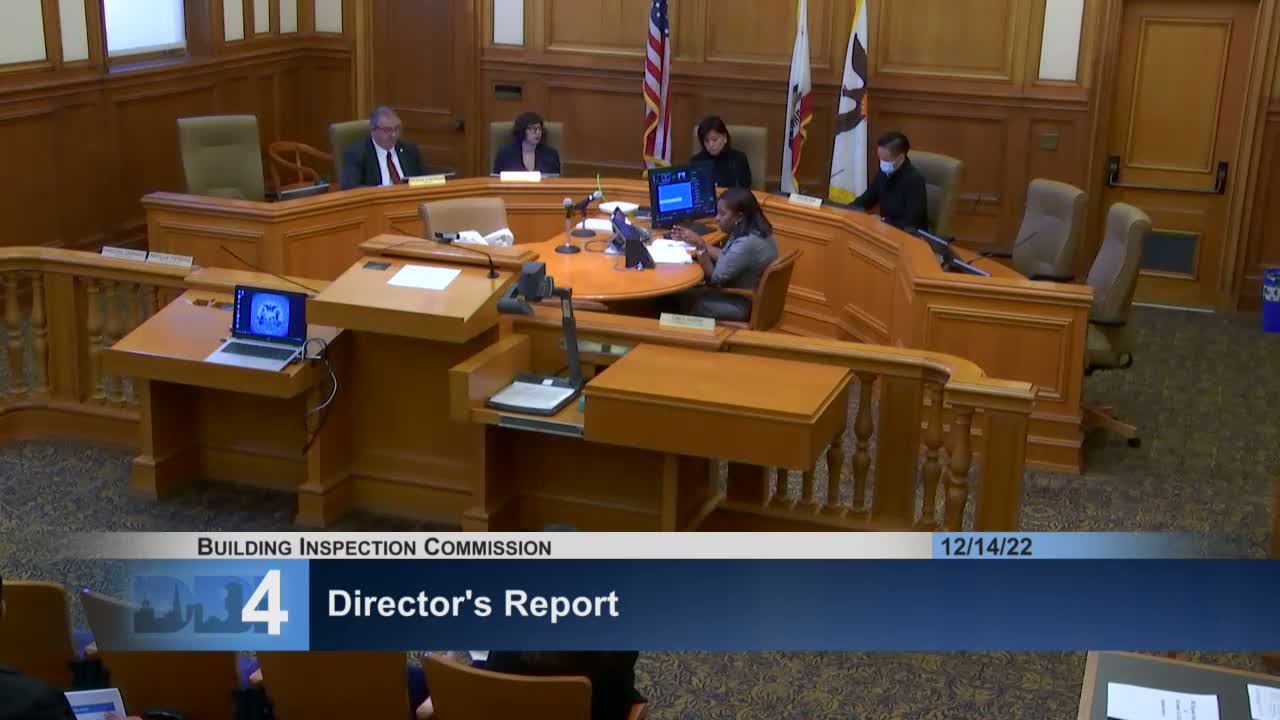
The San Francisco Building Inspection Commission on Dec. 22 was told the Department of Building Inspection is running an ongoing operating deficit of roughly $25,000,000 a year and, absent changes, could exhaust uncommitted cash by fiscal year 2026.
"We are currently experiencing a $25,000,000 per year operating deficit," Deputy Director for Administration Alex Koskinen said, summarizing DBI's finances and the department's plan to address it.
Koskinen told commissioners DBI holds about $95,000,000 in cash, of which roughly $48,000,000 is currently uncommitted and about $50,000,000 is committed to ongoing projects. To stabilize the fund, DBI has begun a fee study with a consultant and is pursuing several near-term steps: a request for about $3,000,000 in COVID-related reimbursement to remove pandemic costs from DBI ratepayers; asking other city departments to resume work currently funded by DBI (estimated one-time savings of about $3.9 million if earlier sunsetting is approved); and exploring whether the mayor's office or Department of Homelessness could assume community-based organization (CBO) grant funding used for tenant and contractor outreach.
Koskinen said the department hopes to complete a fee-study report by April and that the mayor's budget decisions will be reflected by the mayor's June 1 submission. "We have begun the fee study already," he said. "We'll be working with the consultant and moving through that process."
Commissioners pressed staff for detail. Commissioner Alexander Toot raised equity concerns about shifting CBO funding away from DBI, arguing those contracts help reach tenants who are least likely to call 311 or who face language, cultural or psychological barriers to making formal complaints. "This is about DBI's equity and access to DBI services," Toot said, urging that contract privity and purpose be preserved if funding sources change.
Koskinen replied that the department's intent is not to eliminate services: "We're not talking about eliminating or changing the services, just the source of funding for them," he said, adding that DBI would aim to keep the housing-inspection services and have other departments fund them if feasible.
Commissioners also asked for clearer documentation of the roughly $50,000,000 in committed reserves; Koskinen agreed to provide a breakdown at a future meeting. He warned that any shift to other departments or faster use of reserves would affect the fee study's baseline because fees are designed to recover the department's costs.
Koskinen said other short-term options include renegotiating or sunsetting work orders that currently charge DBI for services provided by departments such as Assessor, Fire, and Public Works. He described how DBI historically funded certain positions or services through the building inspection fund and is now asking those units or the mayor's office to re-assume the cost to avoid a rate shock for permit-fee payers.
DBI staff told commissioners the mayor's office could decide on any funding shifts during its budget phase between February and June; commissioners were invited to consider sending supporting letters. The commission expects to revisit the item at its January meeting and to receive detailed budget and reserve-commitment documentation to inform the fee study.
"We are currently experiencing a $25,000,000 per year operating deficit," Deputy Director for Administration Alex Koskinen said, summarizing DBI's finances and the department's plan to address it.
Koskinen told commissioners DBI holds about $95,000,000 in cash, of which roughly $48,000,000 is currently uncommitted and about $50,000,000 is committed to ongoing projects. To stabilize the fund, DBI has begun a fee study with a consultant and is pursuing several near-term steps: a request for about $3,000,000 in COVID-related reimbursement to remove pandemic costs from DBI ratepayers; asking other city departments to resume work currently funded by DBI (estimated one-time savings of about $3.9 million if earlier sunsetting is approved); and exploring whether the mayor's office or Department of Homelessness could assume community-based organization (CBO) grant funding used for tenant and contractor outreach.
Koskinen said the department hopes to complete a fee-study report by April and that the mayor's budget decisions will be reflected by the mayor's June 1 submission. "We have begun the fee study already," he said. "We'll be working with the consultant and moving through that process."
Commissioners pressed staff for detail. Commissioner Alexander Toot raised equity concerns about shifting CBO funding away from DBI, arguing those contracts help reach tenants who are least likely to call 311 or who face language, cultural or psychological barriers to making formal complaints. "This is about DBI's equity and access to DBI services," Toot said, urging that contract privity and purpose be preserved if funding sources change.
Koskinen replied that the department's intent is not to eliminate services: "We're not talking about eliminating or changing the services, just the source of funding for them," he said, adding that DBI would aim to keep the housing-inspection services and have other departments fund them if feasible.
Commissioners also asked for clearer documentation of the roughly $50,000,000 in committed reserves; Koskinen agreed to provide a breakdown at a future meeting. He warned that any shift to other departments or faster use of reserves would affect the fee study's baseline because fees are designed to recover the department's costs.
Koskinen said other short-term options include renegotiating or sunsetting work orders that currently charge DBI for services provided by departments such as Assessor, Fire, and Public Works. He described how DBI historically funded certain positions or services through the building inspection fund and is now asking those units or the mayor's office to re-assume the cost to avoid a rate shock for permit-fee payers.
DBI staff told commissioners the mayor's office could decide on any funding shifts during its budget phase between February and June; commissioners were invited to consider sending supporting letters. The commission expects to revisit the item at its January meeting and to receive detailed budget and reserve-commitment documentation to inform the fee study.
Don't Miss a Word: See the Full Meeting!
Go beyond summaries. Unlock every video, transcript, and key insight with a Founder Membership.
✓
Get instant access to full meeting videos
✓
Search and clip any phrase from complete transcripts
✓
Receive AI-powered summaries & custom alerts
✓
Enjoy lifetime, unrestricted access to government data
30-day money-back guarantee
