DBI outlines vacancy-tracking improvements and limits of enforcement role on storefront vacancy tax
June 21, 2023 | San Francisco City, San Francisco County, California
This article was created by AI summarizing key points discussed. AI makes mistakes, so for full details and context, please refer to the video of the full meeting. Please report any errors so we can fix them. Report an error »
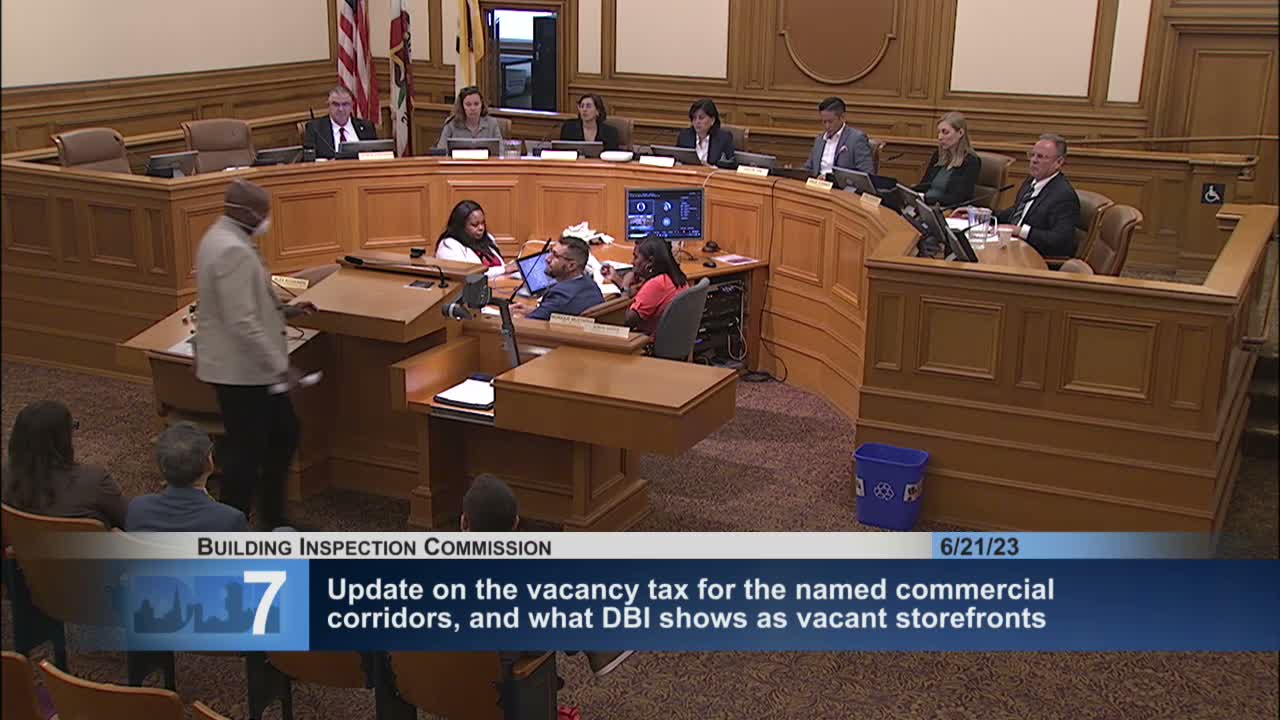
At the June 21 meeting, Charles Robinson, who oversees clerical and administrative staff in DBI's code-enforcement section, briefed the commission on the city's vacant storefront ordinance, enforcement processes and an upcoming DBI vacancy-tracking application.
Robinson summarized how DBI defines a vacant storefront (unoccupied and unsecured, unoccupied and unsafe due to code violations, or unoccupied for more than 30 days) and explained the registration requirements introduced in 2014 and updated in 2019. Property owners are required to register a vacancy within 30 days; DBI currently shows an annual registration fee of $711 and said penalties for noncompliance equal four times the registration fee. Robinson emphasized DBI does not implement the vacancy tax; the Treasurer/Tax Collector handles tax collection and any department may use DBI data to support tax administration.
Robinson said DBI currently relies primarily on complaints and 311 reports to identify vacant storefronts and employs two inspectors dedicated to vacancy tracking. He said DBI has conducted a large data cleanup and is building a vacancy app that will be viewable to the public, allow district filtering and be updated more frequently, which DBI expects to release in the next couple months.
Commissioners asked about the policy purpose of the tax (to discourage land banking and reduce blight), the 182-day vacancy threshold for taxability, and how the system will handle edge cases such as active-but-unsuccessful marketing of space. DBI staff said mere advertising for rent does not automatically exempt a property from registration and that sale of a property could affect status in limited circumstances. Commissioners noted the vacancy tax excludes downtown corridors and proposed future joint outreach with the Tax Collector.
Why it matters: Improved vacancy data could support neighborhood revitalization and targeted enforcement; DBI's new app aims to increase transparency and make it easier for community stakeholders to report and monitor vacant storefronts. The tax enforcement mechanism, however, operates outside DBI's authority.
Robinson summarized how DBI defines a vacant storefront (unoccupied and unsecured, unoccupied and unsafe due to code violations, or unoccupied for more than 30 days) and explained the registration requirements introduced in 2014 and updated in 2019. Property owners are required to register a vacancy within 30 days; DBI currently shows an annual registration fee of $711 and said penalties for noncompliance equal four times the registration fee. Robinson emphasized DBI does not implement the vacancy tax; the Treasurer/Tax Collector handles tax collection and any department may use DBI data to support tax administration.
Robinson said DBI currently relies primarily on complaints and 311 reports to identify vacant storefronts and employs two inspectors dedicated to vacancy tracking. He said DBI has conducted a large data cleanup and is building a vacancy app that will be viewable to the public, allow district filtering and be updated more frequently, which DBI expects to release in the next couple months.
Commissioners asked about the policy purpose of the tax (to discourage land banking and reduce blight), the 182-day vacancy threshold for taxability, and how the system will handle edge cases such as active-but-unsuccessful marketing of space. DBI staff said mere advertising for rent does not automatically exempt a property from registration and that sale of a property could affect status in limited circumstances. Commissioners noted the vacancy tax excludes downtown corridors and proposed future joint outreach with the Tax Collector.
Why it matters: Improved vacancy data could support neighborhood revitalization and targeted enforcement; DBI's new app aims to increase transparency and make it easier for community stakeholders to report and monitor vacant storefronts. The tax enforcement mechanism, however, operates outside DBI's authority.
Don't Miss a Word: See the Full Meeting!
Go beyond summaries. Unlock every video, transcript, and key insight with a Founder Membership.
✓
Get instant access to full meeting videos
✓
Search and clip any phrase from complete transcripts
✓
Receive AI-powered summaries & custom alerts
✓
Enjoy lifetime, unrestricted access to government data
30-day money-back guarantee
