Fire commissioners press for review after retired chief warns slow streets could delay emergency response
April 14, 2021 | San Francisco City, San Francisco County, California
This article was created by AI summarizing key points discussed. AI makes mistakes, so for full details and context, please refer to the video of the full meeting. Please report any errors so we can fix them. Report an error »
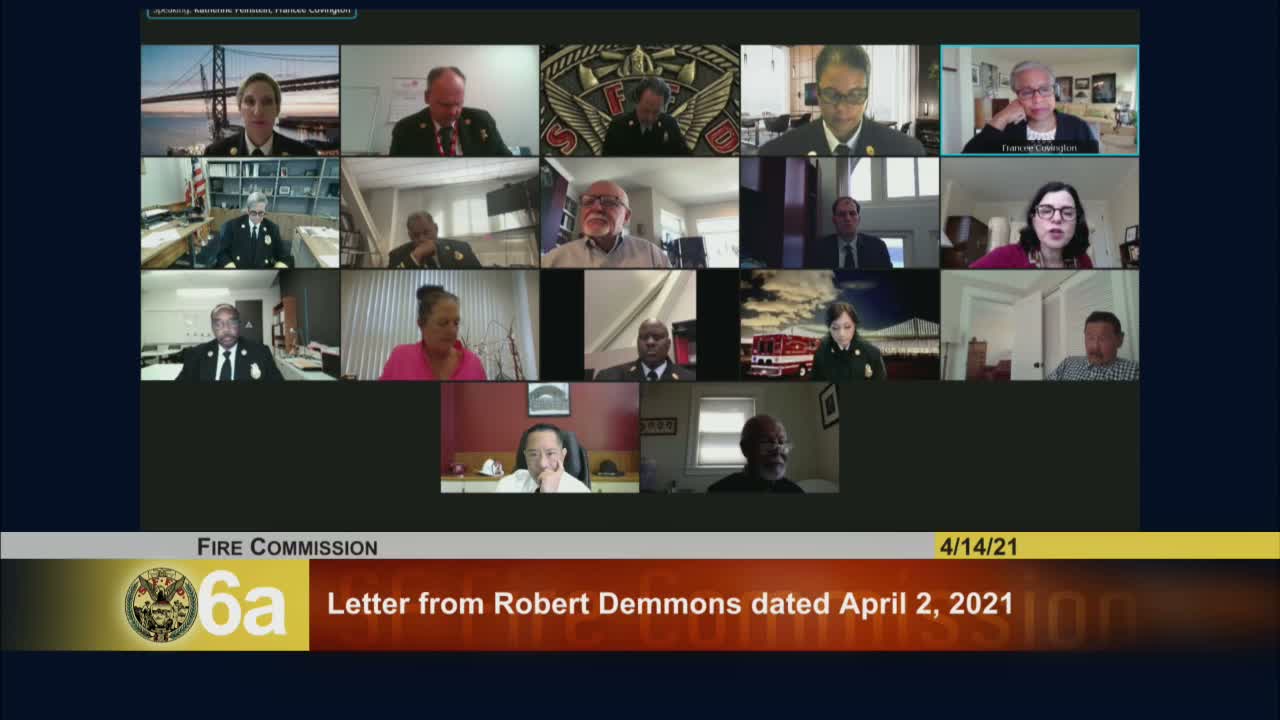
A letter read into the record on April 14 by the commission secretary from retired San Francisco Fire Chief Robert L. Demens warned that converting temporary slow streets into permanent ones could impede emergency response and put lives at risk. Commissioners used the letter — and their own local observations — to press the fire department and the fire marshal for more data and policy clarity.
Demens wrote that “San Francisco's slow streets do just what the name implies. They slow or stop traffic on those streets, but they can also slow responses to emergencies by police cruisers, ambulances, and fire apparatus,” and cited Page Street as an example where traffic diversion has pushed vehicles onto neighboring streets.
Fire Marshal Dan DeCo and department staff explained that two separate permitting tracks exist: shared spaces (DPW) and slow streets (MTA). DeCo said the department reviewed temporary programs and supported many at the time of their short‑term approval but urged caution before making temporary designs permanent, noting the department’s internal tracking shows response‑time increases “anywhere from just a few seconds to 32 seconds” in some neighborhoods since 2016.
Commissioners asked whether the department had veto power; DeCo said the fire department provides data and recommendation but that the MTA or DPW are lead agencies on those programs. Commissioners pressed for more granular reporting on any increase in response times, specific examples of blocked intersections, and the cost/reimbursement status for waterfront rescues; several asked to agendize a formal review comparing traffic patterns and response metrics before MTA moves streets to permanent status.
Next steps: the commission asked staff to return with a focused agenda item that would include response-time data, a list of temporary installations that cause access concerns, and options for coordinating with MTA and DPW on mitigations before any permanent conversions.
Demens wrote that “San Francisco's slow streets do just what the name implies. They slow or stop traffic on those streets, but they can also slow responses to emergencies by police cruisers, ambulances, and fire apparatus,” and cited Page Street as an example where traffic diversion has pushed vehicles onto neighboring streets.
Fire Marshal Dan DeCo and department staff explained that two separate permitting tracks exist: shared spaces (DPW) and slow streets (MTA). DeCo said the department reviewed temporary programs and supported many at the time of their short‑term approval but urged caution before making temporary designs permanent, noting the department’s internal tracking shows response‑time increases “anywhere from just a few seconds to 32 seconds” in some neighborhoods since 2016.
Commissioners asked whether the department had veto power; DeCo said the fire department provides data and recommendation but that the MTA or DPW are lead agencies on those programs. Commissioners pressed for more granular reporting on any increase in response times, specific examples of blocked intersections, and the cost/reimbursement status for waterfront rescues; several asked to agendize a formal review comparing traffic patterns and response metrics before MTA moves streets to permanent status.
Next steps: the commission asked staff to return with a focused agenda item that would include response-time data, a list of temporary installations that cause access concerns, and options for coordinating with MTA and DPW on mitigations before any permanent conversions.
View the Full Meeting & All Its Details
This article offers just a summary. Unlock complete video, transcripts, and insights as a Founder Member.
✓
Watch full, unedited meeting videos
✓
Search every word spoken in unlimited transcripts
✓
AI summaries & real-time alerts (all government levels)
✓
Permanent access to expanding government content
30-day money-back guarantee
