Fire Department outlines retirements, planned academy classes and recruitment changes
October 27, 2021 | San Francisco City, San Francisco County, California
This article was created by AI summarizing key points discussed. AI makes mistakes, so for full details and context, please refer to the video of the full meeting. Please report any errors so we can fix them. Report an error »
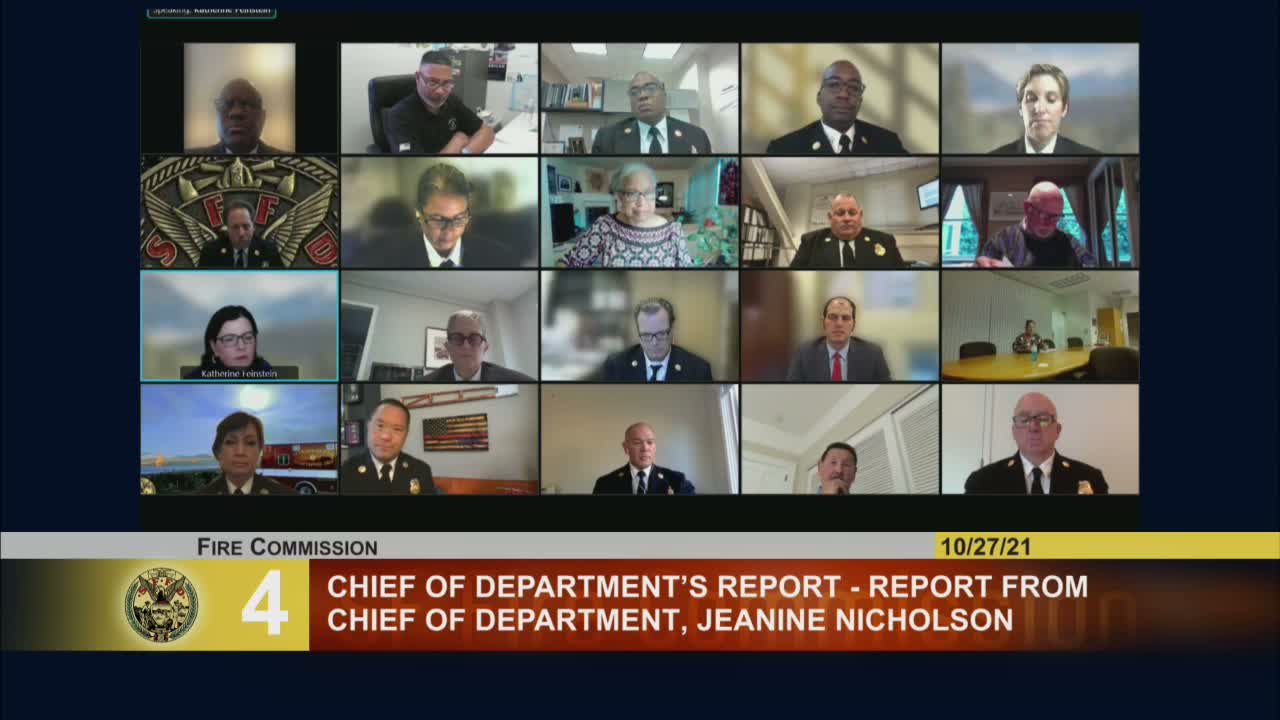
At the San Francisco Fire Commission meeting, Chief of Department Janine Nicholson said the department has experienced substantial retirements and described plans to accelerate recruit training to replenish personnel.
Nicholson told commissioners that over the past two years the department recorded “well over 100 retirements,” estimating the number closer to 140–150. The department had a class of 25 last year because of COVID constraints; a current class started at roughly 40 and is down to 35 recruits. Nicholson said the department plans a class of 50 in January and a second academy class later in the year, and is coordinating with the mayor’s budget office to add additional classes if funding allows.
Training leadership supplied detail on planned emergency-medical technician (EMT) and paramedic cohorts: an anticipated November (level-one EMT) cohort of up to about 40 participants, a February paramedic-only class, and potential hybrid classes in spring if additional funding is approved.
Chiefes and training staff described attrition and testing standards: the division of training said national academy failure rates are about 10 percent; SFFD’s current academy uses a 20-week program with an 18-deficiency threshold for failure. Training staff said only two recruits failed during the recent term, below the national average. The department is also expanding recruitment staffing and DEI interview processes; a new recruitment outreach lieutenant (name spelled inconsistently in the record) was named to lead those efforts.
Why it matters: The commission’s discussion mapped projected incoming classes against recent, sizable retirements and ongoing COVID-era staffing constraints. Restoring sworn staffing affects daily fire and EMS coverage, overtime costs and readiness for major incidents.
What’s next: Officials said timelines remain contingent on funding approval from the mayor’s office and supply/operational constraints; commissioners asked for continued updates on class sizes, retention and on-station engagement during facility design projects.
Nicholson told commissioners that over the past two years the department recorded “well over 100 retirements,” estimating the number closer to 140–150. The department had a class of 25 last year because of COVID constraints; a current class started at roughly 40 and is down to 35 recruits. Nicholson said the department plans a class of 50 in January and a second academy class later in the year, and is coordinating with the mayor’s budget office to add additional classes if funding allows.
Training leadership supplied detail on planned emergency-medical technician (EMT) and paramedic cohorts: an anticipated November (level-one EMT) cohort of up to about 40 participants, a February paramedic-only class, and potential hybrid classes in spring if additional funding is approved.
Chiefes and training staff described attrition and testing standards: the division of training said national academy failure rates are about 10 percent; SFFD’s current academy uses a 20-week program with an 18-deficiency threshold for failure. Training staff said only two recruits failed during the recent term, below the national average. The department is also expanding recruitment staffing and DEI interview processes; a new recruitment outreach lieutenant (name spelled inconsistently in the record) was named to lead those efforts.
Why it matters: The commission’s discussion mapped projected incoming classes against recent, sizable retirements and ongoing COVID-era staffing constraints. Restoring sworn staffing affects daily fire and EMS coverage, overtime costs and readiness for major incidents.
What’s next: Officials said timelines remain contingent on funding approval from the mayor’s office and supply/operational constraints; commissioners asked for continued updates on class sizes, retention and on-station engagement during facility design projects.
View the Full Meeting & All Its Details
This article offers just a summary. Unlock complete video, transcripts, and insights as a Founder Member.
✓
Watch full, unedited meeting videos
✓
Search every word spoken in unlimited transcripts
✓
AI summaries & real-time alerts (all government levels)
✓
Permanent access to expanding government content
30-day money-back guarantee
