SFFD reports October incident totals, readies crews for Central Subway and trains on new high‑rise elevator systems
November 09, 2022 | San Francisco City, San Francisco County, California
This article was created by AI summarizing key points discussed. AI makes mistakes, so for full details and context, please refer to the video of the full meeting. Please report any errors so we can fix them. Report an error »
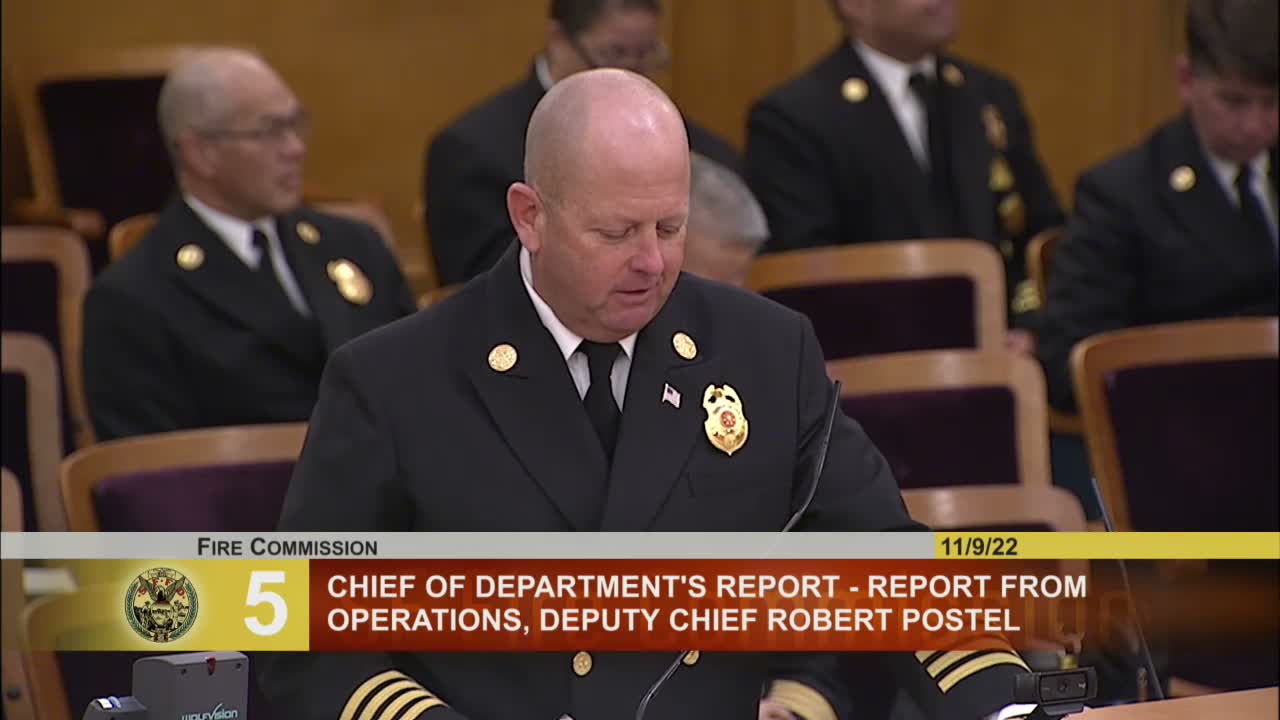
The San Francisco Fire Department reported a busy October during the Fire Commission meeting, with 20 working fires in the month — including one greater alarm — seven water rescues and one cliff rescue, Deputy Chief Robert Postel said. The department described a multi‑building second alarm at 1926 Palou where incident commanders quickly prioritized exposures to limit damage.
Postel highlighted training and preparedness work tied to new building technologies and transit infrastructure. The department ran a high‑rise drill at 49 South Van Ness that focused on two new elevator types: occupant evacuation elevators (used to move building occupants in certain super high‑rise designs) and fire service access elevators that allow firefighters to reach floors that would previously have posed greater hazards. "We have these new elevators that are...protected," Postel said, adding the department must train to operate in buildings that include the systems. Fire protection engineer Saghi Weiss Ishahi participated in the drill and briefed chief officers on building systems.
Central Subway preparedness was a focal point: Postel described the line as 1.7 miles long with stations at Yerba Buena/Moscone, Union Square and Chinatown, and said the Chinatown station lies about 10 stories below street level. "You can't just pull a hose line off a fire engine and go down 10 floors below grade," he warned, describing distinct pumping and evacuation challenges for subterranean incidents and the need for coordinated operational drills before the line opens for service.
The department also reported prevention and permitting activity: roughly 2,100 inspections and 380 complaints in October, with plan check receiving 668 permit submissions and approving 580. Postel read an email from Philip Wong that thanked bureau staff for their work on the Potrero HOPE SF project, a 157‑unit affordable housing development with an associated childcare center.
Recruiting and training remain a priority: the 130th recruit class is due to graduate November 18, with about 44 of the original 51 still in the class. The department said it typically runs two recruit classes per year and is continuing high‑rise and Central Subway drills to ensure crews can operate safely in new built environments.
What happens next: the department plans additional operational drills at Central Subway stations prior to a soft opening and will continue outreach to building owners and engineering partners to plan evacuation and firefighter access training.
Postel highlighted training and preparedness work tied to new building technologies and transit infrastructure. The department ran a high‑rise drill at 49 South Van Ness that focused on two new elevator types: occupant evacuation elevators (used to move building occupants in certain super high‑rise designs) and fire service access elevators that allow firefighters to reach floors that would previously have posed greater hazards. "We have these new elevators that are...protected," Postel said, adding the department must train to operate in buildings that include the systems. Fire protection engineer Saghi Weiss Ishahi participated in the drill and briefed chief officers on building systems.
Central Subway preparedness was a focal point: Postel described the line as 1.7 miles long with stations at Yerba Buena/Moscone, Union Square and Chinatown, and said the Chinatown station lies about 10 stories below street level. "You can't just pull a hose line off a fire engine and go down 10 floors below grade," he warned, describing distinct pumping and evacuation challenges for subterranean incidents and the need for coordinated operational drills before the line opens for service.
The department also reported prevention and permitting activity: roughly 2,100 inspections and 380 complaints in October, with plan check receiving 668 permit submissions and approving 580. Postel read an email from Philip Wong that thanked bureau staff for their work on the Potrero HOPE SF project, a 157‑unit affordable housing development with an associated childcare center.
Recruiting and training remain a priority: the 130th recruit class is due to graduate November 18, with about 44 of the original 51 still in the class. The department said it typically runs two recruit classes per year and is continuing high‑rise and Central Subway drills to ensure crews can operate safely in new built environments.
What happens next: the department plans additional operational drills at Central Subway stations prior to a soft opening and will continue outreach to building owners and engineering partners to plan evacuation and firefighter access training.
Don't Miss a Word: See the Full Meeting!
Go beyond summaries. Unlock every video, transcript, and key insight with a Founder Membership.
✓
Get instant access to full meeting videos
✓
Search and clip any phrase from complete transcripts
✓
Receive AI-powered summaries & custom alerts
✓
Enjoy lifetime, unrestricted access to government data
30-day money-back guarantee
