Volunteers trained: NERTS leaders ask Fire Commission for staffing and recruitment help
June 28, 2023 | San Francisco City, San Francisco County, California
This article was created by AI summarizing key points discussed. AI makes mistakes, so for full details and context, please refer to the video of the full meeting. Please report any errors so we can fix them. Report an error »
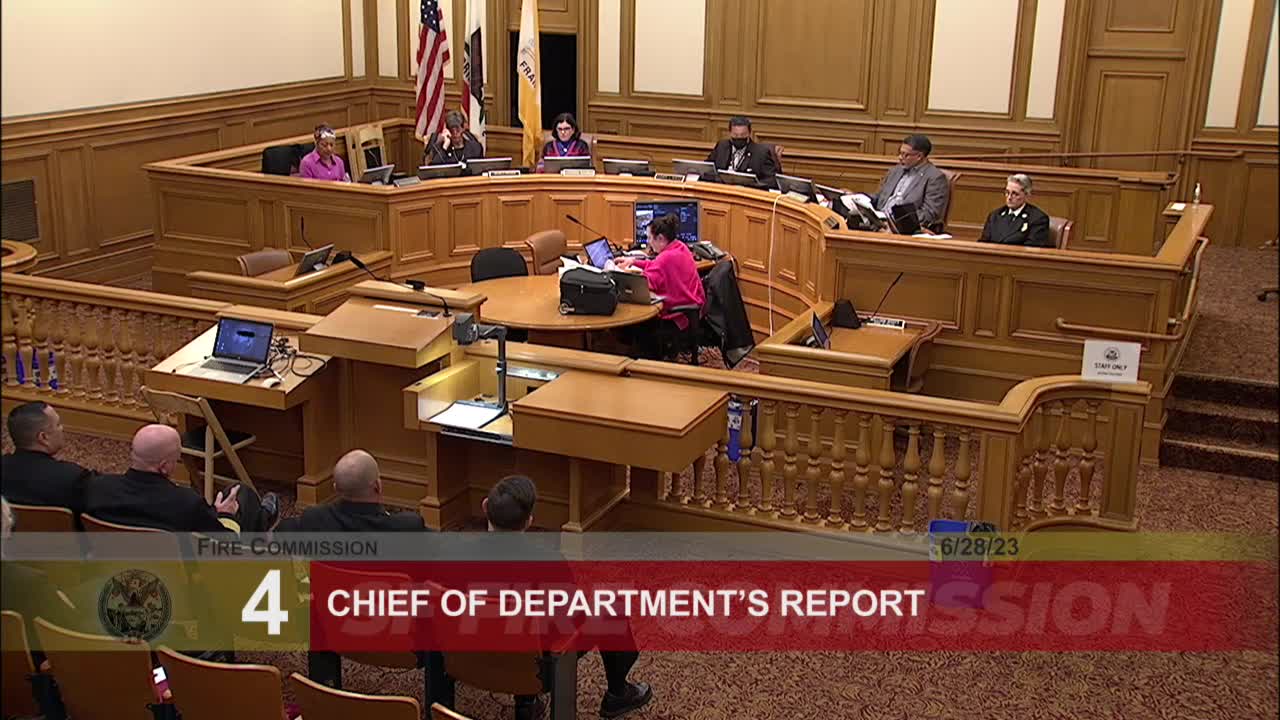
Captain Brandon Tom, coordinator of the San Francisco Fire Department’s Neighborhood Emergency Response Team (NERTS), presented an overview and update at the June 28 Fire Commission meeting.
Tom traced NERTS’ origin to the 1989 Loma Prieta earthquake and said the program has trained close to 35,000 residents since 1990. NERTS provides FEMA‑standardized, 20+ hour all‑hazard training intended to make volunteers personally prepared and able to support the fire department during disasters. Advanced training offerings include CPR/AED, Stop the Bleed and auxiliary water‑supply skills.
Advisory board members described NERTS’ role during recent crises: staffing cooling centers during a heat event, shelter and donation‑center support during NorCal wildfires, and staffing testing and vaccination sites during COVID‑19. Presenters characterized NERTS as a force multiplier: one estimate offered at the meeting suggested roughly $1 invested in NERTS yields $15 in resilience value.
Advisory board members Steiger and Nathan Karkovsky said the program faces recruitment and retention pressures as longtime volunteers retire, as San Francisco’s demographics shift, and as volunteers require more multilingual outreach. Presenters said NERTS’ operating budget is a very small portion of the fire department budget (under 0.1 percent) and that the advisory board’s enduring ask is for dedicated staff support to manage retention, retraining and community outreach.
Commissioners asked about neighborhood coverage, active volunteer counts (presenters estimated ~10,000 active volunteers but said the goal is 40,000), language access (past reliance on bilingual firefighters and translated materials; interest in real‑time translation tech), and coordination with public‑health efforts for vulnerable populations who rely on electricity for medical devices in power‑out scenarios. Chief Nicholson acknowledged staffing and retention are ongoing concerns and offered to follow up offline.
The commission did not take formal action on the NERTS request during this meeting; presenters asked the commission to consider support for staffing and outreach efforts to sustain program capacity.
Tom traced NERTS’ origin to the 1989 Loma Prieta earthquake and said the program has trained close to 35,000 residents since 1990. NERTS provides FEMA‑standardized, 20+ hour all‑hazard training intended to make volunteers personally prepared and able to support the fire department during disasters. Advanced training offerings include CPR/AED, Stop the Bleed and auxiliary water‑supply skills.
Advisory board members described NERTS’ role during recent crises: staffing cooling centers during a heat event, shelter and donation‑center support during NorCal wildfires, and staffing testing and vaccination sites during COVID‑19. Presenters characterized NERTS as a force multiplier: one estimate offered at the meeting suggested roughly $1 invested in NERTS yields $15 in resilience value.
Advisory board members Steiger and Nathan Karkovsky said the program faces recruitment and retention pressures as longtime volunteers retire, as San Francisco’s demographics shift, and as volunteers require more multilingual outreach. Presenters said NERTS’ operating budget is a very small portion of the fire department budget (under 0.1 percent) and that the advisory board’s enduring ask is for dedicated staff support to manage retention, retraining and community outreach.
Commissioners asked about neighborhood coverage, active volunteer counts (presenters estimated ~10,000 active volunteers but said the goal is 40,000), language access (past reliance on bilingual firefighters and translated materials; interest in real‑time translation tech), and coordination with public‑health efforts for vulnerable populations who rely on electricity for medical devices in power‑out scenarios. Chief Nicholson acknowledged staffing and retention are ongoing concerns and offered to follow up offline.
The commission did not take formal action on the NERTS request during this meeting; presenters asked the commission to consider support for staffing and outreach efforts to sustain program capacity.
Don't Miss a Word: See the Full Meeting!
Go beyond summaries. Unlock every video, transcript, and key insight with a Founder Membership.
✓
Get instant access to full meeting videos
✓
Search and clip any phrase from complete transcripts
✓
Receive AI-powered summaries & custom alerts
✓
Enjoy lifetime, unrestricted access to government data
30-day money-back guarantee
