S.F. Fire Dept. accepts concept design for 1236 Carroll Ave. training campus; construction target late 2025
May 08, 2024 | San Francisco City, San Francisco County, California
This article was created by AI summarizing key points discussed. AI makes mistakes, so for full details and context, please refer to the video of the full meeting. Please report any errors so we can fix them. Report an error »
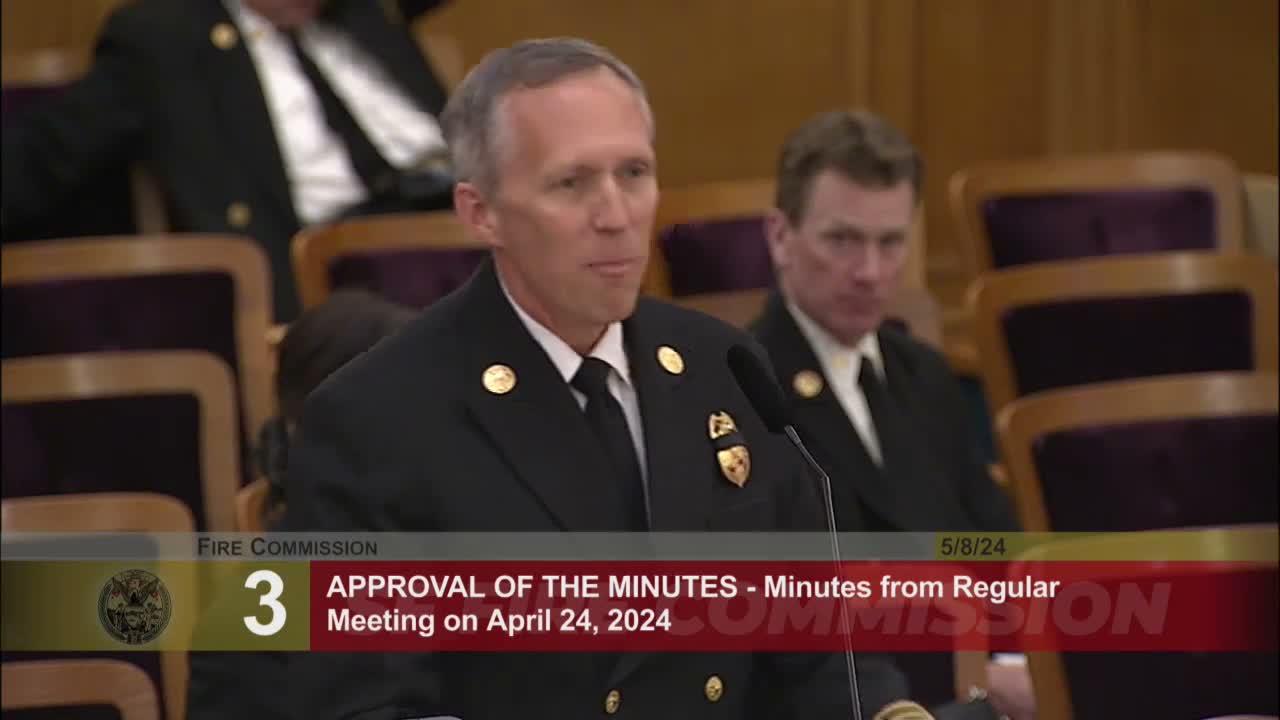
The San Francisco Fire Department has accepted 100% concept design documents for a new Division of Training at 1236 Carroll Avenue, Assistant Deputy Chief Gareth Miller told the Fire Commission on May 8.
Miller said the site plan covers roughly eight acres assembled from 26 parcels and includes 12 buildings: approximately 58,000 square feet of occupied classroom and support space and about 53,000 square feet of training structures. The scheme includes simulated San Francisco streetscapes, multi‑story training towers and a USAR practice structure. Miller said early construction estimates had been $15 million over budget, but the department and design team made adjustments during concept design to bring the estimate back within budget, with some program reductions under evaluation.
"We received from the design team the 100% concept design documents which the department has accepted," Miller said. He gave a projected schedule that places schematic design over the next 15 weeks, a construction start target at the end of 2025 and completion in 2028.
Miller told commissioners the site sits within a 40‑foot height limit and the department will seek a variance to accommodate a seven‑story tower and an 80‑foot simulated communications tower. He said additional geotechnical borings and a detailed structural plan are required; while it is the department’s intention to take occupied buildings down to bedrock, some smaller, unoccupied training structures may use friction piers depending on soils and cost implications.
Commissioners pressed about remediation and contaminated spoils from deep foundations; Miller acknowledged the potential for naturally occurring asbestos in excavated material and said the team is trying to minimize off‑haul of contaminated soils to control cost. He described the start of public outreach with Bayview Hunters Point community groups, Alice Griffith tenants association and other local stakeholders and said the Art Commission has discussed a 2% art budget allocation for the project.
Miller emphasized the project is an essential departmental investment, calling the training campus "the heart and of the department" for recruits and career progression. The department will proceed through schematic design and further geotechnical work before returning with more detailed schedule, budget and mitigation proposals.
What happens next: schematic design continues; the department will complete further soil borings and structural plans, pursue required variances and continue neighborhood outreach before returning with refined cost and schedule estimates.
Miller said the site plan covers roughly eight acres assembled from 26 parcels and includes 12 buildings: approximately 58,000 square feet of occupied classroom and support space and about 53,000 square feet of training structures. The scheme includes simulated San Francisco streetscapes, multi‑story training towers and a USAR practice structure. Miller said early construction estimates had been $15 million over budget, but the department and design team made adjustments during concept design to bring the estimate back within budget, with some program reductions under evaluation.
"We received from the design team the 100% concept design documents which the department has accepted," Miller said. He gave a projected schedule that places schematic design over the next 15 weeks, a construction start target at the end of 2025 and completion in 2028.
Miller told commissioners the site sits within a 40‑foot height limit and the department will seek a variance to accommodate a seven‑story tower and an 80‑foot simulated communications tower. He said additional geotechnical borings and a detailed structural plan are required; while it is the department’s intention to take occupied buildings down to bedrock, some smaller, unoccupied training structures may use friction piers depending on soils and cost implications.
Commissioners pressed about remediation and contaminated spoils from deep foundations; Miller acknowledged the potential for naturally occurring asbestos in excavated material and said the team is trying to minimize off‑haul of contaminated soils to control cost. He described the start of public outreach with Bayview Hunters Point community groups, Alice Griffith tenants association and other local stakeholders and said the Art Commission has discussed a 2% art budget allocation for the project.
Miller emphasized the project is an essential departmental investment, calling the training campus "the heart and of the department" for recruits and career progression. The department will proceed through schematic design and further geotechnical work before returning with more detailed schedule, budget and mitigation proposals.
What happens next: schematic design continues; the department will complete further soil borings and structural plans, pursue required variances and continue neighborhood outreach before returning with refined cost and schedule estimates.
Don't Miss a Word: See the Full Meeting!
Go beyond summaries. Unlock every video, transcript, and key insight with a Founder Membership.
✓
Get instant access to full meeting videos
✓
Search and clip any phrase from complete transcripts
✓
Receive AI-powered summaries & custom alerts
✓
Enjoy lifetime, unrestricted access to government data
30-day money-back guarantee
