SFFD behavioral health unit asks commissioners for three more navigators as overtime, trauma rise
February 22, 2023 | San Francisco City, San Francisco County, California
This article was created by AI summarizing key points discussed. AI makes mistakes, so for full details and context, please refer to the video of the full meeting. Please report any errors so we can fix them. Report an error »
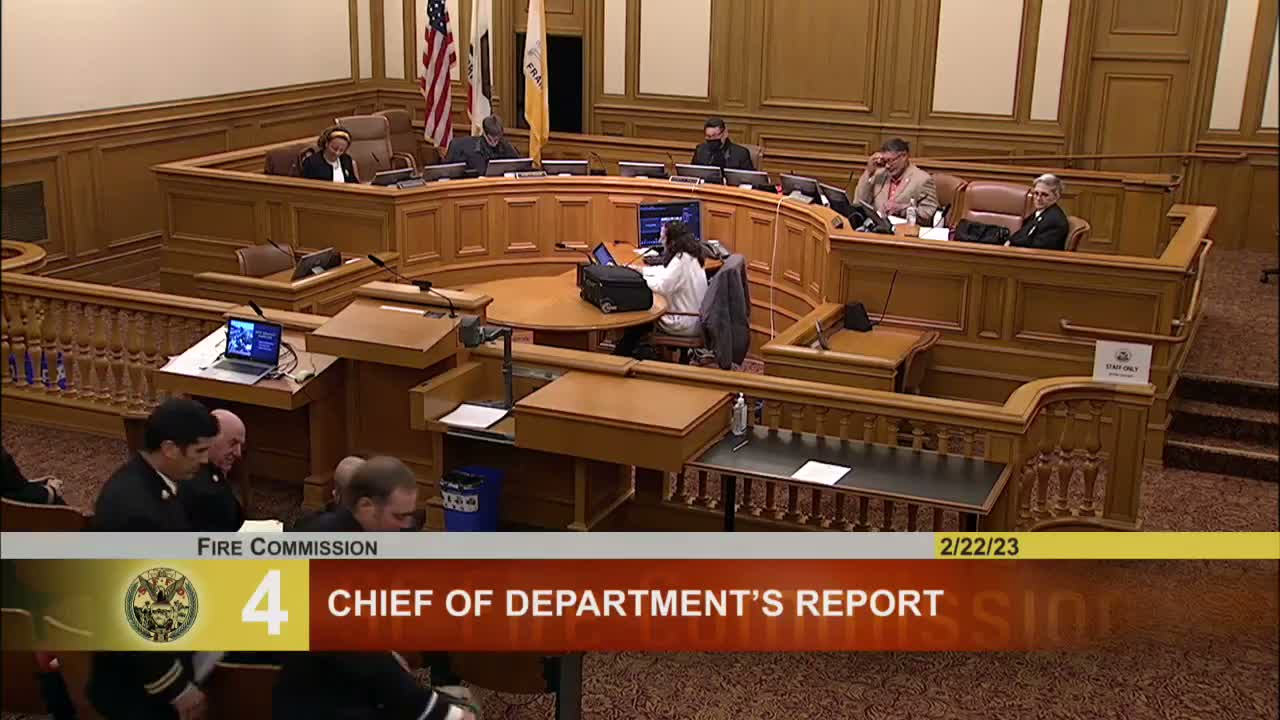
Battalion Chief Matthew Alba, who oversees the San Francisco Fire Department's Health, Safety and Wellness program, told the Fire Commission on Feb. 8 that the department faces heavy demand for behavioral-health services as call volume has grown and overtime has become routine. "Now we respond to approximately 145,000" emergency calls annually, Alba said, and the BHU needs more staff to meet members’ needs.
Acting Captain Heather Buren described the BHU’s five components—BHU navigators, peer support, the Critical Incident Response Team (CERT), facility dogs and a chaplaincy program—and said the navigators perform critical roles connecting members to counseling and addiction services. "A navigator really is what that word is…they're not a counselor, but they're people embedded in our department who are comfortable talking with people and navigating them to services," Buren said.
BHU navigator Jennifer Green summarized the program’s caseload and the problems driving demand: mandatory overtime, a younger workforce with many members under seven years in the field, rising call volumes and exposure to violent and traumatic incidents. "The things that are currently affecting our members are the mandatory overtime staffing issues," Green said, adding the BHU regularly conducts debriefings after critical incidents such as homicides and multi-casualty events.
Commissioners pressed for data on how many members use BHU services. Green said the unit does not yet have consolidated annual contact statistics but is working to improve data collection. Commissioners and Chief Janine Nicholson endorsed the program and its staffing request; Nicholson said the department will seek creative ways to add positions amid budget constraints. "I would love to hire three more BHU navigators," Nicholson said, while noting the department has been asked to reduce budgets and must identify funding.
What happens next: presenters asked the commission to support a plan to grow the BHU to five navigators (an increase of three), citing workforce retention, suicide prevention and improved access to culturally competent peer support as goals. The presenters also said they plan to pursue in-house peer-support training and to diversify BHU staff to build trust with members from different backgrounds.
Acting Captain Heather Buren described the BHU’s five components—BHU navigators, peer support, the Critical Incident Response Team (CERT), facility dogs and a chaplaincy program—and said the navigators perform critical roles connecting members to counseling and addiction services. "A navigator really is what that word is…they're not a counselor, but they're people embedded in our department who are comfortable talking with people and navigating them to services," Buren said.
BHU navigator Jennifer Green summarized the program’s caseload and the problems driving demand: mandatory overtime, a younger workforce with many members under seven years in the field, rising call volumes and exposure to violent and traumatic incidents. "The things that are currently affecting our members are the mandatory overtime staffing issues," Green said, adding the BHU regularly conducts debriefings after critical incidents such as homicides and multi-casualty events.
Commissioners pressed for data on how many members use BHU services. Green said the unit does not yet have consolidated annual contact statistics but is working to improve data collection. Commissioners and Chief Janine Nicholson endorsed the program and its staffing request; Nicholson said the department will seek creative ways to add positions amid budget constraints. "I would love to hire three more BHU navigators," Nicholson said, while noting the department has been asked to reduce budgets and must identify funding.
What happens next: presenters asked the commission to support a plan to grow the BHU to five navigators (an increase of three), citing workforce retention, suicide prevention and improved access to culturally competent peer support as goals. The presenters also said they plan to pursue in-house peer-support training and to diversify BHU staff to build trust with members from different backgrounds.
View the Full Meeting & All Its Details
This article offers just a summary. Unlock complete video, transcripts, and insights as a Founder Member.
✓
Watch full, unedited meeting videos
✓
Search every word spoken in unlimited transcripts
✓
AI summaries & real-time alerts (all government levels)
✓
Permanent access to expanding government content
30-day money-back guarantee
