Ethics Commission approves FY2023 budget request with added Commission Secretary
February 11, 2022 | San Francisco City, San Francisco County, California
This article was created by AI summarizing key points discussed. AI makes mistakes, so for full details and context, please refer to the video of the full meeting. Please report any errors so we can fix them. Report an error »
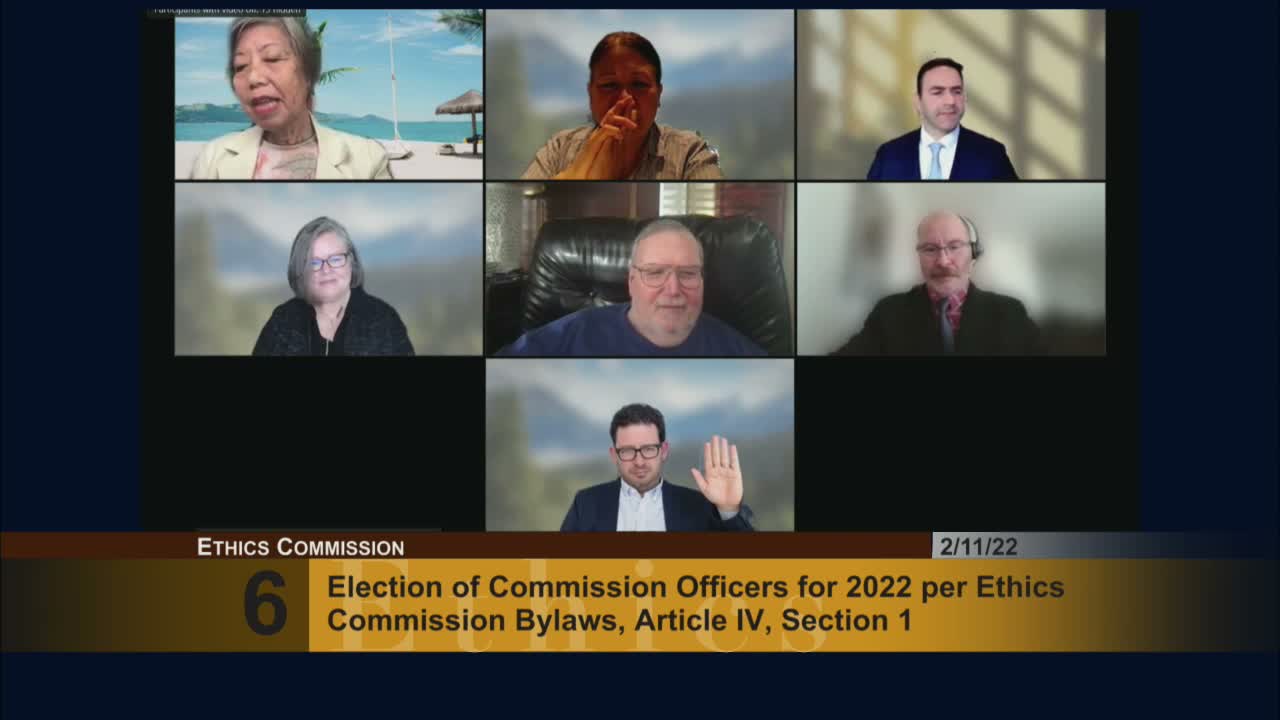
The San Francisco Ethics Commission voted unanimously on Feb. 11 to include an additional staff position — a commission secretary — in its FY2023 budget request to the Mayor’s Office.
The decision came after Director Pelham and Deputy Director Gayathri Taycanil presented staff’s budget package, which proposed several reclassifications and three new permanent positions — including a senior auditor, a client‑support specialist and an information systems engineer — plus funding for technology and professional services. Pelham said the package seeks to maintain the Commission’s core public‑disclosure and audit functions while expanding community engagement and compliance capacity.
Commissioners pressed staff for details about the timing and scope of limited‑term positions, how the Commission would sustain the work of more than 4,000 new Form 700 filers, and whether creating an executive or commission secretary was necessary to improve public outreach. ‘‘We have a public‑facing obligation,’’ Commissioner Larry Bush said during the debate, arguing that an identifiable point of contact would improve outreach to underserved communities. Deputy City Attorney Shen and staff cautioned that the charter and civil‑service classifications constrain how and where a secretary could be placed, but staff said they could propose classifications and funding amounts as part of the budget submission.
After extended discussion about reporting lines and job classification, Commissioner Bush moved to submit the Director’s proposal with one additional position — the commission secretary — and authorized staff to identify an appropriate job classification and the detailed job description during the budget process. The motion passed on a roll call vote, 5–0. Chair Yvonne Lee said staff will draft the budget lines and classification language to maximize the request’s flexibility and will return with more details as the Mayor’s Office and Department of Human Resources process the submission.
The Commission also discussed whether the secretary should be hired and supervised directly by the Commission (as some commissioners preferred) or appointed by the executive director; staff recommended a pragmatic approach of embedding public‑facing outreach duties into the new positions if the Commission chooses not to seek a separate commission‑hired secretary immediately.
The budget request will be transmitted to the Mayor’s budget office ahead of the city’s submission deadline. Pelham said the city’s budget process and civil‑service hiring timelines typically mean newly funded positions do not take full effect until later in the fiscal year.
What happens next: staff will identify the job classification and draft a job description for the commission secretary, provide cost estimates for the position, and include those details in the formal budget submission.
The vote to add the commission secretary marks a notable shift: commissioners argued the Commission needs a more robust public‑engagement capacity as it handles expanded filing duties and implements reforms resulting from recent corruption investigations.
The decision came after Director Pelham and Deputy Director Gayathri Taycanil presented staff’s budget package, which proposed several reclassifications and three new permanent positions — including a senior auditor, a client‑support specialist and an information systems engineer — plus funding for technology and professional services. Pelham said the package seeks to maintain the Commission’s core public‑disclosure and audit functions while expanding community engagement and compliance capacity.
Commissioners pressed staff for details about the timing and scope of limited‑term positions, how the Commission would sustain the work of more than 4,000 new Form 700 filers, and whether creating an executive or commission secretary was necessary to improve public outreach. ‘‘We have a public‑facing obligation,’’ Commissioner Larry Bush said during the debate, arguing that an identifiable point of contact would improve outreach to underserved communities. Deputy City Attorney Shen and staff cautioned that the charter and civil‑service classifications constrain how and where a secretary could be placed, but staff said they could propose classifications and funding amounts as part of the budget submission.
After extended discussion about reporting lines and job classification, Commissioner Bush moved to submit the Director’s proposal with one additional position — the commission secretary — and authorized staff to identify an appropriate job classification and the detailed job description during the budget process. The motion passed on a roll call vote, 5–0. Chair Yvonne Lee said staff will draft the budget lines and classification language to maximize the request’s flexibility and will return with more details as the Mayor’s Office and Department of Human Resources process the submission.
The Commission also discussed whether the secretary should be hired and supervised directly by the Commission (as some commissioners preferred) or appointed by the executive director; staff recommended a pragmatic approach of embedding public‑facing outreach duties into the new positions if the Commission chooses not to seek a separate commission‑hired secretary immediately.
The budget request will be transmitted to the Mayor’s budget office ahead of the city’s submission deadline. Pelham said the city’s budget process and civil‑service hiring timelines typically mean newly funded positions do not take full effect until later in the fiscal year.
What happens next: staff will identify the job classification and draft a job description for the commission secretary, provide cost estimates for the position, and include those details in the formal budget submission.
The vote to add the commission secretary marks a notable shift: commissioners argued the Commission needs a more robust public‑engagement capacity as it handles expanded filing duties and implements reforms resulting from recent corruption investigations.
View the Full Meeting & All Its Details
This article offers just a summary. Unlock complete video, transcripts, and insights as a Founder Member.
✓
Watch full, unedited meeting videos
✓
Search every word spoken in unlimited transcripts
✓
AI summaries & real-time alerts (all government levels)
✓
Permanent access to expanding government content
30-day money-back guarantee
