Ethics Commission unanimously grants limited post‑employment waiver to Philip Wong
January 13, 2023 | San Francisco City, San Francisco County, California
This article was created by AI summarizing key points discussed. AI makes mistakes, so for full details and context, please refer to the video of the full meeting. Please report any errors so we can fix them. Report an error »
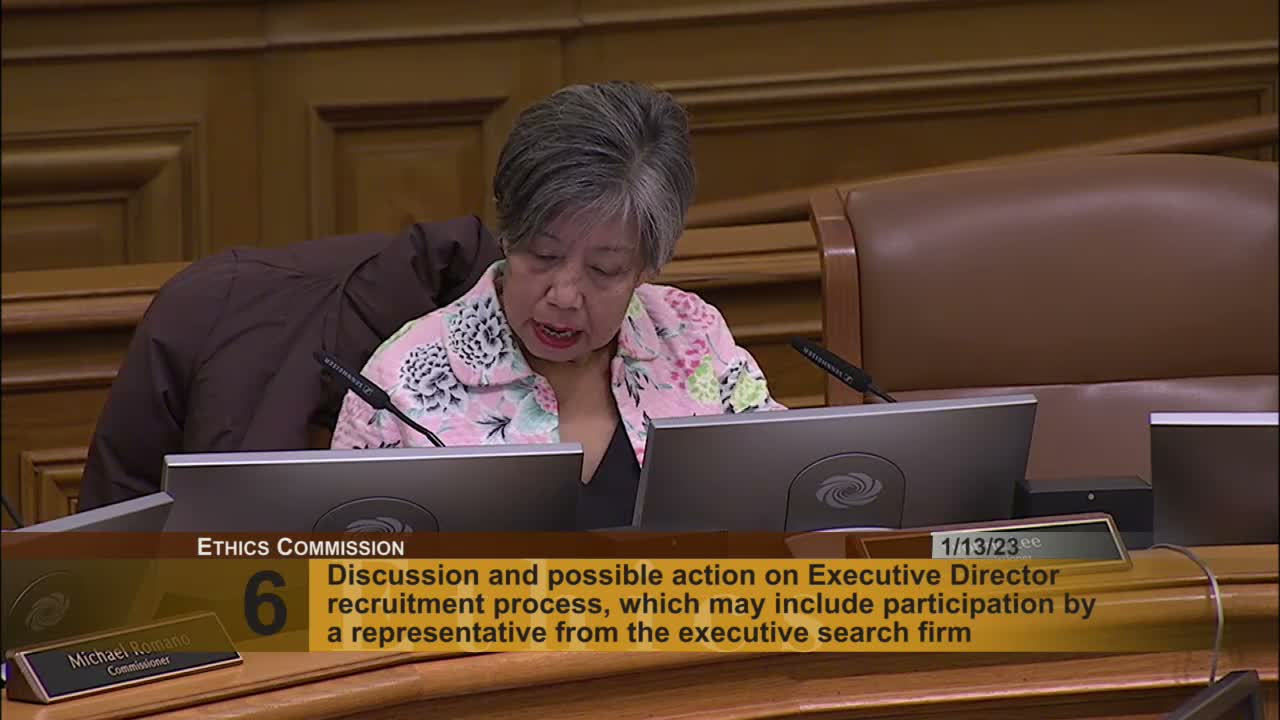
The San Francisco Ethics Commission voted unanimously to grant a post‑employment waiver to Philip Wong, who asked the commission to lift the city’s one‑year restriction on communicating with his former department in connection with work for a nonprofit affordable‑housing developer.
Senior policy analyst Michael Canning briefed the commission that Wong submitted a supplemental response to questions posed at the December meeting and that the material is included in the agenda packet. Wong, who is a current city employee working on development projects, told commissioners he sought the waiver to take a role with a nonprofit on Potrero HOPE SF and described the communications he anticipates with the Office of Economic and Workforce Development as relating to the public appraisal and disposition of market‑rate parcels that financially support the affordable‑housing work.
Commissioners framed their deliberations around the ordinance’s concern about "undue influence." Deputy City Attorney Bridal Russi told the panel there is no statutory or case law definition of undue influence for the commission’s ordinance and that the commission must apply the regulatory factors in the context of the request.
Several commissioners said the record shows alignment between the city’s mission and Wong’s prospective job and no apparent risk of personal financial enrichment. Commissioner Finliff said, "given the kind of unity of interest" and the safeguards described in the record, "I personally am thinking that a waiver is appropriate here." Commissioners discussed limiting the waiver’s scope so that it would apply only to communications on behalf of his new employer and, if the commission wished, further narrow the waiver to communications tied to the Potrero HOPE SF project.
One caller during the item, former Office of Economic and Workforce Development official Ken Rich, urged the commission to grant the waiver and described Wong as "upstanding and thorough" during their shared work on HOPE SF negotiations.
Chair Lee then called for a motion to grant the waiver; the motion was moved, seconded and adopted by roll call vote. The transcript records five affirmative votes and no opposition; the chair noted the motion "is approved unanimously."
What the commission approved: The commission approved a waiver tailored to lift the one‑year communication ban in the narrow circumstances discussed in the meeting. Commissioners discussed and prefaced the vote with an expectation that the waiver be limited to communications on behalf of Wong’s new employer and that Wong return with updates to the commission while the waiver is in effect. The transcript does not include language of the final written waiver document; the commission said staff will prepare the precise draft language consistent with the motion.
Next steps: Staff will finalize waiver language and the commission indicated it expects Mr. Wong to provide periodic status updates while the waiver is in effect.
Vote at a glance: The motion to grant the waiver passed by roll call (recorded as unanimous) with the following recorded votes: Commissioner Bush — Aye; Commissioner Flores Fang — Aye; Commissioner Finliff — Aye; Chair Lee — Aye; Commissioner Romano — Aye.
Sources and context: The commission considered a supplemental response submitted by Mr. Wong on Jan. 5 and staff analyses in the agenda packet. Deputy City Attorney Bridal Russi advised the commission about the lack of a statutory definition for "undue influence," and commissioners relied on ordinance factors and past precedents in deciding whether to narrow the waiver’s scope.
The commission also took routine business earlier in the meeting, adopted its consent calendar, and heard a CPS HR presentation on ongoing executive‑director recruitment work. The commission’s proceedings on the waiver are public; the signed waiver language will be a public document once finalized and posted by staff.
Senior policy analyst Michael Canning briefed the commission that Wong submitted a supplemental response to questions posed at the December meeting and that the material is included in the agenda packet. Wong, who is a current city employee working on development projects, told commissioners he sought the waiver to take a role with a nonprofit on Potrero HOPE SF and described the communications he anticipates with the Office of Economic and Workforce Development as relating to the public appraisal and disposition of market‑rate parcels that financially support the affordable‑housing work.
Commissioners framed their deliberations around the ordinance’s concern about "undue influence." Deputy City Attorney Bridal Russi told the panel there is no statutory or case law definition of undue influence for the commission’s ordinance and that the commission must apply the regulatory factors in the context of the request.
Several commissioners said the record shows alignment between the city’s mission and Wong’s prospective job and no apparent risk of personal financial enrichment. Commissioner Finliff said, "given the kind of unity of interest" and the safeguards described in the record, "I personally am thinking that a waiver is appropriate here." Commissioners discussed limiting the waiver’s scope so that it would apply only to communications on behalf of his new employer and, if the commission wished, further narrow the waiver to communications tied to the Potrero HOPE SF project.
One caller during the item, former Office of Economic and Workforce Development official Ken Rich, urged the commission to grant the waiver and described Wong as "upstanding and thorough" during their shared work on HOPE SF negotiations.
Chair Lee then called for a motion to grant the waiver; the motion was moved, seconded and adopted by roll call vote. The transcript records five affirmative votes and no opposition; the chair noted the motion "is approved unanimously."
What the commission approved: The commission approved a waiver tailored to lift the one‑year communication ban in the narrow circumstances discussed in the meeting. Commissioners discussed and prefaced the vote with an expectation that the waiver be limited to communications on behalf of Wong’s new employer and that Wong return with updates to the commission while the waiver is in effect. The transcript does not include language of the final written waiver document; the commission said staff will prepare the precise draft language consistent with the motion.
Next steps: Staff will finalize waiver language and the commission indicated it expects Mr. Wong to provide periodic status updates while the waiver is in effect.
Vote at a glance: The motion to grant the waiver passed by roll call (recorded as unanimous) with the following recorded votes: Commissioner Bush — Aye; Commissioner Flores Fang — Aye; Commissioner Finliff — Aye; Chair Lee — Aye; Commissioner Romano — Aye.
Sources and context: The commission considered a supplemental response submitted by Mr. Wong on Jan. 5 and staff analyses in the agenda packet. Deputy City Attorney Bridal Russi advised the commission about the lack of a statutory definition for "undue influence," and commissioners relied on ordinance factors and past precedents in deciding whether to narrow the waiver’s scope.
The commission also took routine business earlier in the meeting, adopted its consent calendar, and heard a CPS HR presentation on ongoing executive‑director recruitment work. The commission’s proceedings on the waiver are public; the signed waiver language will be a public document once finalized and posted by staff.
View the Full Meeting & All Its Details
This article offers just a summary. Unlock complete video, transcripts, and insights as a Founder Member.
✓
Watch full, unedited meeting videos
✓
Search every word spoken in unlimited transcripts
✓
AI summaries & real-time alerts (all government levels)
✓
Permanent access to expanding government content
30-day money-back guarantee
