Ethics staff roll out draft hearing 'guidebook' to clarify administrative process
April 14, 2023 | San Francisco City, San Francisco County, California
This article was created by AI summarizing key points discussed. AI makes mistakes, so for full details and context, please refer to the video of the full meeting. Please report any errors so we can fix them. Report an error »
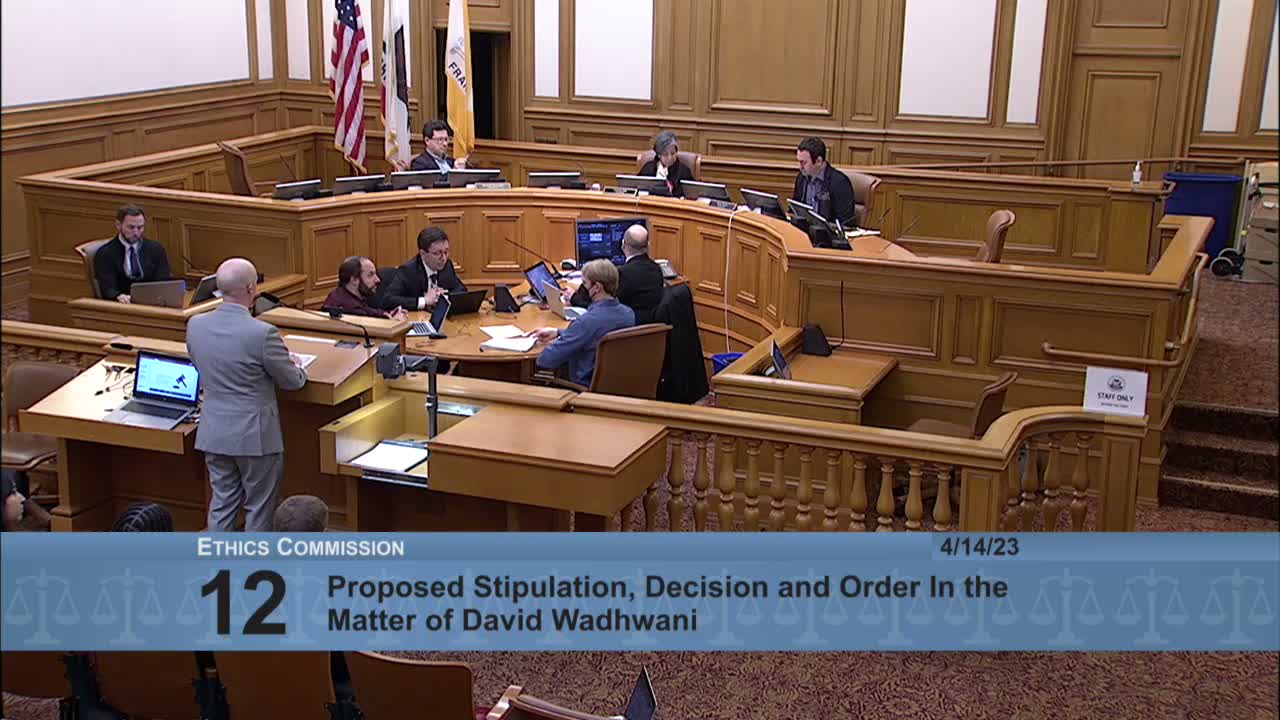
Enforcement staff presented a draft "hearing guidebook" on April 14 meant to explain and standardize how the San Francisco Ethics Commission will handle administrative hearings.
Senior investigator Zach D'Amico told commissioners the guidebook was created to clarify the administrative hearing process and to identify gaps and options for how those areas could be resolved. "The goal of the guidebook itself is twofold: 1, to help everyone understand the process for handling a case for which there's been a finding of probable cause and is moving forward, and the second is to help understand the role and the duty of the commission itself in this process," the presenter said.
The draft covers probable cause proceedings, preliminary matters (including commissioner disqualification, discovery, and subpoenas), and hearings on the merits, with separate sections on who presides, hearing protocols (language access, public access, recording), the presentation of evidence (oral argument, exhibits, witnesses), and findings and orders.
Staff recommended delegating preliminary matters to a single prehearing officer (often a commissioner) as an efficient procedural option. Commissioners asked whether an appointed hearing officer would still result in the full commission voting on findings; staff confirmed the full commission must vote on whether to find a violation and on penalties after a hearing officer issues recommended findings and a report.
Commissioners asked about the appeals path (superior court review), the possibility of regulatory rulemaking to fill gaps, and who would bear the cost of outside hearing officers; staff said such costs would come from the commission's legal-expenses line and that appointing a commissioner could be less costly.
Members of the public, including David Pilpel, urged staff to consult other departments that hold similar hearings for lessons learned (police commission, civil service). Staff indicated they will circulate the draft for feedback and aim to publish a final version on the commission website in May, subject to additional input.
What’s next: Staff asked for public and commissioner feedback by the end of the following week and plans to finalize a version for website publication in May. The guidebook is intended to reduce ambiguity in advance of hearings and to provide respondents, commissioners, staff and the public with a clearer roadmap for administrative enforcement proceedings.
Senior investigator Zach D'Amico told commissioners the guidebook was created to clarify the administrative hearing process and to identify gaps and options for how those areas could be resolved. "The goal of the guidebook itself is twofold: 1, to help everyone understand the process for handling a case for which there's been a finding of probable cause and is moving forward, and the second is to help understand the role and the duty of the commission itself in this process," the presenter said.
The draft covers probable cause proceedings, preliminary matters (including commissioner disqualification, discovery, and subpoenas), and hearings on the merits, with separate sections on who presides, hearing protocols (language access, public access, recording), the presentation of evidence (oral argument, exhibits, witnesses), and findings and orders.
Staff recommended delegating preliminary matters to a single prehearing officer (often a commissioner) as an efficient procedural option. Commissioners asked whether an appointed hearing officer would still result in the full commission voting on findings; staff confirmed the full commission must vote on whether to find a violation and on penalties after a hearing officer issues recommended findings and a report.
Commissioners asked about the appeals path (superior court review), the possibility of regulatory rulemaking to fill gaps, and who would bear the cost of outside hearing officers; staff said such costs would come from the commission's legal-expenses line and that appointing a commissioner could be less costly.
Members of the public, including David Pilpel, urged staff to consult other departments that hold similar hearings for lessons learned (police commission, civil service). Staff indicated they will circulate the draft for feedback and aim to publish a final version on the commission website in May, subject to additional input.
What’s next: Staff asked for public and commissioner feedback by the end of the following week and plans to finalize a version for website publication in May. The guidebook is intended to reduce ambiguity in advance of hearings and to provide respondents, commissioners, staff and the public with a clearer roadmap for administrative enforcement proceedings.
Don't Miss a Word: See the Full Meeting!
Go beyond summaries. Unlock every video, transcript, and key insight with a Founder Membership.
✓
Get instant access to full meeting videos
✓
Search and clip any phrase from complete transcripts
✓
Receive AI-powered summaries & custom alerts
✓
Enjoy lifetime, unrestricted access to government data
30-day money-back guarantee
